Restoring Aging Water Mains with SIPP Rehab in Charleston
Recurring pinhole leaks in aging ductile iron water mains prompted the City of Charleston, South Carolina, to seek a solution. Specifically, a long-term rehabilitation solution for a densely populated residential neighborhood.
While conventional open-cut replacement was considered, trenchless rehab was a more practical alternative. This is due to underground utility congestion, restricted access, and the potential for significant disruption to residents.
The city ultimately selected spray-in-place polymer pipe (SIPP) technology to rehabilitate the existing mains. Thus extending the service life with minimal impact to the surrounding community.
Planning Process
The project focused on two 6-in. unlined ductile iron pipe (DIP) water main segments located in Charleston’s West Ashley area. This is a highly developed residential district along the western banks of the Ashley River.
Charleston has a long history of implementing rehabilitation methods within its potable water system. This includes cement mortar lining practices dating back to the early 20th century. However, the affected pipeline segments had remained unlined. Over time, internal corrosion and deterioration contributed to the development of pinhole leaks. These leaks allow water infiltration and increasing the need for corrective rehabilitation.
Site conditions further complicated the project. The area’s elevated groundwater table, influenced by proximity to both the Ashley River and Atlantic coastal conditions, increased the urgency for a long-term rehabilitation strategy capable of sealing existing leaks while protecting against future corrosion and tuberculation.
Given the density of underground utilities, residential access limitations, and the potential disruption associated with open-cut replacement, Charleston’s Commissioners of Public Works selected trenchless rehabilitation as the preferred approach. The city awarded the project to J. Fletcher Creamer & Sons, Inc. (JFC), an applicator with demonstrated experience rehabilitating water infrastructure using SIPP technology and epoxy lining systems.
SIPP as the Right Rehabilitation Strategy
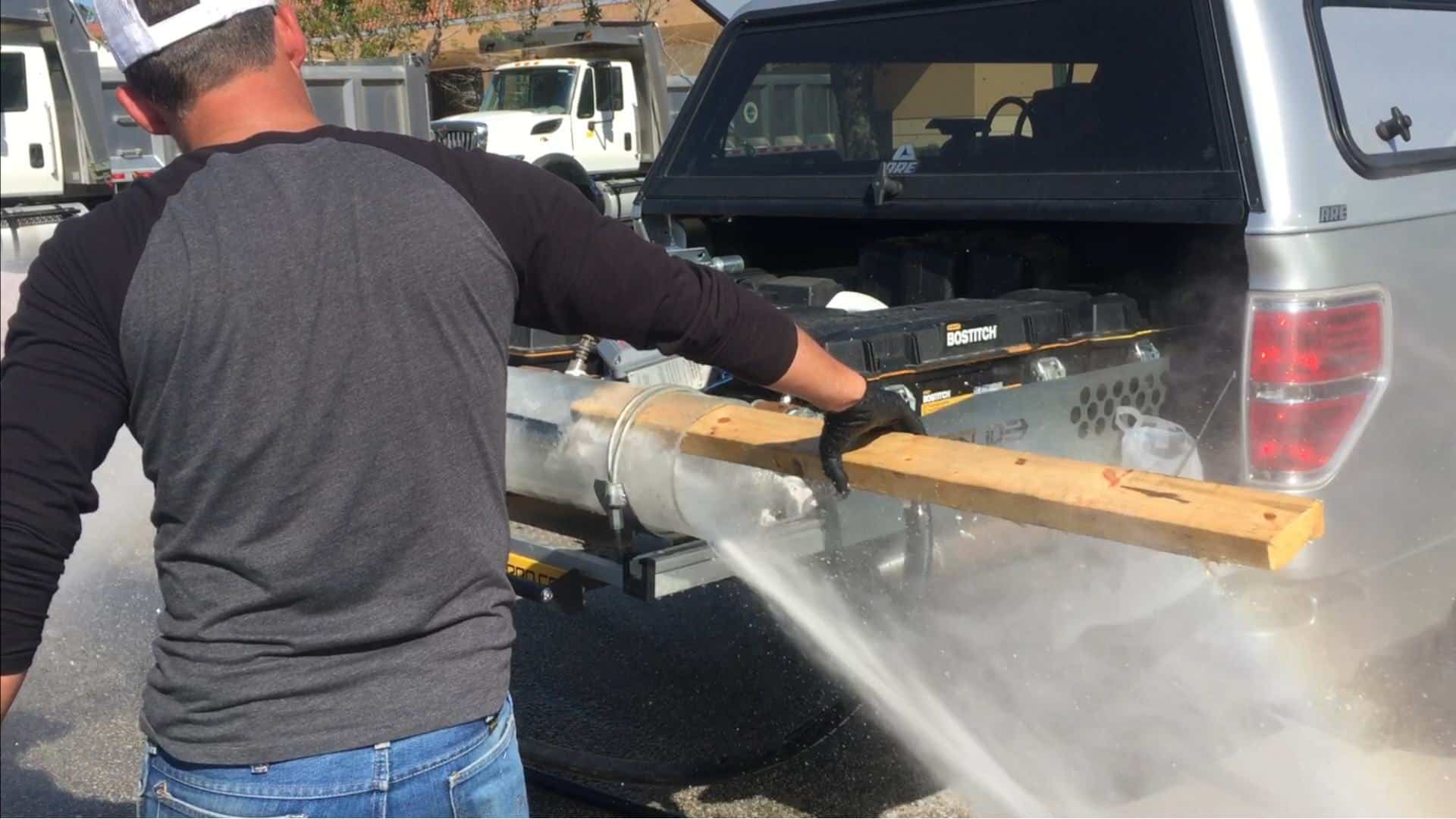
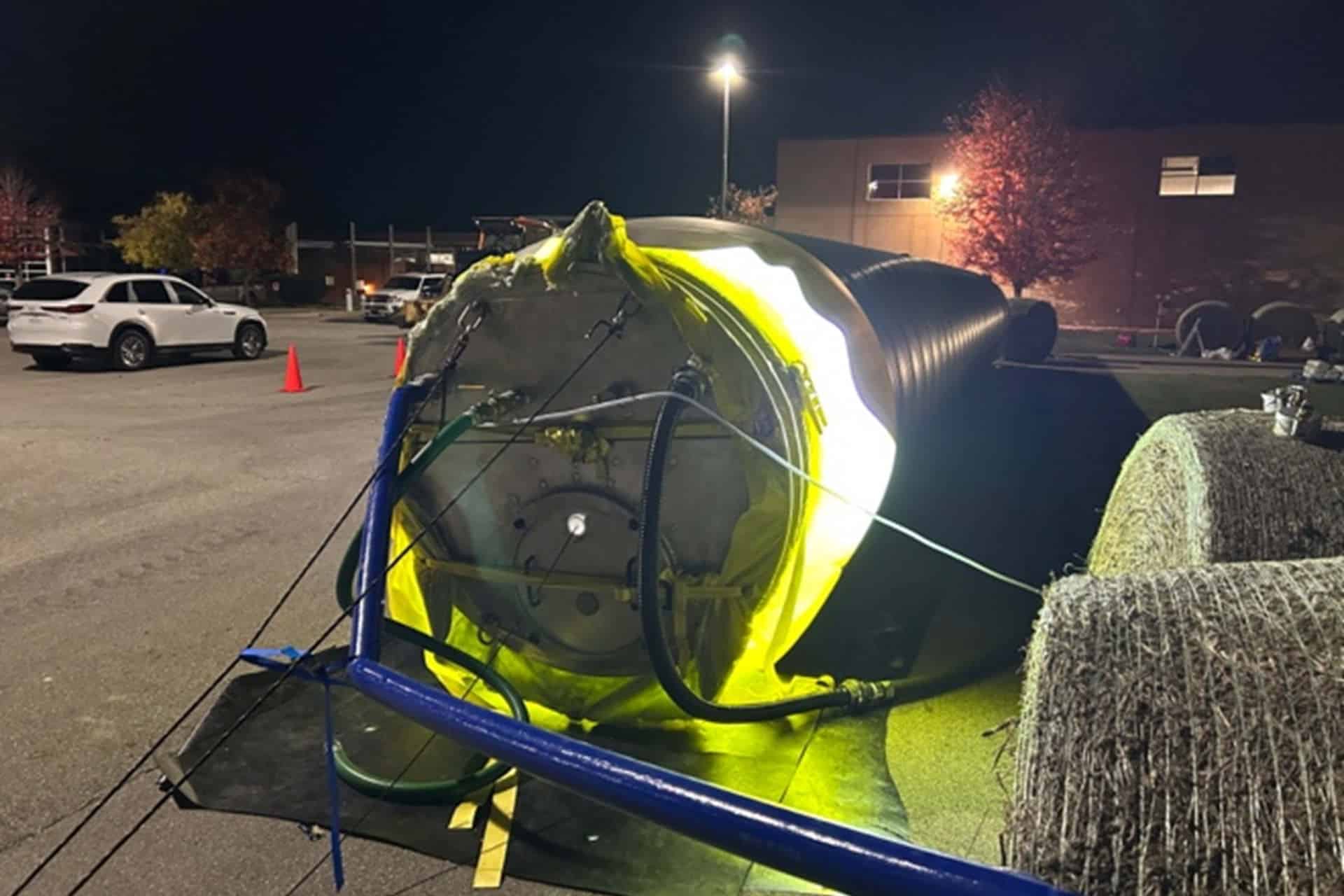
SIPP is a trenchless rehabilitation method that applies a protective lining to the interior wall of an existing pipe using a rotating spray head connected to a computerized spray rig. During application, coating material is distributed by centrifugal force while the system controls mix ratio, temperature, and pull speed to ensure consistent lining thickness and application quality.
This method is commonly used in water infrastructure rehabilitation for pipe diameters ranging from six to 36 inches and provides an alternative to replacement when minimizing excavation, reducing surface disruption, and restoring existing assets are priorities.
Bypass Installation and Access
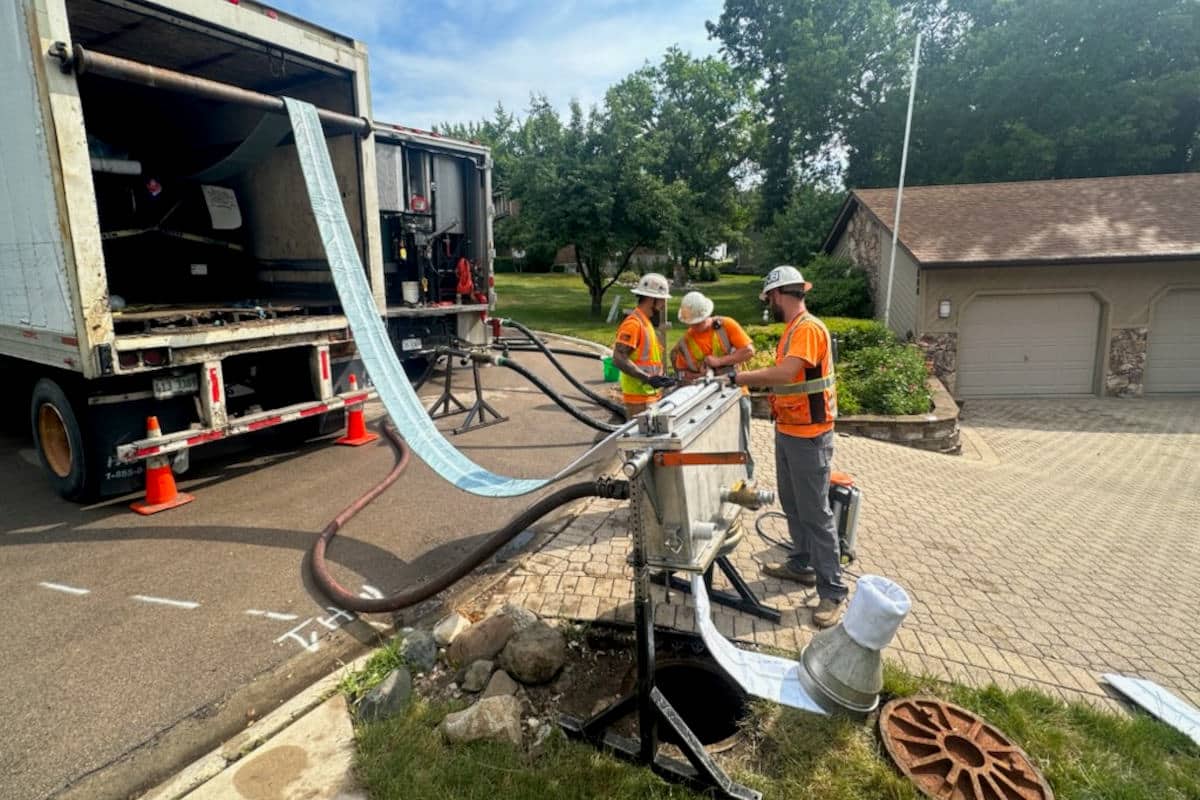
To maintain uninterrupted water service during rehabilitation, JFC designed and installed a temporary above-ground bypass system in compliance with NSF/ANSI/CAN 61 requirements. The bypass included both 2-in. and 4-in. diameter pipelines to support residential service demands and maintain fire protection capacity.
In total, the bypass consisted of 520 lf of 2-in. pipe and 2,880 lf of 4-in. pipe. The system was installed along the curb line, with street crossings buried where required and driveway crossings protected using rubber mats to avoid surface damage. Residential services were connected to the bypass through hoses attached to exterior hose bibs or meter pits, reducing inconvenience to homeowners. A dedicated bypass representative remained on-call throughout the project to address operational issues if needed.
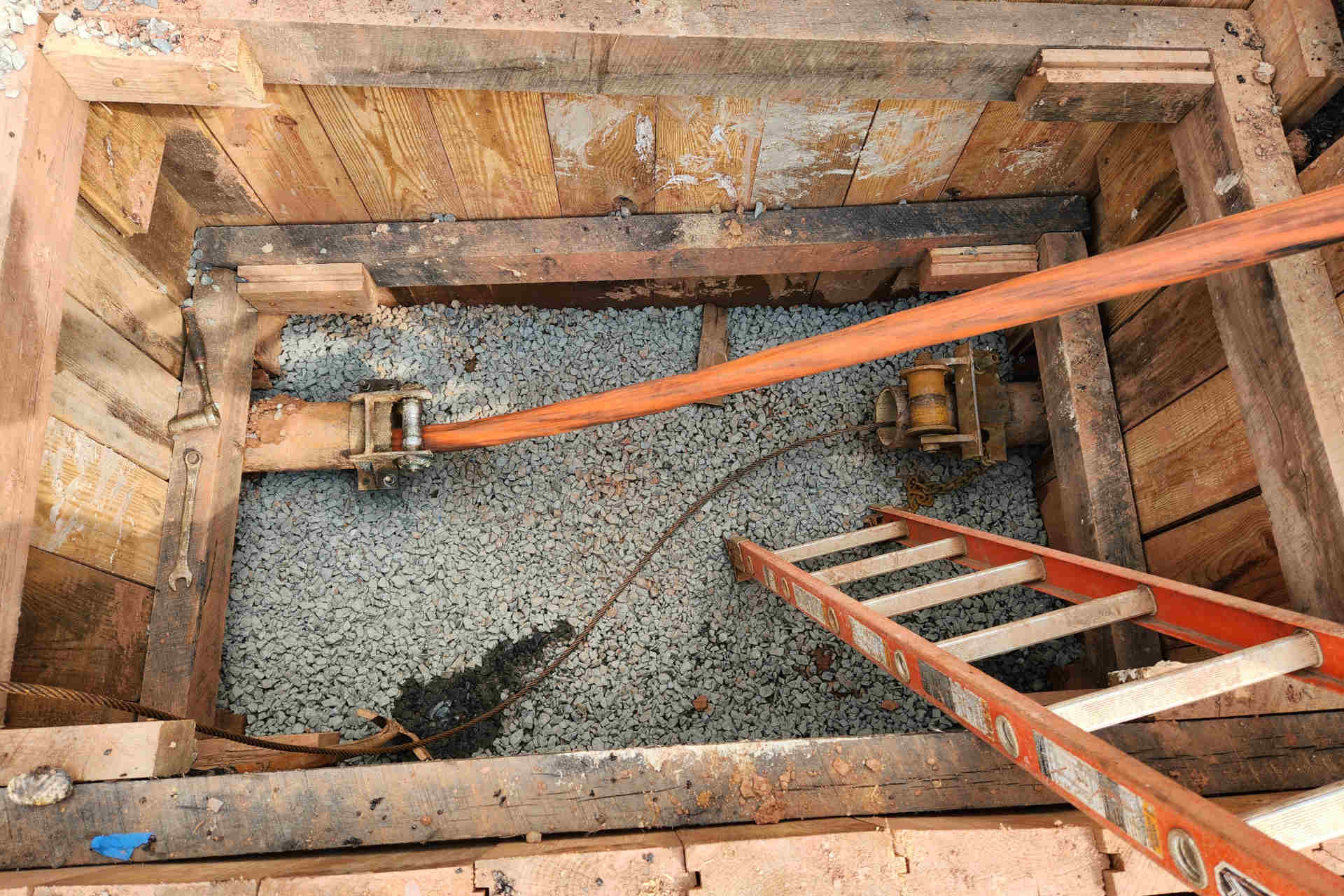
Pipe access was achieved through two 5-ft by 7-ft excavation pits, minimizing the project footprint and reducing congestion within the residential corridor.
Inspection and Cleaning
Following bypass activation, JFC completed (CCTV) inspection of both pipe segments to verify internal pipe conditions and confirm the extent of deterioration and leakage.
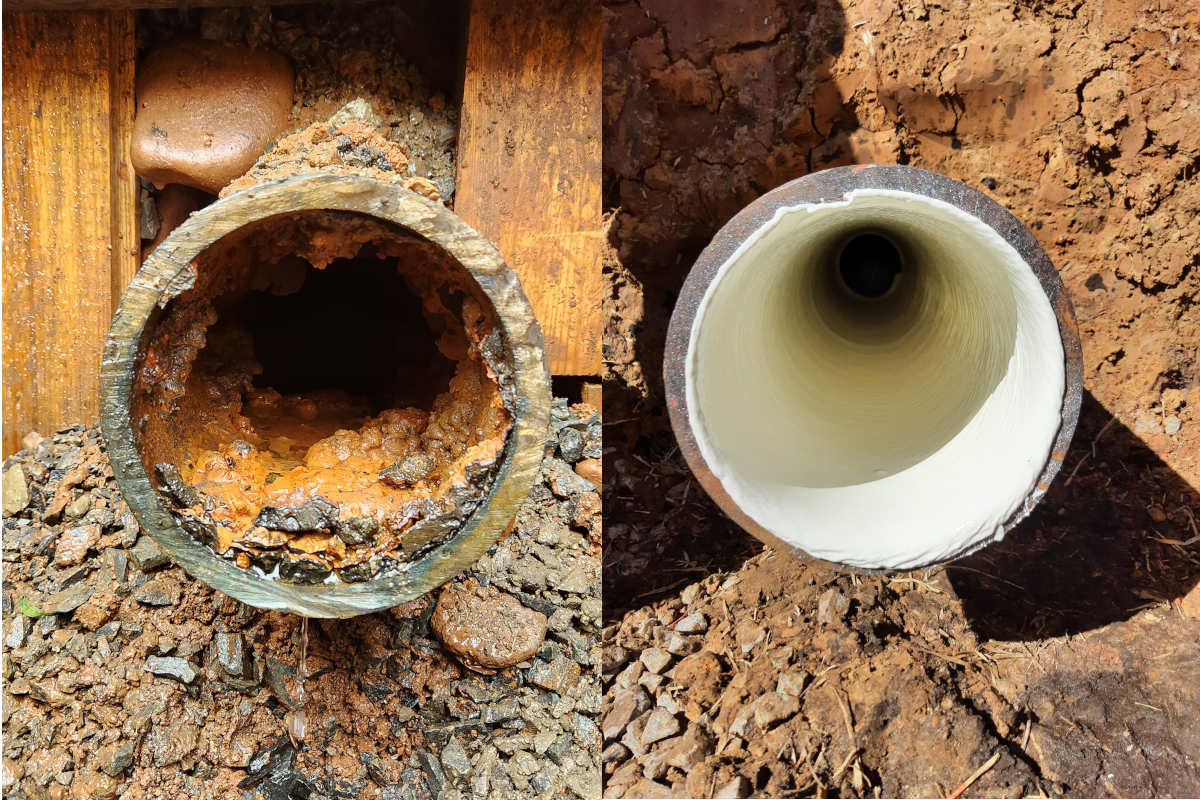
Proper surface preparation was critical to the effectiveness of the epoxy lining system. Mechanical cleaning was performed using drag and metal scrapers to remove tuberculation and hardened buildup. Water jetting was then used to eliminate residual sediment, scale, and debris, restoring the pipe closer to its original internal diameter.
Free-standing water was removed prior to lining; however, complete drying was not required because the selected epoxy system was designed to adhere to damp substrates. A final CCTV inspection verified surface readiness before coating application.
Epoxy Application
Once preparation was complete, Warren Environmental’s two-component, 100 percent solids epoxy lining material was mixed within the spray rig and introduced into the pipeline through an umbilical hose and rotating spray head.
A single application of 118 mils of epoxy was spray-applied to the pipe interior. The installed lining met the requirements of a Class III structural liner under AWWA structural classifications for pressure pipe linings while exceeding ASTM F3182 Class IV strength modulus thresholds.
The epoxy cured within four to six hours, allowing the contractor to proceed efficiently through the rehabilitation process. In addition to resolving active pinhole leaks, the coating provided a protective barrier intended to reduce future corrosion, inhibit tuberculation, and improve the long-term performance of the rehabilitated main.
Testing, Reconnection & Restoration
Following application, the rehabilitated main was rejoined, flushed, and subjected to two consecutive water quality samples taken 24 hours apart to confirm potability before returning the line to service. Once the main was cleared, the temporary bypass was decommissioned, and all residential service connections were restored to the permanent line. The project concluded with restoration of disturbed areas, including roadway and landscaping repairs.
Project Outcomes
The rehabilitation was completed over two weeks beginning in mid-February. Compared with open-cut replacement, SIPP reduced excavation requirements, limited disruption to residents, and eliminated many of the uncertainties associated with replacement costs,. This includes underground utility conflicts and bore-related assumptions.
For asset management, this project demonstrated that SIPP could provide a viable solution for addressing aging unlined water mains while extending infrastructure service life and improving system reliability.
For Charleston, the project functioned as a pilot program. City engineers assessed both the application methodology and the epoxy product performance with the intent of replicating this approach on future rehabilitation projects across the system.
SIPP technology delivered on every dimension the city required: leak resolution, structural improvement, regulatory compliance, minimal surface disturbance, and continuity of service to residents.
As water utilities across the country confront aging infrastructure with constrained budgets and growing public expectations, outcomes like Charleston’s offer a compelling model for what trenchless rehabilitation can achieve.
David Adams is a coatings specialist with Warren Environmental.
Latest Posts
- In Memoriam: Leo Barbera, Trenchless Technology Pioneer

- Hinterland Group Marks 20 Years of Trenchless Infrastructure Growth
- Digital Bore Planning Drives Better HDD Decisions

- Trenchless Technology Canada – Association Updates Fall 2026

- Organizers Recap UESI Pipelines 2026 Successes, Look Forward to Louisville

Next Up
HDD Rodeo | December 2-4, 2026 | Perry, Georgia | Learn more
HDD Academy | February 18-19, 2027 | Scottsdale, Arizona | Learn more
Microtunneling Short Course | May 4-6, 2027 | Scottsdale, Arizona | Learn more
Water Finance Conference | August 3-4, 2027 | Cleveland, Ohio | Learn more