Getting HDD Locator Calibration Right
To understand calibration, we first must understand signal strength. As its name implies, signal strength is the amount of signal emitted by a transmitter.
Each transmitter is designed to transmit at a constant signal strength, so different makes, models, and lengths of transmitters will transmit at different strengths.
You can think of signal strength like volume. The receiver “listens” to the transmitter, determines how “loud” it is, and provides a numerical value for that volume. The louder the “sound,” the further away you can “hear” it. As you move away from the transmitter, the signal strength therefore decreases and increases again as you move toward it.
The signal strength scale is arbitrary, but values between 0 and 1,200 are common for receivers.
What Is Calibration?
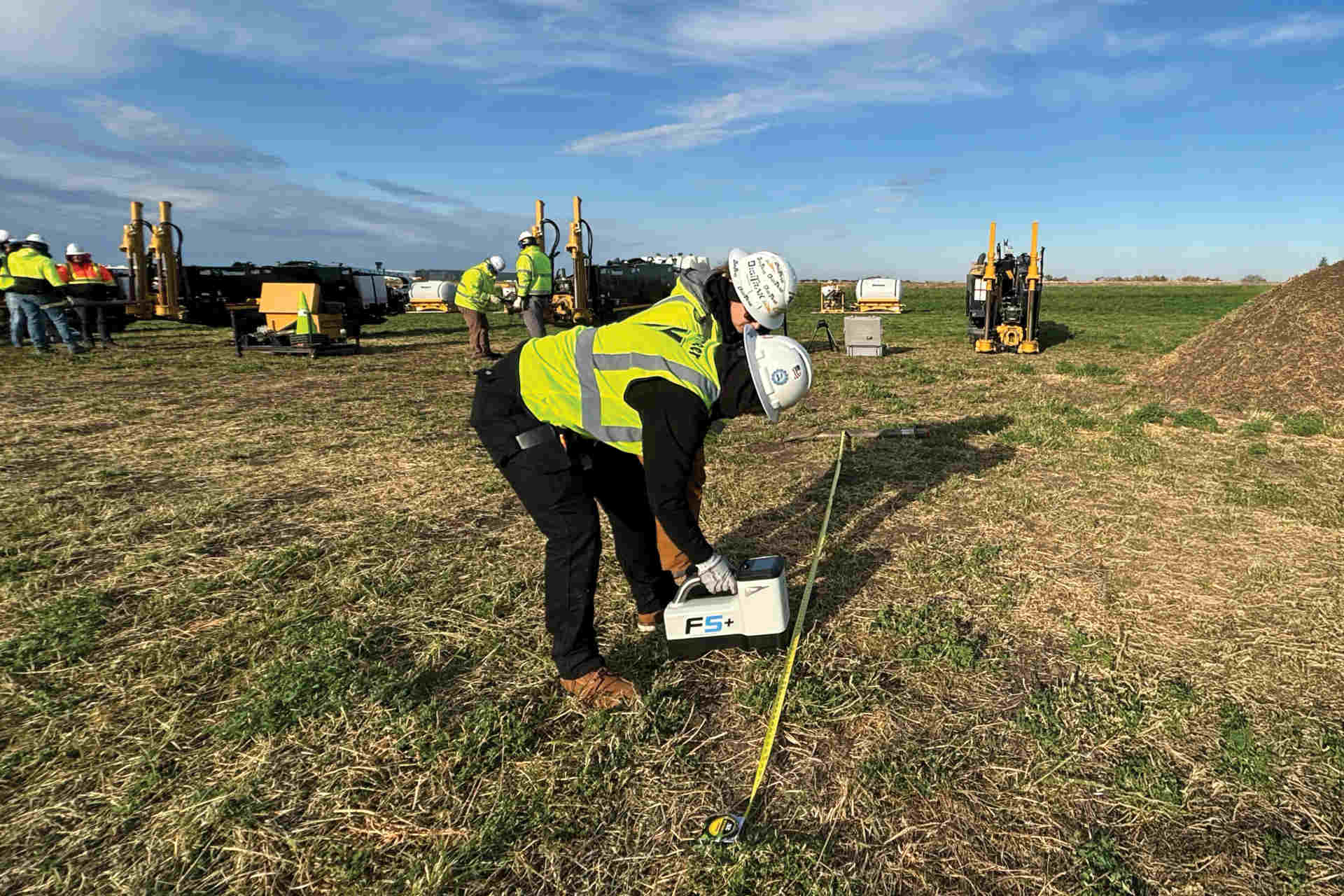
Since properly functioning transmitters broadcast signal at a constant strength, the signal received at any distance from the transmitter can therefore be equated to a distance. In other words, signal strength equals depth.
Latest Posts
- Contractor Profile – SKE Construction
- 2026 Trenchless Rail Crossings Special Report
- NASSCO Report – Florida City Rehabilitates More Than 1,600 Manholes

- PG&E Files 10-Year Electrical Undergrounding Plan

- HDD Contractor Faces Tough Rock Drilling Under the Illinois River

Next Up
HDD Rodeo | December 2-4, 2026 | Perry, Georgia | Learn more
HDD Academy | February 18-19, 2027 | Scottsdale, Arizona | Learn more
Microtunneling Short Course | May 4-6, 2027 | Scottsdale, Arizona | Learn more
Water Finance Conference | August 3-4, 2027 | Cleveland, Ohio | Learn more