Last Word – Underground Infrastructure Advocacy Begins with You

Advocating for underground infrastructure is a core function of NASSCO, and providing adequate funding to assess, maintain and rehabilitate wastewater systems is our key objective.
The ASCE 2025 Infrastructure Report Card awarded grades of D+ for wastewater infrastructure and D for stormwater infrastructure, both unchanged since the 2021 Report Card. Clearly there is much work to be done to improve these grades and better serve the environment and our communities.
But with such a massive problem, where should we start? My answer is simple – advocacy begins with you.
Presumably most everyone reading this article is a citizen and constituent of a state or province and has the personal power to help shape legislation, influence regulatory policy, and defend trenchless technology. As a 501 ( c ) ( 6 ) trade association, NASSCO brings together these individuals to amplify the importance of underground infrastructure.
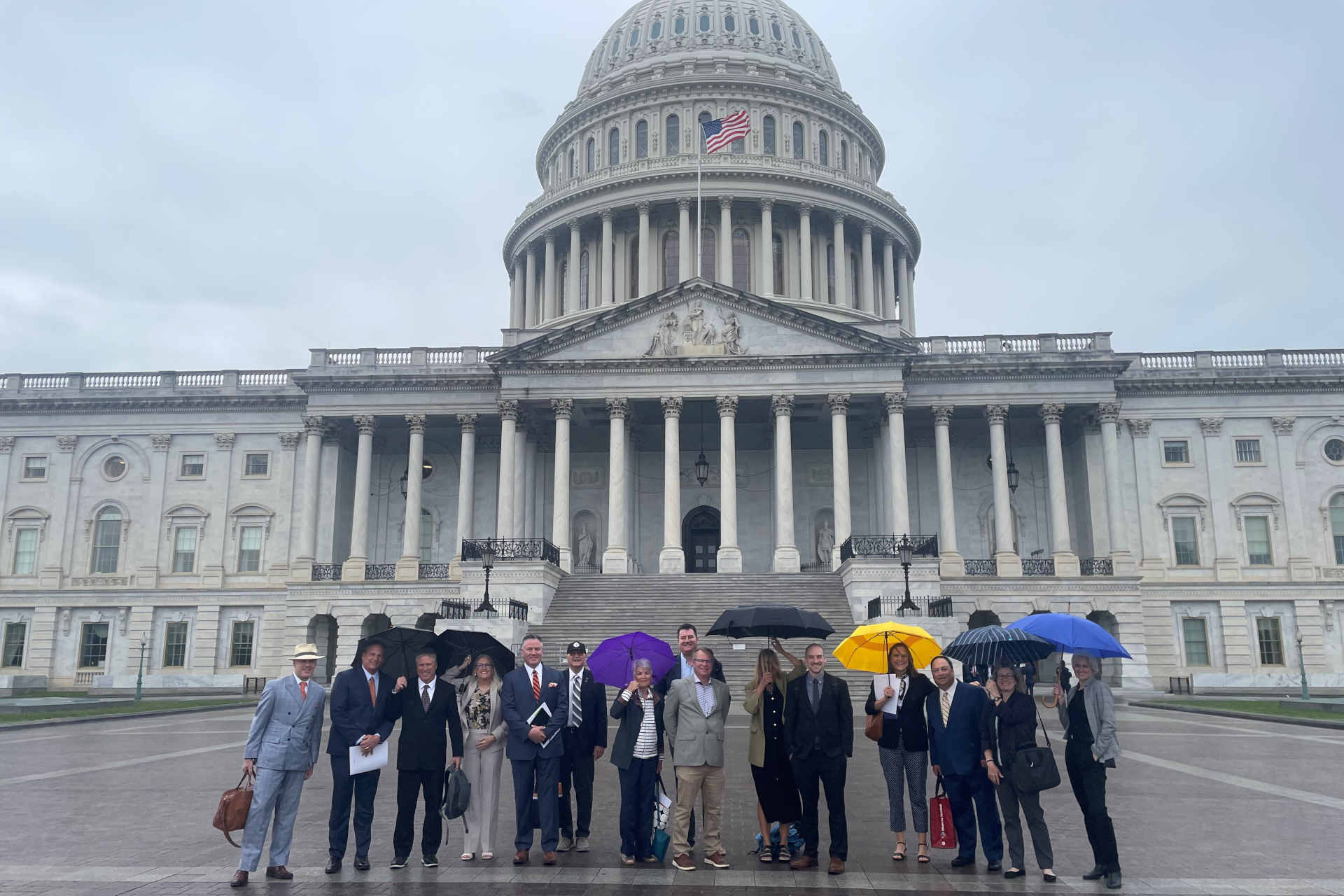
Seventeen NASSCO members met in Washington, D.C. on May 6 where they conducted 24 meetings with their elected officials to share NASSCO’s 2026 key policy recommendations, which are as follows:
1: Fully Fund Drinking Water, Wastewater & Stormwater Pipeline Infrastructure
Congress should include in the FY27 budget full funding for all federal programs that fund water infrastructure through re-authorization of the Infrastructure, Investment, and Jobs Act (IIJA). This funding is vital for helping utilities, communities, and local businesses.
A recent US EPA report found that $630.1 billion is needed for water infrastructure projects over the next 20 years, of which $302.9 billion (48%) are for wastewater collections systems, stormwater systems, and combined sewer overflow prevention projects to meet federal Clean Water Act regulations. That amount will increase due to the systems being older and the small amount of funding provided to maintain and upgrade them.
2: Strengthen Asset Management Requirements & Funding
Congress should require that wastewater and stormwater infrastructure projects that receive federal funding have asset management plans, and that grants and technical assistance be provided to communities that lack the financial and technical resources to develop comprehensive asset management plans.
Changes should be made to the Clean Water State Revolving Fund (SRF), U.S. Dept. of Agriculture Water & Wastewater Disposal Loan & Grant Program, U.S. Dept. of Transportation programs, and all other federal programs that fund collections infrastructure to require applicants submit an asset management plan as a condition of receiving federal funding, and that all of the assets of the entire system be included in the asset management plan.
Grants and low interest loans to complete asset management plans should be made available through the Clean Water SRF and other federal funding programs. Communities with limited financial and technical capabilities face some of the largest infrastructure challenges. They need support through grants to help them develop comprehensive asset management plans, which will ensure that federal funding is being spent on the most needed projects.
3: Require Certified Inspectors & Standardized Inspection Methods
Congress should direct the EPA, USDA, Department of Transportation, and other federal agencies to require certified inspectors and a standardized inspection method for projects that receive federal funding. In order to protect the interests of taxpayers and ensure that federal support for infrastructure investments is well spent, it should be required that certified inspectors perform pipe assessments using standardized inspection practices of drinking water, wastewater, and stormwater systems.
4: Streamline SRF Permitting
America’s water infrastructure can’t afford permitting gridlock. NASSCO urges Congress to modernize SRF permitting by replacing today’s fragmented, duplicative reviews with coordinated interagency timelines, parallel processing where allowable, and standardized documentation — so critical clean water projects can break ground sooner without weakening environmental protections. Streamlining the process will stretch SRF dollars further, reduce local carrying costs, and deliver safe drinking water and cleaner waterways faster, especially for small and rural communities that face the steepest delays.
Canadian Influence
NASSCO has experienced explosive growth in Canada – both in Association membership and training of our Pipeline Assessment Certification Program (PACP). As a result, we have expanded our advocacy efforts and held our first-ever Canadian Fly-In in Ottawa last fall.
NASSCO members came well prepared for a full day of meetings with elected officials and their staff to discuss the importance of trenchless technology, funding, and the role of proper assessment of underground infrastructure conditions using NASSCO’s PACP.
Key discussion points included recommendations to expand infrastructure investments, to create a $500 million Municipal Asset Management Fund, to expedite the National Infrastructure Assessment (NIA), and to establish a Center of Excellence for Underground Infrastructure.
Make a Difference
- Get involved in a NASSCO Government Relations Committee – United States or Canada.
- Join us in Washington D.C. or Ottawa for a future Fly-In. We do all the heavy lifting to make your meetings go as smoothly as possible and pair you with experienced NASSCO members.
- Allow us to schedule an online meeting with your elected officials to discuss infrastructure needs specific to your state or province.
- Visit NASSCO.org/Advocacy to swiftly send an email to your elected officials today! We make it easy with our online tools that prepopulate messages customized to your Congressional Leaders or MP.
- Visit NASSCO.org for more information about advocacy, trenchless technology, and our many exciting initiatives.
Sheila Joy is executive director of NASSCO.
Latest Posts
- Contractor Profile – SKE Construction
- 2026 Trenchless Rail Crossings Special Report
- NASSCO Report – Florida City Rehabilitates More Than 1,600 Manholes
- PG&E Files 10-Year Electrical Undergrounding Plan
- HDD Contractor Faces Tough Rock Drilling Under the Illinois River
Next Up
HDD Rodeo | December 2-4, 2026 | Perry, Georgia | Learn more
HDD Academy | February 18-19, 2027 | Scottsdale, Arizona | Learn more
Microtunneling Short Course | May 4-6, 2027 | Scottsdale, Arizona | Learn more
Water Finance Conference | August 3-4, 2027 | Cleveland, Ohio | Learn more