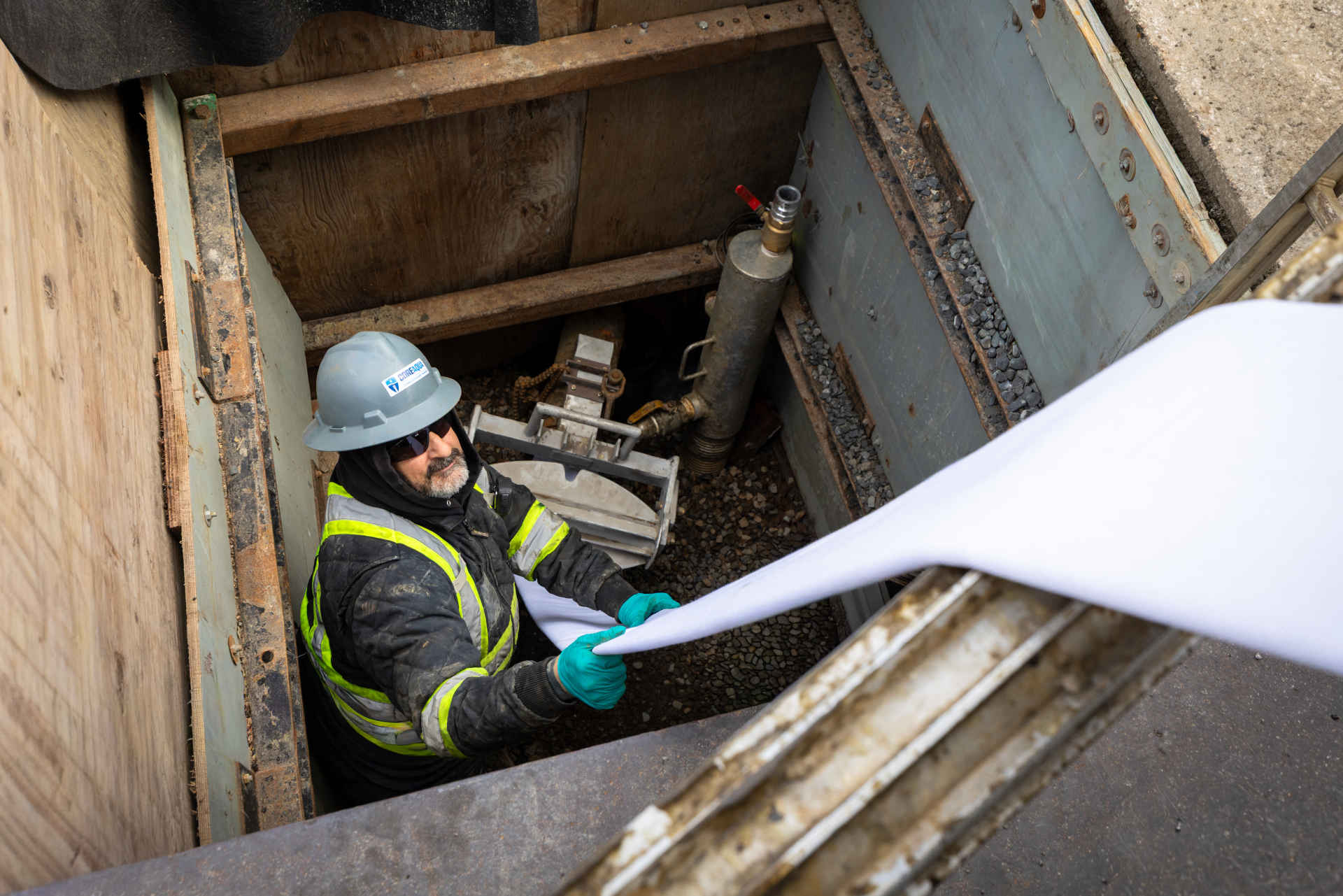
CoreAqua – Powering the Future of Water Main Rehabilitation
When it comes to the rehabilitation of potable water systems with cured-in-place pipe (CIPP), AquaPipe stands out as the leader in the sector. The product stands as the cornerstone of the CoreAqua brand.
While the story of AquaPipe dates to the turn of the century, CoreAqua’s story and legacy in the trenchless world is only a year old. CoreAqua is the amalgamation of FERPAL Infrastructure, Niedner and AquaPipe under one umbrella.
CoreAqua’s Back Story
“CoreAqua’s story began when private equity investors acquired LOGISTEC Corp. in January 2024,” says Patrick Maginn, CoreAqua president and CEO. “LOGISTEC, a Montreal-based logistics company, was the parent company of the businesses that ultimately became CoreAqua; Sanexen’s infrastructure division, Niedner and FERPAL.”
LOGISTEC brought Maginn, a longtime trenchless industry executive, onboard in November 2024 to lead the three entities. The three businesses were merged shortly thereafter and Maginn orchestrated the return of the AquaPipe name to the storied CIPP brand. In June 2025, the three entities integral to AquaPipe’s growth and future success were brought together under the CoreAqua parent brand.
“CoreAqua brought together the most experienced installers of pressure CIPP in the world, FERPAL and Sanexen’s infrastructure team, with the most widely used pressure pipe product in the world, AquaPipe,” Maginn explains. “AquaPipe is manufactured by the third pillar of this organization, our 130-year-old hose manufacturer, Niedner, located in Coaticook, Quebec.”
Across the entire CoreAqua platform, the brand employs more than 500 employees during peak construction months. It operates seven locations in Canada and the United States. The headquarters are in Toronto with key manufacturing and contracting hubs in Montreal, Chicago, Detroit and the Washington, D.C., area.
Starts with AquaPipe
Like many of the great trenchless technologies, AquaPipe was born out of necessity and the needs of the customer. In 1998, Sanexen saw a downturn in its existing market and went to its customers – in this case – municipalities, asking them what needs they had.
One need that stood out was a trenchless method to structurally rehabilitate potable water systems. And Sanexen, with LOGISTEC as a majority shareholder, started on the path to create and develop AquaPipe.
“In the beginning, our clients were searching for better ways to solve their aging water infrastructure problems, already recognizing that there would be funding challenges and that they would need a more economical solution compared to the traditional dig-and-replace method,” says Maginn. “There were a few water main rehabilitation products on the market, especially spray-in-place cementitious and polymeric products, but they were not providing a fully structural solution. Recognizing the success of CIPP products in the sewer rehabilitation space, our engineers set forth on a journey to create a CIPP solution specifically designed for the rehabilitation of pressurized potable watermains.”
With the help of the National Research Council of Canada and its Industrial Materials Institute (NRC-IMI) and the Center of Expertise and Research in Urban Infrastructure (CERIU) the team worked to create the first NSF/ANSI/CAN 61 certified structural liner for potable water systems.
The company worked with Niedner to manufacture the liner, which was impregnated with Sanexen’s proprietary thermoset polymeric resin. LOGISTEC bought Niedner in 2009 bringing both components of AquaPipe under one roof.
“Between 1999 and 2007, many improvements in the product itself as well as the installation procedures brought us closer to where we are today,” says Maginn. “Our partnership with Niedner proved essential. They had the expertise in the textile industry that we needed to create proper liner construction.”
Installers – A Crucial Component
It has been said many times on these pages: A trenchless product is only as good as the team overseeing the installation process.
While managing AquaPipe installations in-house via Sanexen Water, the company teamed with Toronto-based FERPAL Construction. FERPAL served as the leading AquaPipe installer throughout Canada and entered the U.S. market in 2007. A decade later LOGISTEC got a majority interest in FERPAL, eventually getting the entire business outright.
“As the footprint of our organization grew, the training and support provided to our new installation crews were paramount to our success and the assurance of a quality product,” Maginn explains. “This is what set us apart from other technology providers in the industry.”
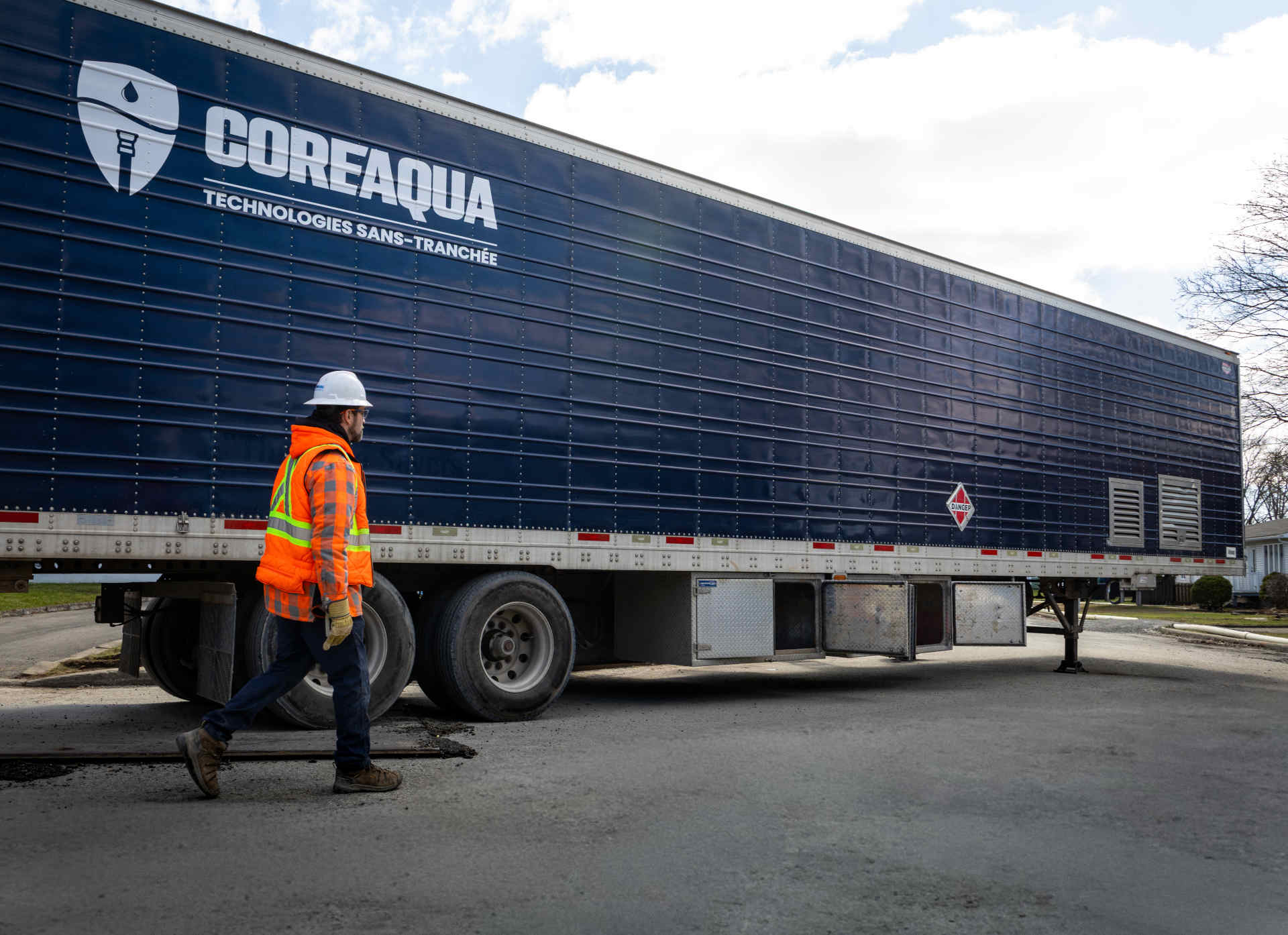
While the AquaPipe product is available on a global scale, CoreAqua serves as the sole installer to the North American market.
“To be successful at a challenging process like pressure CIPP installation, we knew our crews had to be trained to a high standard and install the product every day,” says Maginn. “No other contractor in North America installed as much pressure liner as CoreAqua, and as such, our crews became highly proficient in their craft, setting the standard for what quality pressure CIPP installations included.”
Building a North American Presence
Since the beginning, the Canadian market has always been integral to the growth of the companies and products that make up the CoreAqua brand.
“Our first installations were in municipalities on the south shore of the island of Montreal. The City of Dollard-des-Ormeaux were the first to create a steady water main rehabilitation program,” says Maginn. “They remain a strong proponent of AquaPipe for the past 25 years.”
From there, the company began working in Ontario by way of contracts with the City of Ottawa and installations in Toronto and Hamilton. And in Quebec the newly agglomerated City of Montreal started its water main program.
With Canada’s largest cities adopting this technology, the company set its sights to the south.
“Entering the United States was difficult in the beginning,” Maginn says. “We had to create awareness and educate city and consulting engineers about what we are offering. The key was creating relationships and developing trust.”
On the contracting side, the team focused on working in tandem with existing contractors to manage aspects of projects outside of lining.
Much like it grew in Canada with pilot projects, the same tact was taken in the United States. When AquaPipe was being installed in a community, neighboring communities would come out to see the process. As the number of projects grew to a sustainable level, the company setup dedicated U.S.-based crews.
“We have been able to support municipalities with the creation of multi-year contracts,” Maginn says. “We quickly became the North American leader in water mainlining and innovation in this space. Our presence at trade shows created more awareness, and our ability to manufacture our products and equipment gave us credibility with key stakeholders within the trenchless industry.”
Varying Markets
“CoreAqua has spent decades with ‘boots on the ground’ efforts in many municipalities, across Canada and the United States,” Maginn says.
To date, approximately 1,500 miles (2,400 km) of AquaPipe has been installed across North America. Just looking at Toronto and Montreal alone, Canada is the leader in water main rehabilitation. However, the process continues to gain ground and acceptance in the United States.
“Fortunately, the provincial governments of Canada have invested heavily in their failing infrastructure,” Maginn explains. “Programs like the Ontario Community Infrastructure Fund (OCIF) and Housing-Enabling Water Systems Fund (HEWSF) in Ontario and Programme d’infrastructures municipales d’eau (PRIMEAU) in Quebec give municipalities support to aid in the repair or replacement of the worst water pipes.”
In Canada, there is a greater focus on asset management – a longtime requirement of gaining access to critical federal and provincial funding. The country also takes a more centralized approach to its system ownership with regional municipalities helping guide capital decisions for several smaller communities.
“Planning of asset management is done every day to stay years ahead,” says Maginn. “Some municipalities have even created programs where multi-year contracts are planned in order to lock in project costs and secure funding for future years.”
In the United States, Maginn sees a lot of growth potential for water main rehabilitation especially if government funding can be more accessible, especially to smaller communities. With proper funding, these communities could create a situation where local work becomes more sustainable.
“If we can get to a place where this is accepted widely, the opportunity is massive,” Maginn says. “Things are turning the corner in terms of planning and proactivity, and some multi-year programs are showing up.”
The Future of CoreAqua
CoreAqua’s growth is no longer limited to North America. Recent activity in Asia‑Pacific and European markets reflects the global reputation of AquaPipe and the company’s rigorous installation standards. The organization is actively managing inbound interest from international municipalities seeking proven solutions for aging water infrastructure.
The company also plans to expand the AquaPipe product line in the coming months, introducing new offerings aligned with its history of quality, innovation and collaboration.
“We continue to evaluate new technologies for pressure pipe applications that benefit our customers,” Maginn says. “Our owners strongly support investment in promising technologies and complementary companies that strengthen the CoreAqua platform.”
The Global Growth of Water Main Rehab
Education stays central to CoreAqua’s long‑term vision. With so many trenchless solutions available, Maginn believes industry collaboration is essential to building confidence among engineers and municipalities.
“Transparency around product performance and testing is critical,” he says. “Trust is earned and maintained through accountability.”
He emphasizes the importance of rigorous specifications that evaluate trenchless solutions beyond cost, considering experience, installation methods, safety and long‑term performance.
Investment needs are large. It is estimated that more than $2 trillion will be needed over the next 25 years to maintain and rehabilitate North America’s water infrastructure. Without scalable trenchless solutions like potable water CIPP, keeping pace with deterioration will be impossible.
CoreAqua believes the future of water infrastructure depends on shifting from traditional open‑cut replacement toward proven, high‑quality trenchless technologies.
As Maginn sees it, education is still the industry’s most powerful tool.
“We’ve been educating the water sector since the early 2000s,” he says. “That continues through our involvement with AWWA, ASTM, BNQ and ISO committees, our participation in NASTT conferences, and — most importantly — meeting face‑to‑face with municipalities across North America to demonstrate what quality trenchless technology can achieve.”
Mike Kezdi is managing editor of Trenchless Technology.
Latest Posts
- Contractor Profile – SKE Construction
- 2026 Trenchless Rail Crossings Special Report
- NASSCO Report – Florida City Rehabilitates More Than 1,600 Manholes
- PG&E Files 10-Year Electrical Undergrounding Plan
- HDD Contractor Faces Tough Rock Drilling Under the Illinois River
Next Up
HDD Rodeo | December 2-4, 2026 | Perry, Georgia | Learn more
HDD Academy | February 18-19, 2027 | Scottsdale, Arizona | Learn more
Microtunneling Short Course | May 4-6, 2027 | Scottsdale, Arizona | Learn more
Water Finance Conference | August 3-4, 2027 | Cleveland, Ohio | Learn more