5 Things You May Not Know About Solids Control and Drilling Fluids Recycling
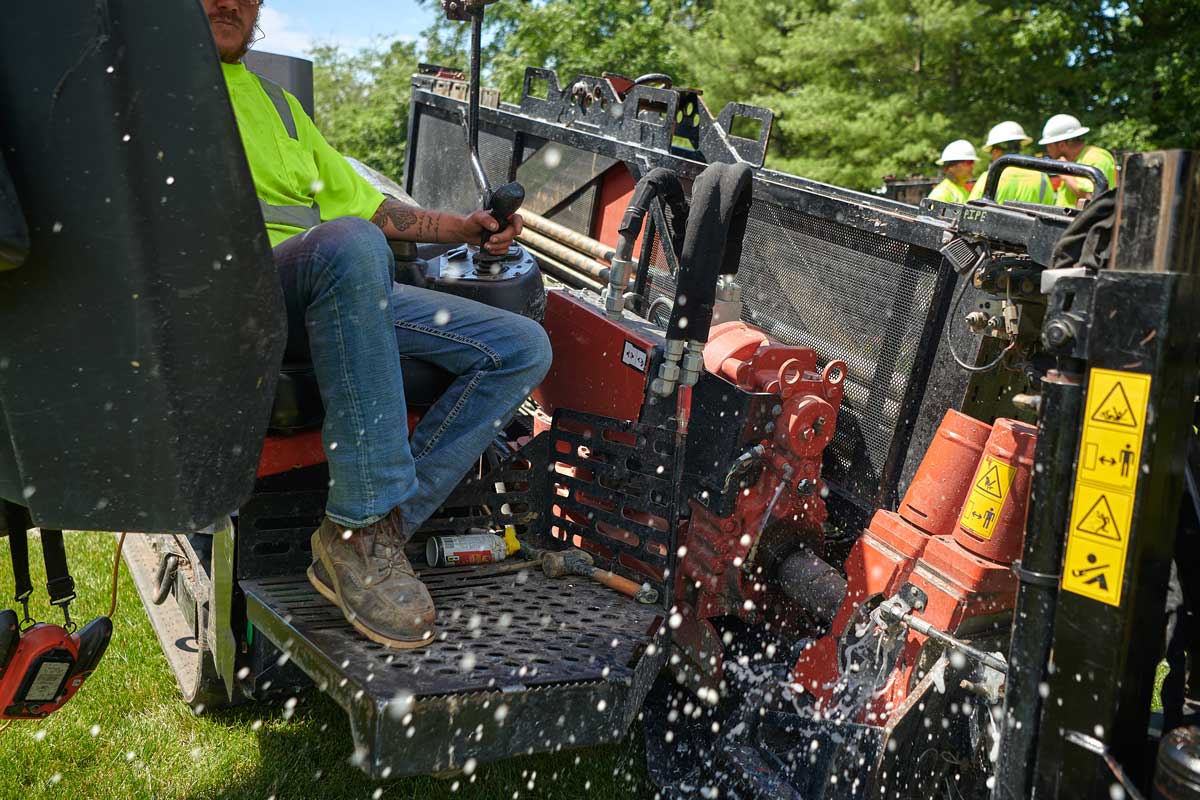
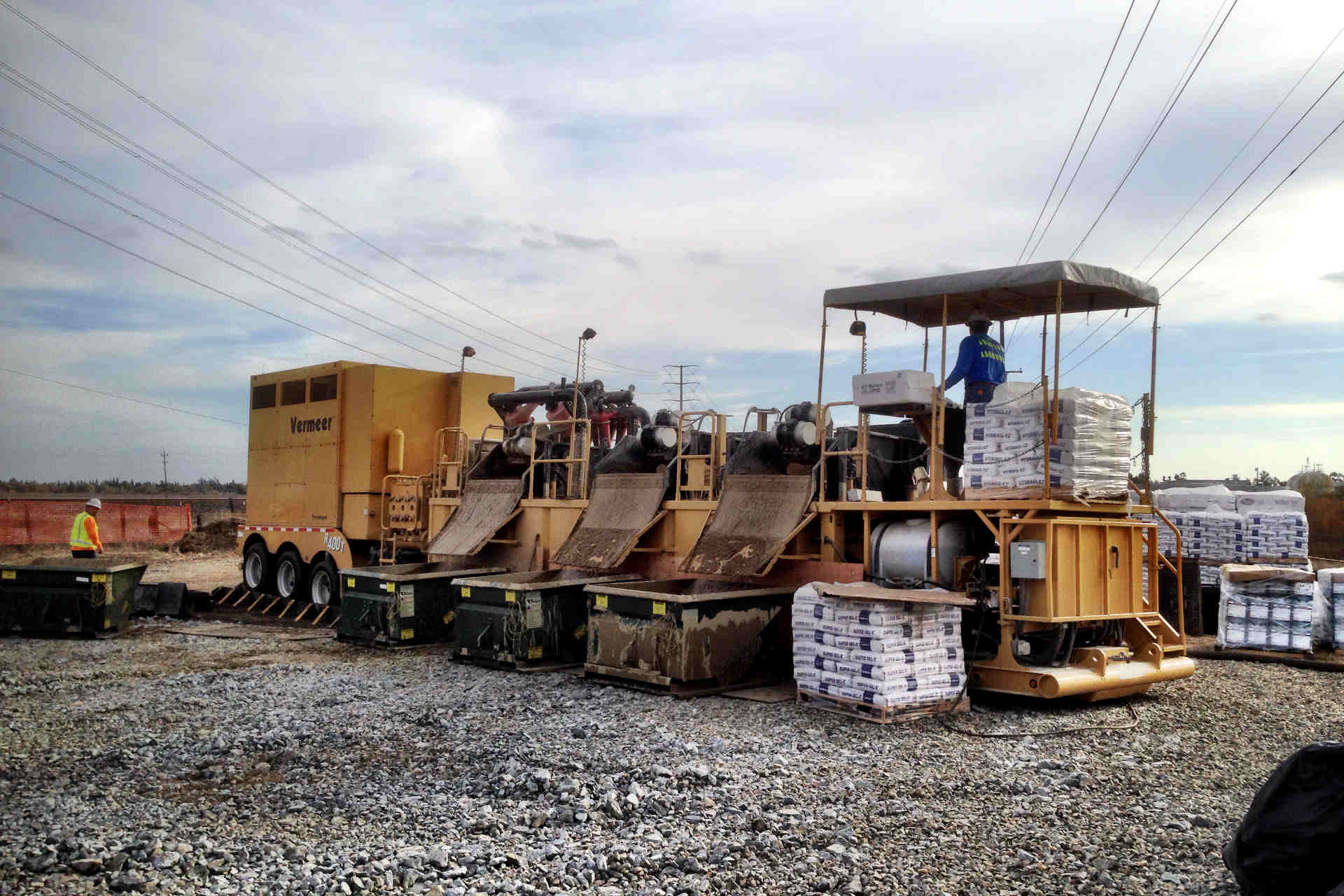
There are many advantages to utilizing solids control/drilling fluids recycling equipment for any rotary mud drilling application. Water is one of our most valuable natural resources and recycling drilling fluid dramatically reduces the demand for water; along with savings in fuel, time, and cost for transporting additional water to the jobsite and hauling off wet drill spoils.
Landfills can only take material that will pass a paint-filter test therefore only dry solids are acceptable. Wet drill spoils are a big disposal issue. Recycling drilling fluid (along with the polymers and additives) reduces amount of material that must be hauled into and out of a job site, as well as lowering initial product costs.
Here are five things you may not know about solids control and drilling fluids recycling systems:
1 – Selecting a Drilling Fluids Recycling System
When sizing a drilling fluid recycling system to a drill, the system should be capable of processing a minimum of 1.5 times the maximum pumping capacity of the drill. This can be determined by the size and number of hydrocyclones on the system.
For example, a 5-in. hydrocyclone will process around 80 gallons per minute, therefore take the number of 5-in. hydroclones times 80 to determine the capacity. Hydrocyclones do not make a 100 percent cut point in one pass, therefore additional cones/processing capacity must be factored in. When it comes to drilling fluids recycling systems, cheap and compact are two words to avoid.
Small screening decks equate to small capacity and a lack of ability to run ultra-fine screens that are essential for prolonging the life of the drilling fluid. These screens also minimizing abrasive wear and tear on the drilling fluids circulating system.
Sand, as classified by the American Petroleum Institute (API), is a particle size between 74 to 200 microns. A 200-mesh screen will make a 74-micron cut-point whereas a 60-mesh screen will only remove solids 250 microns or larger (not even close to removing sand).
Every time drill solids are recirculated, the solid particles get ground down into smaller particles and will eventually get down into the colloidal (clay) particle range and create viscosity increases (referred to as plastic viscosity).
Plastic viscosity can only be detected by using a Fann Rehometer. These fine particles are still abrasive and do not contribute to fluid loss control to maintain borehole stability and or suspension to carry cuttings out of the borehole. The result is contaminated drilling fluid that must be hauled away.
2- Screen Selection
The wrong size scalping screen can bottleneck the whole operation. The scalping screen is the first point for solids removal by making a coarse cut to remove larger particles that can settle and fill up the compartments of a recycling system or plug up hydrocyclones.
If too fine of a mesh scalping screen is used, contractors may not be able to get the return material into the system fast enough to keep up with the drilling operation. Drilling fluid will be lost off the end of the screens as a result.
Screen blinding is also a problem with scalping screens. Screen blinding occurs when the particle size of drill cuttings is small enough to wedge into the mesh of the screens. This greatly reduces the ability of the screens to conduct the fluid; the drilling fluid will run off the end of the screens.
One can stop the system, rinse off the shaker screens and check to see of material is plugging the screens. In this situation, a finer mesh screen or a coarser mesh screen will be needed. One may need a 30-mesh screen on the scalping shaker and a 200-mesh screen on the final cut (try to always have at least a 200-mesh screen on the final cut).
3 – Two People can Operate the Same System with the Same Set-up and Get Different Results
As mentioned earlier, recycling systems should be capable of processing at least 1.5 times the maximum pumping capacity of the drill. That means the fluid should cascade (backflow) from the clean compartment all the way to the compartment under the scalping shaker.
The scalping shaker compartment will rise and drop depending on the drilling fluid returns from the spoils pit.
A recycling system will perform at its best when the operator uses a valve to regulate the tank level in the scalping tank to around ¾ capacity. This lets the dirty tank drop down close to the bottom and then filling with dirty returns from the exit pit.
This increases the average solids content of the scalping shaker compartment which will increase the overall solids content of the fluid going back to the drill.
4 – Maintain Drilling Fluid Properties
Bentonite, polymers, and additives are expendable items that must be constantly replenished. Drilling fluid properties can change quickly and must be tested frequently (especially viscosity). Bentonite, polymers, and additives are constantly being deposited in the walls of the borehole to create stability and control reactive clays.
These components are also being carriedaway with the drill cuttings, therefore constant testing should be done to ensure that the drilling fluids meet the demands of the soil conditions for a successful bore. Viscosity testing should be performed most frequently, and polymer and additive dosages can be based on bentonite consumption.
5 – Selecting the Correct Polymers and Additives
Long chain/high molecular weight synthetic polymers for controlling reactive clays should be avoided when using drilling fluids recycling equipment. These products create a sheeting effect on the shaker screens that will cause drilling fluid to run off the screens. Look for synthetic polymers that say low viscosity.
Products that break clay down into small particles (Clay Cutter or Clay Breaker type products) should not be used with drilling fluids recycling systems because they break clay down into small particles that cannot be adequately removed by the vibratory screening equipment and the drilling fluid will quickly become contaminated with native mud (high plastic viscosity).
Poly anionic cellulose (PAC) polymers for fluid loss control (borehole stability in coarse soils) are compatible with drilling fluids recycling systems.
The extra low viscosity versions are great for helping to manage viscosity and annular pressures. Viscosity is the resistance to flow; we manage annular pressures and reduce inadvertent returns by having a drilling fluid that suspends drill cuttings, stabilizes the borehole in coarse soil conditions and controls reactive clays at the lowest possible viscosity.
Use non-foaming detergents/surfactants with care. When using these products, keep the throat valve on the mixing hopper closed. Only open it when mixing drilling fluid products to prevent aeration if the drilling fluid which will result in pump cavitation.
For contractors to reap the benefits of drilling fluids recycling systems, a dedicated operator who is properly trained on using the system is vital. The operator must have sufficient drilling fluids training. These systems are only as good as the person who operates the equipment.
Fortunately, training is available and free through the manufacturer of the equipment and or through your drilling fluids provider.
George Dugan is technical sale manager at CETCO Drilling Products Group.
Latest Posts
- Contractor Profile – SKE Construction
- 2026 Trenchless Rail Crossings Special Report
- NASSCO Report – Florida City Rehabilitates More Than 1,600 Manholes
- PG&E Files 10-Year Electrical Undergrounding Plan

- HDD Contractor Faces Tough Rock Drilling Under the Illinois River
Next Up
HDD Rodeo | December 2-4, 2026 | Perry, Georgia | Learn more
HDD Academy | February 18-19, 2027 | Scottsdale, Arizona | Learn more
Microtunneling Short Course | May 4-6, 2027 | Scottsdale, Arizona | Learn more
Water Finance Conference | August 3-4, 2027 | Cleveland, Ohio | Learn more