State-by-State Utility Line Strike Costs: New CGA Report Exposes Full Financial Impact
Common Ground Alliance (CGA) released state-by-state estimates of the economic impact caused by strikes to buried infrastructure. The report gives policymakers, industry leaders and the public a local view of a problem. One that CGA valued at $83.2 billion nationally last month.
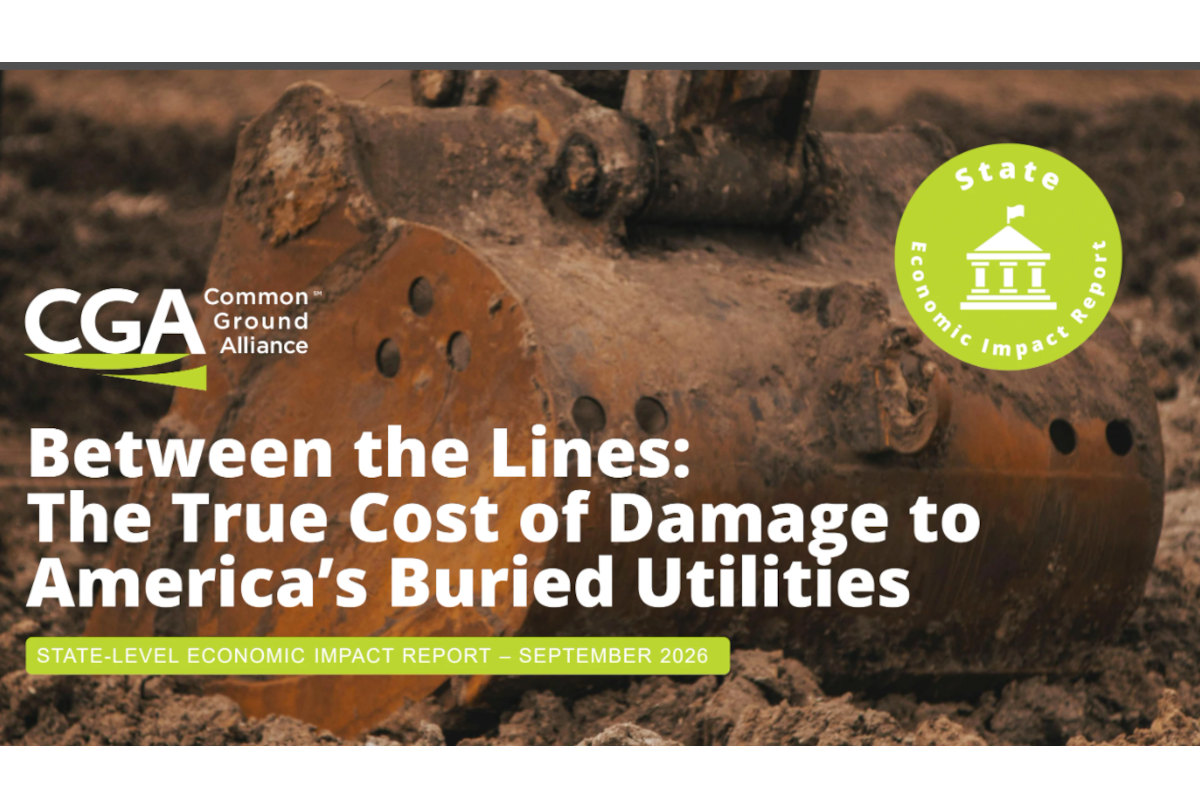
The state estimates build on CGA’s national report: Between the Lines: The True Cost of Damage to America’s Buried Utilities. The report found that direct repair costs represent just 5.9% of what utility damage actually costs the country. Accounting for the rest is business interruption, emergency response, property damage, community impact and other consequences.
The national $83.2 billion estimate applies a model to data submitted to CGA’s Damage Information Reporting Tool (DIRT) to account for damage that goes unreported and estimate the total cost of damages nationwide. The new state-level figures instead apply the economic impact model directly to the 2025 DIRT reports submitted by states with more than 25 incidents. Because DIRT reporting is voluntary, and reporting requirements vary by state, the state-level figures are a conservative floor.
“The national $83.2 billion impact number is our best estimate of the full scope of this problem. The state numbers are a floor, not a ceiling – they reflect only damages reported in 2025, but the actual cost in most states is higher,” said CGA President and CEO Sarah K. Magruder Lyle. “State lawmakers, regulators and industry partners now have a local, data-backed case for investing in damage prevention – and every one of them can start by evaluating the strength of their legislation governing excavation as well as how effectively their enforcement programs hold stakeholders accountable.”
Underground utility damage is largely preventable, but reversing the trend of rising damages requires systemic improvements. CGA’s Best Practices – developed and updated by the industry itself – offer a roadmap for excavators, facility operators, 811 Centers, locators and policymakers alike to close the gaps that lead to damage. As states and utilities invest in infrastructure, CGA urges stakeholders at every level to adopt and enforce these practices as a foundation for reducing damage.
Methodology
The report uses a rigorous quantitative modeling framework that combines 2025 data from CGA’s Damage Information Reporting Tool (DIRT), confidential interviews with CGA members and industry executives, publicly reported incidents and government data.
Costs were modeled by utility type, incident severity and urbanicity and then aggregated across five impact dimensions. The state-level estimates apply this framework to 2025 DIRT reports submitted from 46 states and Washington, D.C. States reporting fewer than 25 damages in 2025 are excluded.
Latest Posts
- 2026 Trenchless Rail Crossings Special Report
- NASSCO Report – Florida City Rehabilitates More Than 1,600 Manholes
- PG&E Files 10-Year Electrical Undergrounding Plan

- HDD Contractor Faces Tough Rock Drilling Under the Illinois River
- Vortex Companies Expands its UK Footprint

Next Up
HDD Rodeo | December 2-4, 2026 | Perry, Georgia | Learn more
HDD Academy | February 18-19, 2027 | Scottsdale, Arizona | Learn more
Microtunneling Short Course | May 4-6, 2027 | Scottsdale, Arizona | Learn more
Water Finance Conference | August 3-4, 2027 | Cleveland, Ohio | Learn more