Microtunnelling Defines Duggan Tunnel Rehabilitation
The Duggan neighbourhood is one of Edmonton, Alberta’s most established residential areas. The area sees significant volumes of daily commuter traffic. It is home to critical amenities and a dense network of utility and transportation infrastructure.
Existing sewer infrastructure in the Duggan Tunnel project area had experienced service life degradation and design issues. This caused significant odour issues due high levels of hydrogen sulfide. Stagnant pump stations limited airflow.
The system’s original design featured several drop structures, a hydraulic feature designed to control water flow. Consequently, this localized hydrogen sulfide release. These factors led to numerous customer complaints over the previous 20 years.
When it came time to replace the aging sanitary trunk sewer, advances in technology and microtunnelling construction methods allowed for a trenchless approach. This enabled the establishment of a new tunnel at a shallower elevation. As a result, the project avoided the ongoing operation of the downstream sanitary lift station facilities. It also avoided the management of odour issues from the existing tunnel.
Developing the Duggan Tunnel Project
Michels Canada, a Canada-based member of the Michels Family of Companies, designed and constructed a comprehensive, technically demanding installation of 3,200 m of 1,200-mm diameter sanitary trunk sewer beneath urban Edmonton.
The alignment included complex curved drives with a radius of 400 and 725 m engineered to navigate around existing infrastructure. The project involved rehabilitation of 260 m of the old tunnel. It also included construction of 10 access manholes and five drop manholes with nine tie-ins and interactions with existing systems. Local sewer systems would also be decommissioned that were connected to the existing in-service tunnel.
Before proceeding with project development, Michels Canada completed an assessment of the previous system to identify environmental conditions and key existing infrastructure. The existing tunnel alignment crossed through multiple sedimentary layers. It also navigated several water and gas mainlines, telecommunications and electrical conduits. These factors limited space for new installments and required strict design tolerances.
Design Strategy and Materials Selection
With these challenges in mind, the team focused on advancing a functional design of the Duggan Tunnel upgrade. Michels Canada prioritized the relocation of stormwater, high-pressure gas lines, water lines, and cable lines to ensure all tunnel shafts could be constructed in line with the final design. Given the critical performance requirements, reinforced HDPE-lined concrete jacking pipe, manholes, and fiberglass pipe for sliplining were utilized throughout the project.
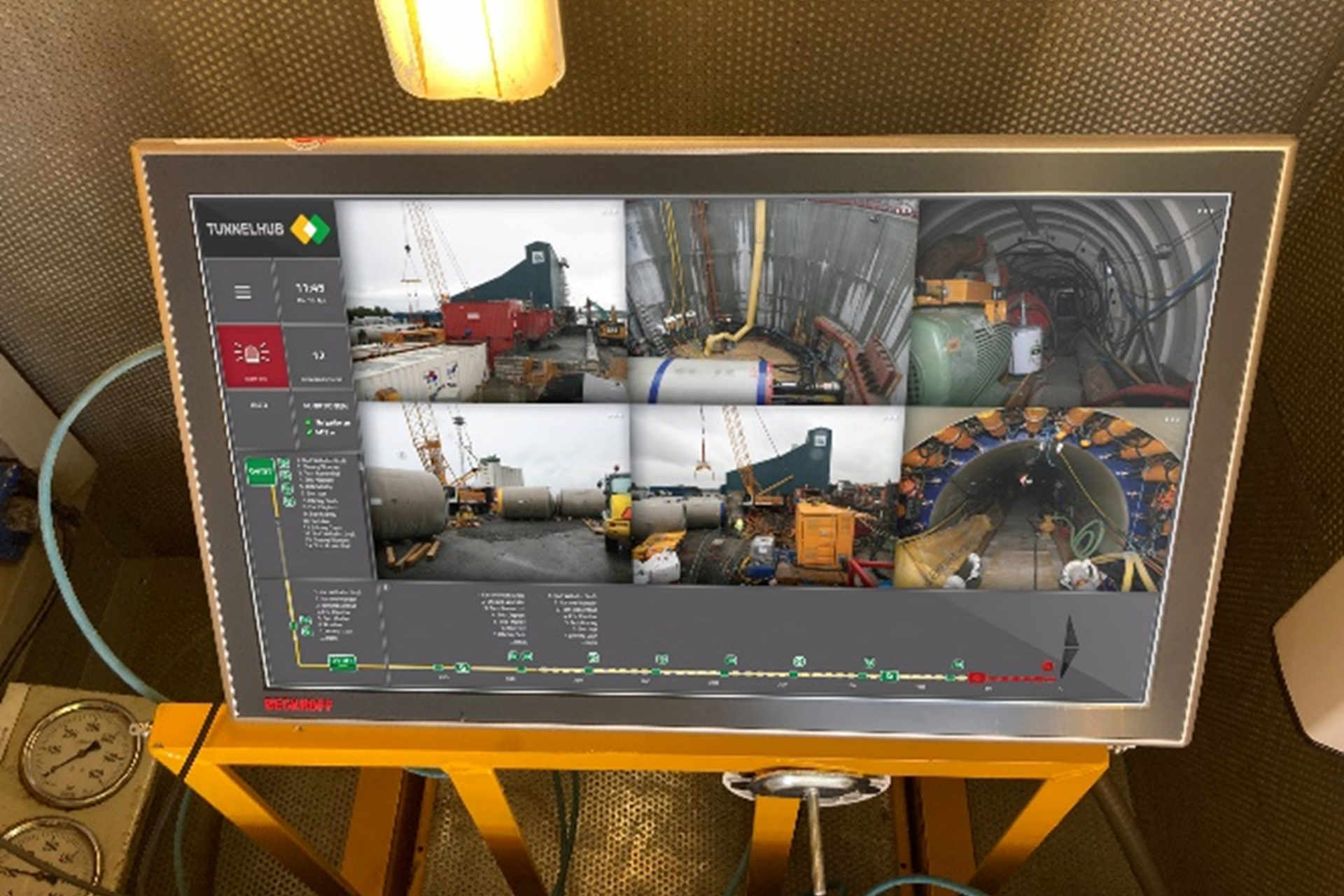
To support the volume of slurry generated during tunnel excavation and address the buildup of hydrogen sulfide, Michels Canada designed and constructed two new slurry separation plants that accommodated the various soil compositions encountered. This microtunnelling approach enabled efficient parallel progress. It also allowed for the utilization of other trenchless construction methods to address varied site constraints and rehabilitate an aging section of the sewer network.
Trenchless Construction and Rehab Methods
Steel casing was installed from the new tunnel manholes to connecting infrastructure where the casing housed PVC pipe. Internal corrosion-resistant liners were utilized on all of the pipe and manholes within the newly constructed tunnel. This effectively addressed the corrosive effects of hydrogen sulfide gas and other aggressive agents.
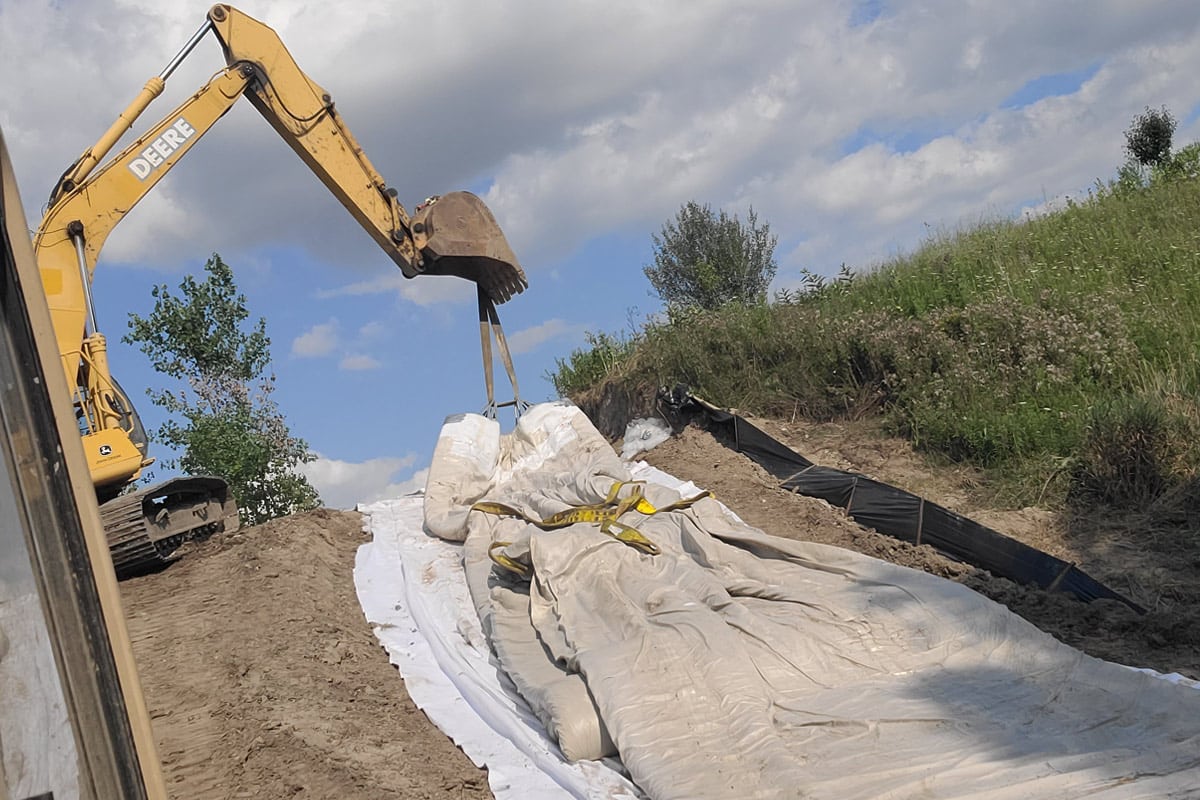
A section of the trunk line required rehabilitation rather than outright replacement, where sliplining with fiberglass-reinforced pipe presented a durable and non-intrusive solution. This solution inserted corrosion-resistant fiberglass liners into the existing pipeline. It restored structural integrity without extensive excavation.
To align with the existing tie-in pipe on the downstream end, the final connection tunnel was installed through hand mining. This is a trenchless construction method utilizing steel arches and lagging. It was implemented to manage the challenging tie-in conditions of the existing infrastructure and soil conditions.
Despite these complex conditions, Michels Canada successfully merged design and construction. This provided a single point of responsibility which streamlined communication, reduced cost, and provided added controls to keep the project on schedule.
Construction Planning, Equipment and Execution
Michels Canada mapped out activity dependencies, identified potent bottlenecks, and integrated contingency buffers into construction and project schedules. This resulted in a timeline that could flex in response to real-time discoveries while preserving logical sequence of activities.
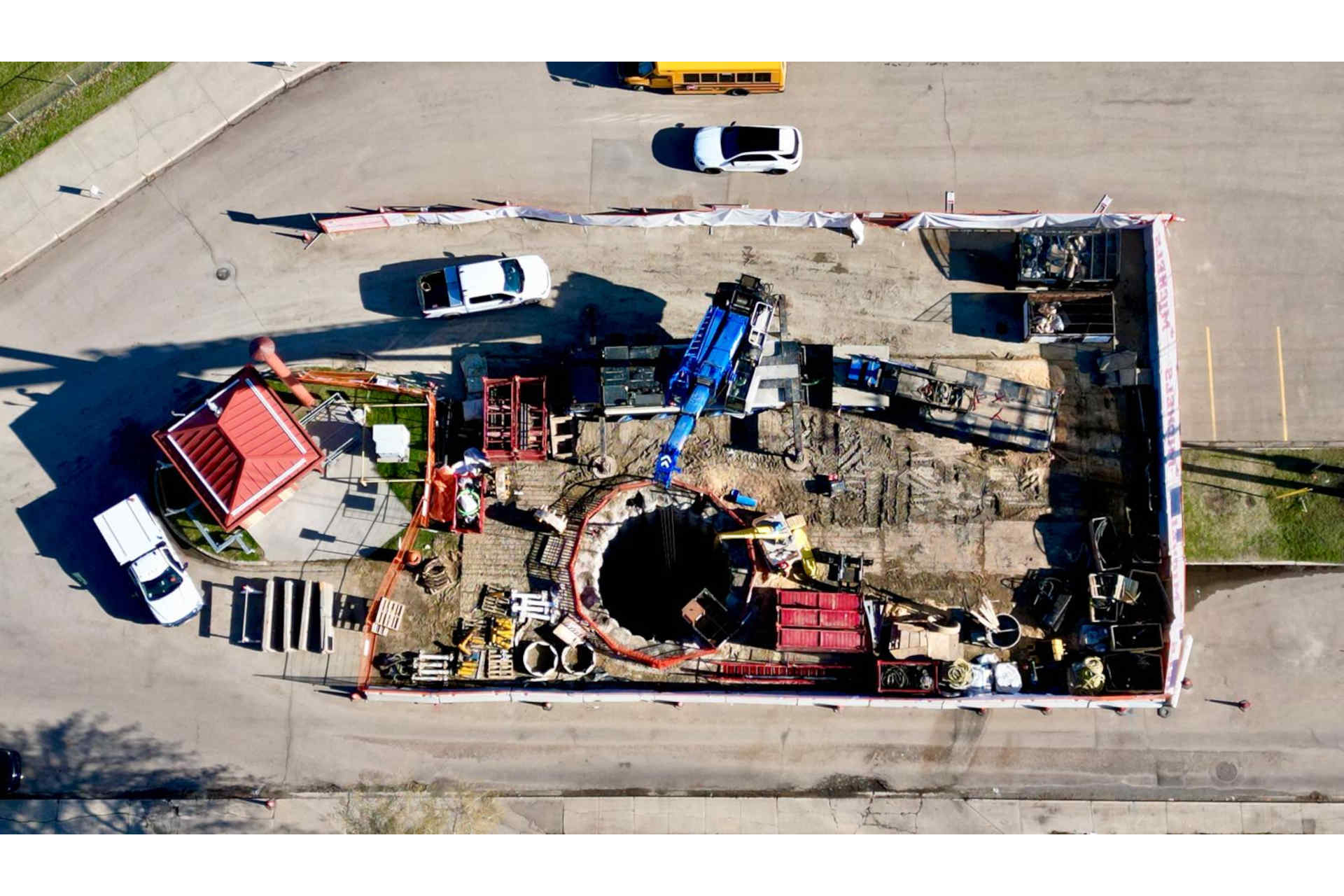
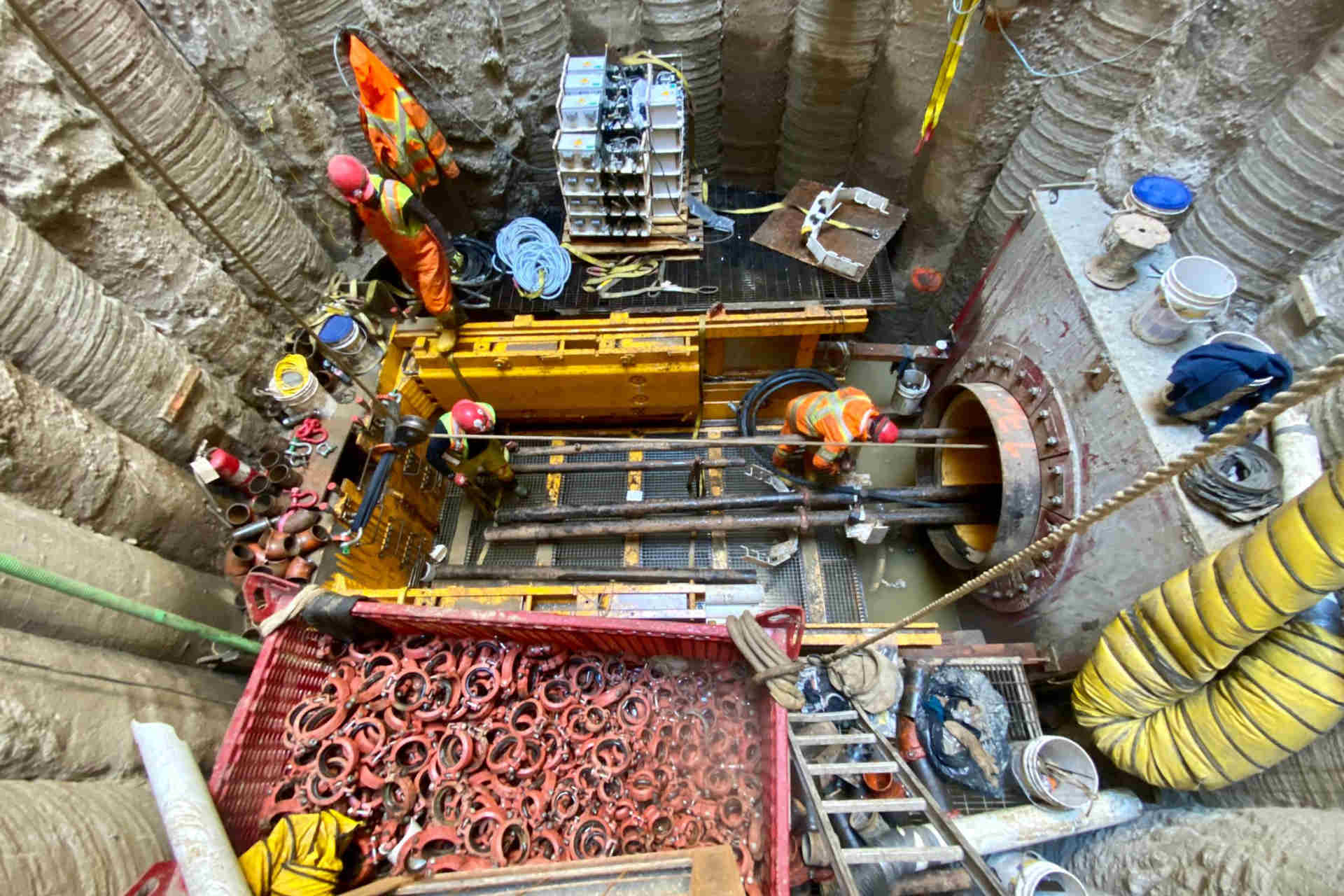
The complex nature of subsurface soils and high groundwater levels required the design to factor in plans for a potential shift and retrieval of the micro tunnel boring machine (MTBM). Dual launch and dual retrieval shafts were constructed at strategic locations along the alignment. This facilitated efficient boring operations and system connections. This enabled the crossing in challenging geotechnical zones, including several drives under highly flowable sand and a high water table.
Michels Canada procured specialized equipment — one of the most pivotal undertakings in the early phase of the project. Two custom-built AVN1200 MTBMs were acquired from Germany. These MTBMs are engineered for precision tunnelling through complex ground conditions. The procurement process allowed for a 6-month lead time for the machines to be designed, built, tested, and shipped to Canada.
Project Outcomes and Community Benefits
At project completion, Michels Canada delivered the efficient, ahead-of-schedule delivery of the rehabilitation of the existing Duggan Tunnel. The company also decommissioned the aging local sewer system that had experienced service life degradation within one of Edmonton’s most established residential corridors.
Eighteen tunnel runs were completed with an average progress rate of about 15 linear meters per day in both tunnels. The system now has an improved capacity for increased wastewater flow, mitigates odour, and ensures long-term infrastructure reliability. The project eliminated both the odour-causing mechanisms and the need for a full-time water pumping system.
Michels Canada seamlessly blended a modern design-build approach with time-tested practices to deliver safer, trenchless installation in a crowded urban setting. This approach was used with minimal disruptions to the public.
Microtunnelling techniques ensured the preservation of roads, limited surface impacts, protected groundwater, management of excavated materials, and reduction in construction materials used. These measures helped minimize disruptions to the public.
The design-build model also encouraged collaboration with the local community and proactive risk management, creating future-proof solutions. Careful planning and a robust safety culture enabled diverse crews to operate in parallel without compromising operational integrity or endangering personnel. Michels Canada worked tirelessly with the owner to implement the project with minimal impact to the six schools. These efforts contributed to this highly coordinated project in the backyard of the community.
The Duggan Tunnel project serves as a pillar of innovative infrastructure construction solutions that support the needs of today while preparing communities for the future.
Dave DeJong, P.Eng., is Director Heavy Civil, Trenchless, Michels Canada, Nisku, Alberta.