FFRP Restores Hazleton, Pennsylvania Transmission Main
A recent rehabilitation project completed for the Hazleton City Water Authority in Pennsylvania demonstrates how Raedlinger Primus Line’s Flexible Fabric Reinforced Pipe (FFRP) provided a more effective solution for restoring a critical water transmission main while minimizing environmental impact and improving long-term operational performance.
Municipal water and wastewater utilities across North America continue to face increasing challenges associated with aging pipeline infrastructure. Many of these systems were installed more than a century ago and now operate beyond their intended service life.
Traditionally, these projects have relied on open-cut replacement or a variety of sliplining methods, both of which can present significant limitations in environmentally sensitive areas, difficult terrain, congested urban environments, or locations where maintaining hydraulic capacity is critical.
Aging Infrastructure in a Sensitive Environment
The Dreck Creek rehabilitation project involved more than 10,000 lf of existing 20-in. cast iron raw water transmission main originally installed in 1915. Over time, the pipeline experienced multiple failures, leaks, and reliability concerns that eventually forced the line out of service and the construction of a new line adjacent to the old cast iron line.
Restoring the old transmission main became a priority for the Hazleton City Water Authority due to increased demand for raw water from the Dreck Creek watershed and its importance within the regional water system and future capacity needs.
The design engineer, Benesch, completed a design for the increase of the Dreck Creek Pump Station from 5 MGD to 10 MGD and relied on the rehabilitation of the old cast iron line to handle the additional flow from the pump station to the water treatment facility.
Project conditions created several unique rehabilitation challenges. Much of the pipeline alignment traversed environmentally sensitive wetlands and protected wildlife areas located within the northern mountain coal region of Pennsylvania.
Conventional open-cut replacement would have required extensive excavation, construction of access roads, environmental permitting, restoration activities, and long-term disturbance throughout the protected corridor. In addition to environmental concerns, the terrain and limited access created major logistical challenges for traditional rehabilitation methods.
The Authority and consulting engineer, Michael Peleschak, P.E., from Benesch, evaluated several rehabilitation alternatives including open-cut replacement, cured-in-place pipe (CIPP), and polyethylene (PE) sliplining. While each method offered certain advantages, the project conditions exposed several limitations that ultimately led the team toward selecting the Primus Line FFRP technology.
Limitations of Open-Cut, CIPP and PE Sliplining
Open-cut replacement would have resulted in the highest level of environmental disruption and restoration costs. Excavation through wetlands and protected areas would have significantly increased permitting complexity, project duration, and surface disturbance.
PE sliplining also presented several operational constraints, including large staging area requirements for fused pipe strings, pull-force limitations associated with long installation distances, and reduced hydraulic capacity due to thicker pipe wall dimensions.
CIPP technology, while effective in many gravity sewer applications, presented additional challenges for high-pressure transmission main rehabilitation. Typical installation lengths often require access pits at relatively short intervals, increasing the number of excavations throughout the corridor.
In environmentally sensitive areas, this increase in excavation activity can significantly reduce the environmental advantages normally associated with trenchless construction methods.
Why FFRP was Tapped
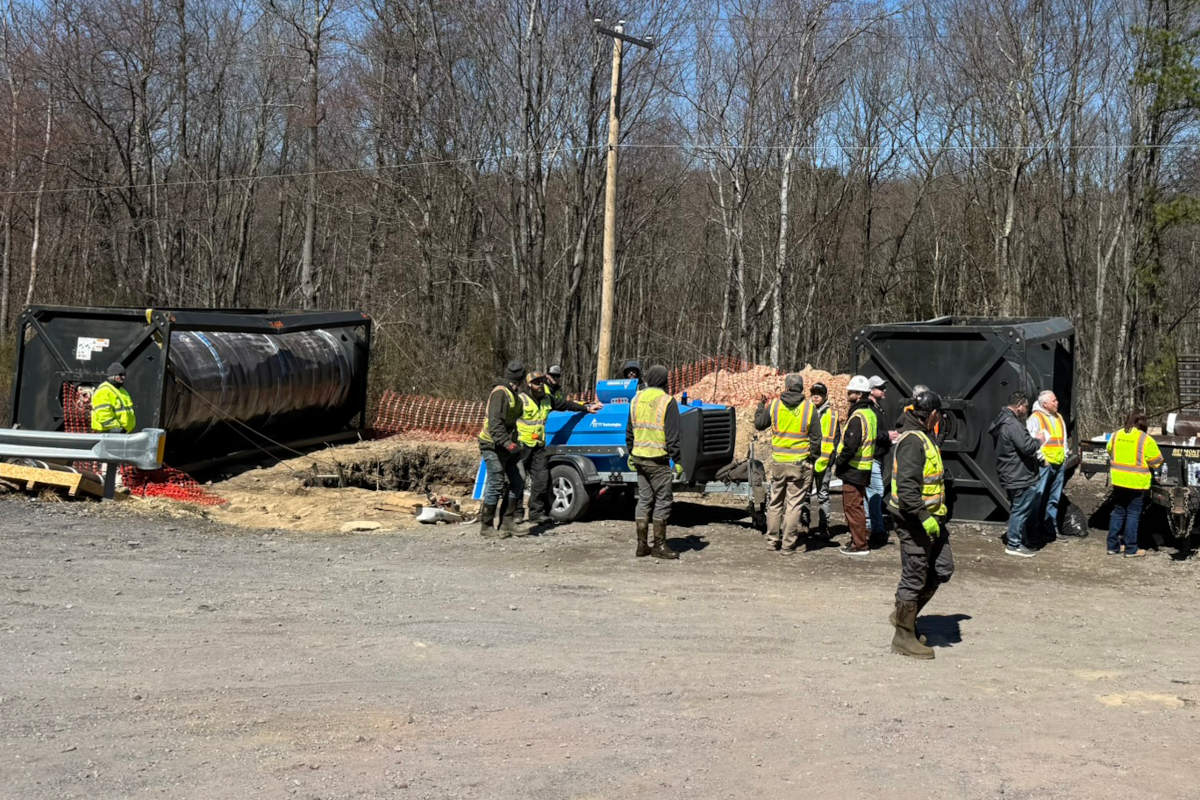
Ultimately, the project objectives highlighted the advantages of the FFRP technology. The utility required a rehabilitation solution capable of meeting a 250-psi operating requirement while increasing system capacity from 5 MGD to 10 MGD to support future operational demands and expansion planning. The selected FFRP system provided a solution capable of delivering both the hydraulic and pressure performance required by the Authority.
One of the most significant advantages of the technology is its long installation capability. The project included four separate pulls consisting of two 3,000-ft installations and two 2,400-ft installations.
These extended pull lengths dramatically reduced the number of excavation pits required throughout the environmentally sensitive easement. Fewer excavations translated directly into lower restoration costs, reduced permitting impacts, shorter construction durations, and significantly less disruption to the surrounding environment.
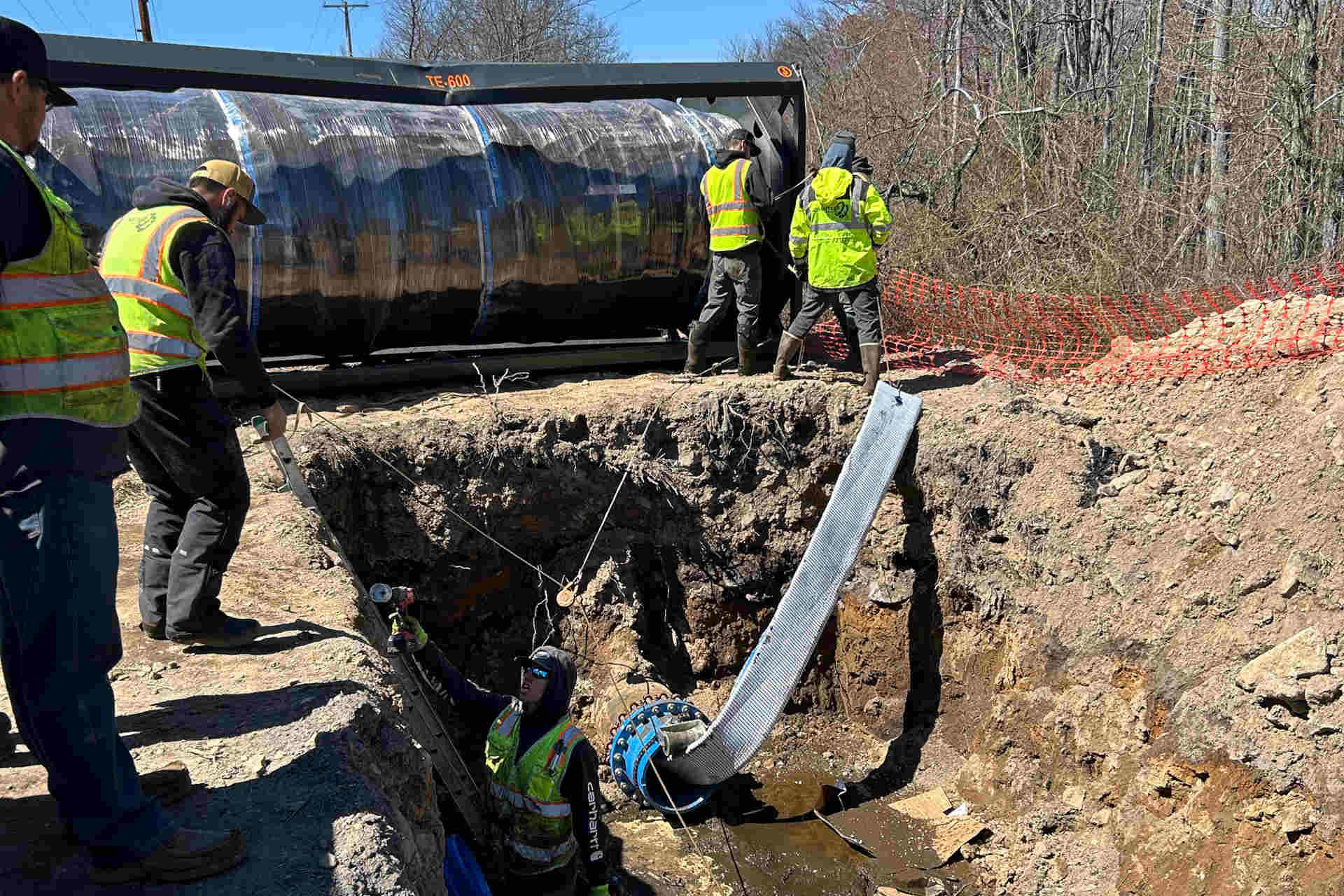
Another key advantage was the compact reel-based deployment system. Access pits measured only 10 ft by 8 ft, substantially reducing the construction footprint compared to both open-cut replacement and PE sliplining methods. Because the liner is delivered on reels, contractors can operate from compact staging areas rather than requiring long sections of fused pipe staged across the project alignment. In difficult terrain and environmentally restricted corridors, this creates substantial logistical and operational advantages.
As construction progressed, confidence in both the technology and the installation capabilities of Advantage Reline (Primus Line certified installer on this project) continued to grow. During the project, the Authority and Benesch elected to add an additional 3,000 lf of 8-in. pipeline rehabilitation for a separate offsite section that had experienced multiple failures caused by shifting coal ash fill from an abandoned reservoir.
The flexibility and pressure performance of the Primus Line system provided an ideal trenchless solution capable of navigating the challenging ground movement conditions without additional excavation.
A Growing Role for FFRP in Pressure Pipe Rehabilitation
As municipalities continue evaluating alternatives for aging pressure pipeline infrastructure, projects like the Hazleton pipeline rehabilitation demonstrate the growing role of FFRP technology within the trenchless industry.
- Compared to open-cut replacement, Primus Line reduces excavation, restoration requirements, environmental impact, and community disruption.
- Compared to PE sliplining, FFRP offers advantages in long-installation capability, hydraulic efficiency, reduced staging requirements, and high-pressure performance.
- Compared to CIPP pressure lining applications, FFRP can greatly reduce excavation frequency while maintaining full pressure capability across long distances and multiple bends.
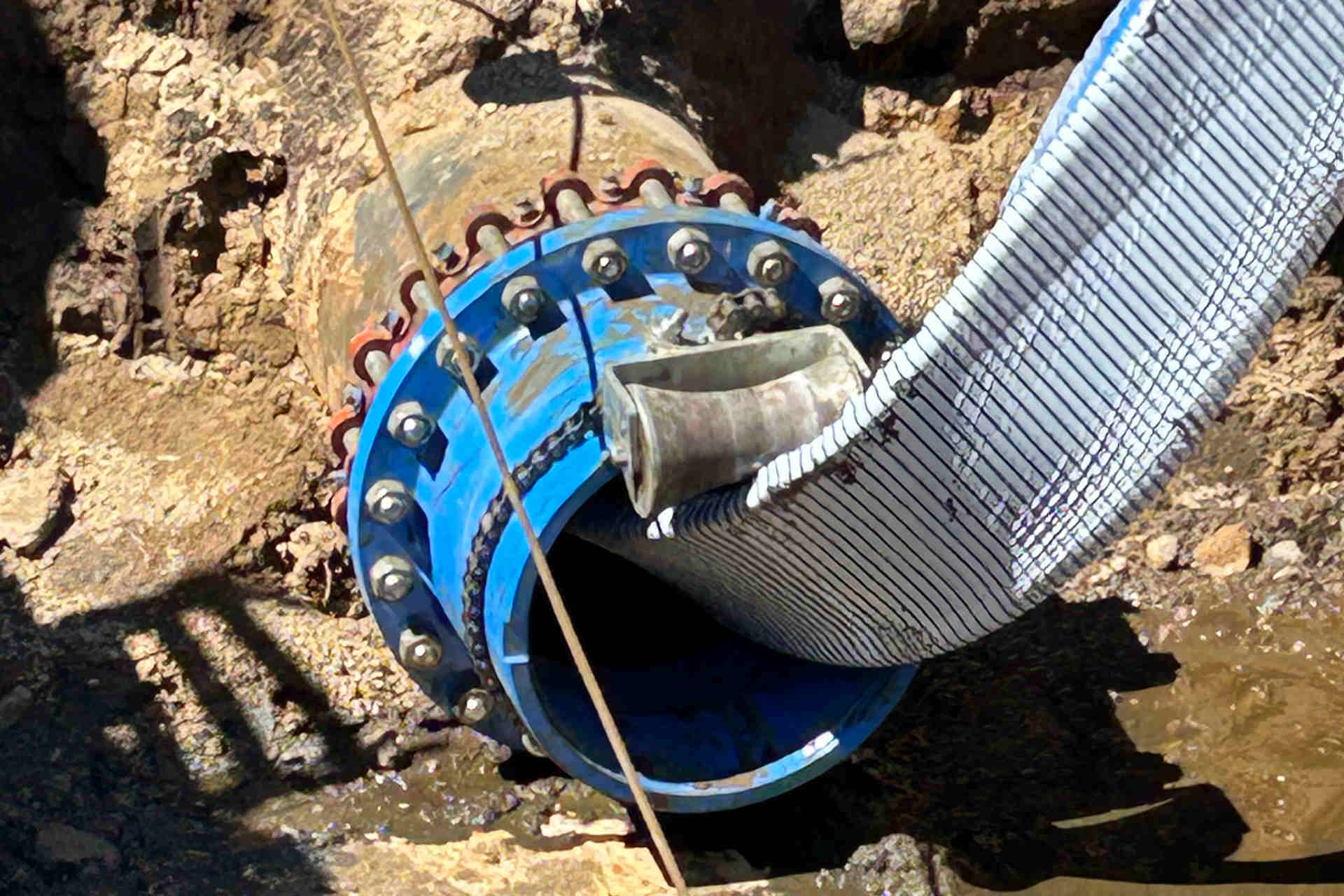
Peleschak noted that one of the most impressive aspects of utilizing this technology was the speed of installation.
“Traditional replacement of the line would have required approximately one to two months to complete; however, Advantage Reline was able to utilize the Primus Line FFRP system to rehabilitate the existing line in approximately one week,” he said. “This significant reduction in construction time was critical in minimizing customer service outages, particularly after the Authority elected to incorporate the additional work into the project.”
For utilities managing critical water transmission infrastructure in environmentally sensitive or difficult-to-access areas, Primus Line continues to prove itself as a highly effective rehabilitation solution.
By combining long pull capabilities, compact installation methods, high-pressure performance, and improved hydraulics, this rehabilitation technology allows utilities to restore aging infrastructure while minimizing environmental impact and improving long-term system reliability.
The Hazleton City Water Authority project serves as an exceptional example of how innovative trenchless rehabilitation technologies are helping utilities modernize aging infrastructure more efficiently, sustainably, and cost-effectively for future generations.
George Gerz is senior sales manager-Midwest at Raedlinger Primus Linus. David Asay is president at Advantage Reline.
Latest Posts
- MaxLiner Expanding U.S. Distribution Network
- Advantage Directional Drilling Delivers Precision on Deep Creek HDD
- 2026 Horizontal Directional Drill Rig Specs
- Product Showcase – CETCO HYDROGROUT-EZ
- Groupe ALLEN Joins Pomerleau

Next Up
HDD Rodeo | December 2-4, 2026 | Perry, Georgia | Learn more
HDD Academy | February 18-19, 2027 | Scottsdale, Arizona | Learn more
Microtunneling Short Course | May 4-6, 2027 | Scottsdale, Arizona | Learn more
Water Finance Conference | August 3-4, 2027 | Cleveland, Ohio | Learn more