Clay Inhibition: Lessons from the HDD World
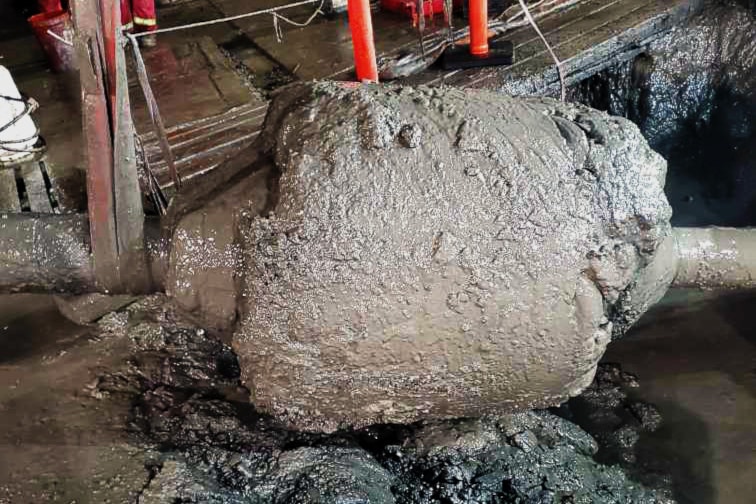
Every trenchless contractor has experienced a bore that starts smoothly, only to deteriorate once reactive clays are encountered. Torque rises, returns slow or become erratic and cuttings begin to accumulate despite adequate flow rates. Eventually mud rings form and begin choking the annulus.
In many of these cases, the limiter is not the execution. Instead, it is how the formation reacts once water-based drilling fluid is introduced.
When Reactive Clays Disrupt an Otherwise Stable Bore
Clays and shales vary widely in plasticity, moisture content, and chemistry. These factors dictate how aggressively a formation will react when exposed to drilling fluid. High-plasticity clays are among the most problematic. When hydrated, drilled cuttings swell rapidly and readily adhere to tooling and to each other.
If this behavior is not controlled, it can jeopardize a crossing. Clay inhibition is the process of chemically or physically reducing clay hydration, swelling, and dispersion. This reduction is managed to a level that supports stable drilling and predictable hydraulics.
Why Plasticity and Chemistry Dictate Clay Behavior Downhole
A recent project plan for a 1,040-ft HDD crossing indicated low-to-moderate plastic clay with intermittent sand. The crew initially ran a conventional fluid program — bentonite for viscosity and polymer for fluid-loss control — without a clay inhibitor. At first, they relied on polymer encapsulation to manage reactivity. As drilling progressed into higher-plasticity clay, cuttings turned tacky and torque climbed. Annular pressures increased as the clays swelled and tightened around the tooling.
Recognizing the trend, the crew pulled back to stabilize the hole and gradually introduced a clay inhibitor. Once circulated and a baseline concentration was established, drilling response improved. Torque stabilized in the 800- to 1,000-ft-lb range, and annular pressures relaxed. As a result, hole conditions recovered. During pullback, forces remained manageable at approximately 10,000 to 15,000 lbs. Crossing completion took eight days versus an expected 15, with clean tooling and no inadvertent returns.
Encapsulation Alone Falls Short in High-Plasticity Clays
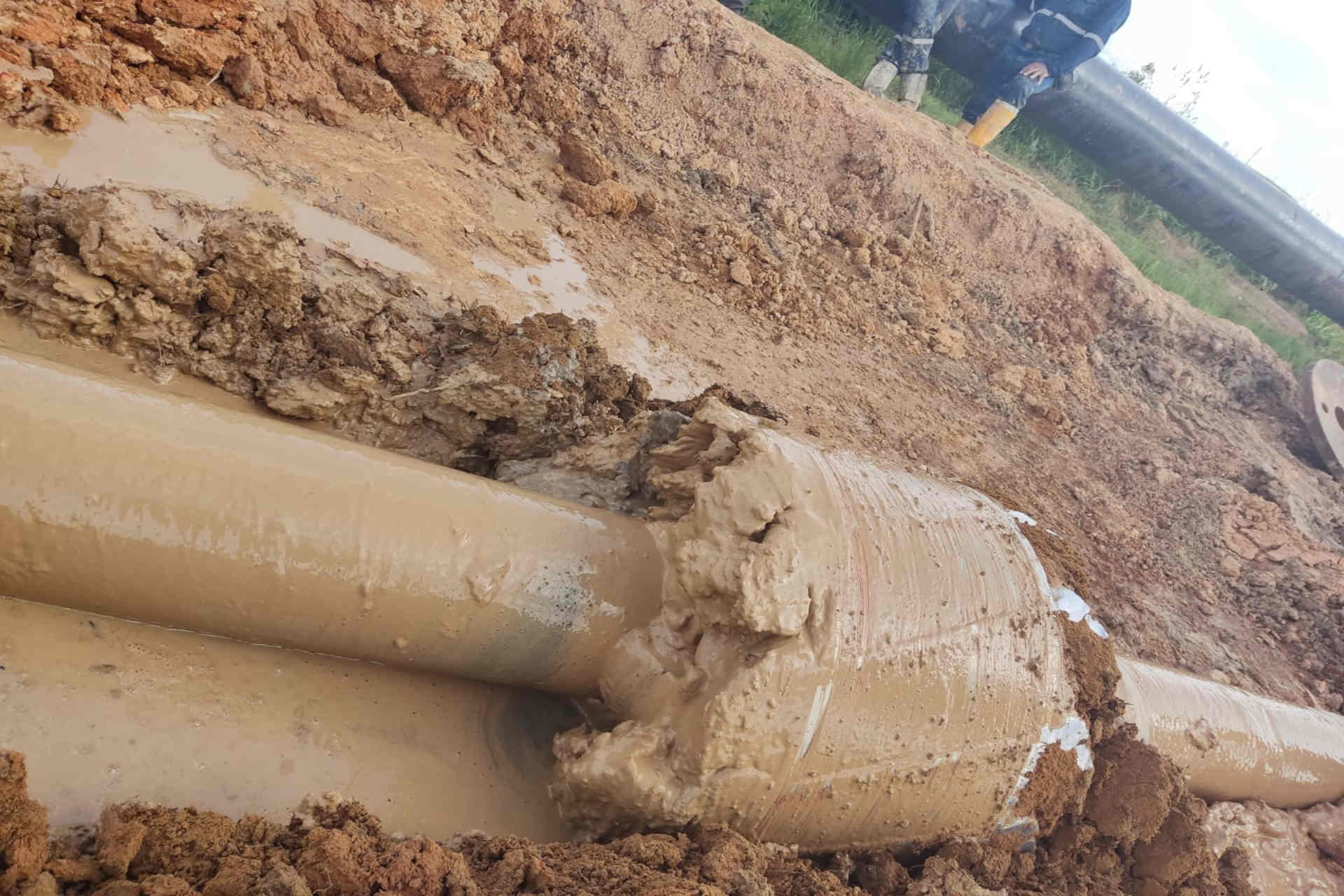
Swelling clays reduce the effective diameter of the bore, constricting flow and increasing annular pressures. This is compounded as cuttings accumulate within the now-reduced annulus. Without intervention, a full pack-off becomes more likely. The result is either an inadvertent return or a trip to surface, mechanically dragging mud rings out of the hole.
This situation highlights a common misconception in drilling fluid design. Polymers are essential in most fluid programs, but many polymer-heavy systems are labeled “inhibitive” even when the primary mechanism is encapsulation. Standard anionic polymers do not chemically suppress hydration. Instead, they coat clay particles in a low-permeability film that slows water uptake and reduces tackiness. Encapsulation helps, but it is not the same as true inhibition in highly reactive clays.
Encapsulation works by limiting the rate of water penetration into clay particles. In low to medium plasticity clays, this may sufficiently control hydration. In high-plasticity clays, hydration occurs too quickly for encapsulation alone to be effective. While polymer can reduce sticking to metal tooling, it does not prevent swelling over time.
How True Clay Inhibition Stabilizes Torque, Pressure, and Returns
By contrast, when a true clay inhibitor is introduced once reactive clays are recognized, the inhibitor interacts with clay platelets and limits water uptake into the clay structure. As a result, hydration is suppressed before significant swelling develops, and the formation remains stable even as drilling continues through high-plasticity zones. In the field, this shows up as cleaner, more granular cuttings at the shaker. Additionally, there is less gumbo buildup on screens and tooling.
Traditional inhibitors such as potassium and calcium salts have been used to control clay reactivity. These can be effective in polymer-only systems, or systems where bentonite use is minimal and filtration control is managed differently. However, these inhibitors do not distinguish between formation clays and bentonite.
Limitations of Traditional Salt Inhibitors in Mixed Formations
In crossings where reactive clays coincide with sand or gravel loss zones, this becomes a serious limitation. Bentonite plays a critical role in sealing the formation and maintaining borehole integrity. Introducing non-selective inhibitors can suppress bentonite performance, leading to increased losses, reduced hole stability, and higher additive usage.
Field experience consistently shows that the most robust clay-control systems combine both polymers and inhibitors. The inhibitor suppresses swelling at the chemical level, while the polymer encapsulates the cuttings. Together, they reduce the risk these reactive cuttings pose and can render them effectively inert in a drilling context. Inert cuttings are easier to remove and less likely to accumulate. They are also far less prone to adhering to tooling or the bore wall.
Field Indicators That Signal Insufficient Clay Inhibition
It is very important to recognize the early signs that the system is not providing the appropriate level of inhibition. Indicators include cuttings that smear or clump at the shaker, unexpected changes in return rheology, and trends in torque and pressure. Downhole pressure instability at a constant pump rate and torque trending upward connection-to-connection are reliable warnings. If these drift from baseline, the type and level of inhibition should be reconsidered. This should be done before pack-off or returns force a trip out.
Geotechnical reports are snapshots, not guarantees. Most crossings encounter anomalies that require adjustments to the fluid program. A till sampled during investigation may represent a pocket within a broader high-plasticity unit. In these cases, polymer alone cannot contend with more aggressive clays. When a dedicated inhibitor is required, implementation matters.
Implementing Inhibitors Correctly to Maintain Bore Stability
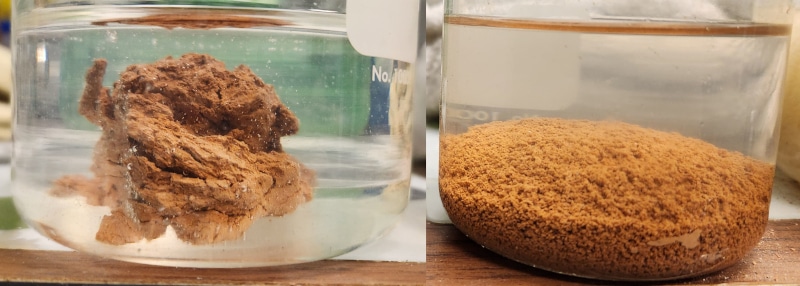
Clay inhibitors work best when used pre-emptively and introduced gradually into the active system. Rapid dumping can create localized overdose zones that “shock” the mud—destabilizing rheology, collapsing gel structures, triggering coagulation or flocculation, and producing unpumpable lumps. This risk is compounded by the mismatch between treating tank volume and total circulating volume. In these cases, an addition that looks heavily dosed at surface can become under-treated once it is diluted through the full circulating system in the bore.
In practice, inhibition must be built to a consistent background level and maintained throughout the crossing. An HDD bore behaves as a single connected hydraulic system. For this reason, any attempt to “spot treat” a short interval is quickly diluted as the fluid circulates and mixes through the annulus. As a best practice, inhibitors are best metered in over multiple circulations, with the concentration verified by a field test when possible. Torque trends, pressure stability, and shaker performance should then be used to confirm the response. This should be done before stepping up to the next ream or moving into pullback.
Clay and shale do not all behave the same, and geotechnical data rarely captures every instance of high-plasticity material along a crossing. Therefore, building a baseline level of inhibition early, then maintaining it as the bore progresses, prevents swelling before it starts and keeps cuttings from turning into gumbo.
Combined with encapsulation and good solids control, a proactive inhibition strategy stabilizes annular pressures and reduces torque spikes. It also helps crews avoid costly delays.
Brandan McGuire is global technical manager for Northstar Fluid Solutions.
Latest Posts
- Hinterland Group Marks 20 Years of Trenchless Infrastructure Growth
- Digital Bore Planning Drives Better HDD Decisions

- Trenchless Technology Canada – Association Updates Fall 2026

- Organizers Recap UESI Pipelines 2026 Successes, Look Forward to Louisville

- Rädlinger Primus Line Hosts Partner Days 2026

Next Up
HDD Rodeo | December 2-4, 2026 | Perry, Georgia | Learn more
HDD Academy | February 18-19, 2027 | Scottsdale, Arizona | Learn more
Microtunneling Short Course | May 4-6, 2027 | Scottsdale, Arizona | Learn more
Water Finance Conference | August 3-4, 2027 | Cleveland, Ohio | Learn more