6 Questions to Ask When Selecting a Pump Partner for a Sewer Bypass Project
Sewer bypass projects are often complex, high-risk challenges. When a bypass fails, the impact can be severe – service disruptions, environmental violations, public health risks and reputational damage.
Most bypass failures are caused by inadequate planning rather than pump breakdowns. This means that pump partner selection hinges on bypass design experience and comprehensive solutions capabilities – not equipment rental availability.
The following six tips can help evaluate pump partners more strategically to reduce sewer bypass risk.
1 – Does the provider have true engineering and hydraulic design capability?
One of the most common sewer bypass mistakes is treating them as temporary plumbing exercises rather than engineered systems. While pumps and hoses are only components within a much larger hydraulic and operational framework.
A qualified pump partner should bring genuine engineering capability to the table. This includes performing hydraulic modeling, assessing peak and minimum flows, accounting for friction losses, evaluating pump curves against system conditions, and identifying failure scenarios before they occur.
Contingency planning — such as planning for power outages, extreme wet weather events, or upstream blockages — should be embedded in the design, not addressed reactively.
In many cases, stamped engineering drawings may be required to meet regulatory or municipal standards. Even when they are not required, the discipline that comes with formal engineering design often marks the difference between a system that works reliably and one that struggles under real-world conditions.
A provider that only supplies equipment, without owning the design responsibility, may leave critical risk unaddressed.
2 – What is their safety and risk mitigation track record on complex or high-consequence bypasses?
Sewer bypass projects frequently take place in dense urban corridors, near hospitals, schools, waterways, or environmentally sensitive areas. Safety — for workers, the public, and the environment — must be a core competency.
A pump solutions partner should demonstrate a strong safety culture supported by documented training and procedures, such as site-specific hazard assessments, confined space protocols and traffic control coordination.
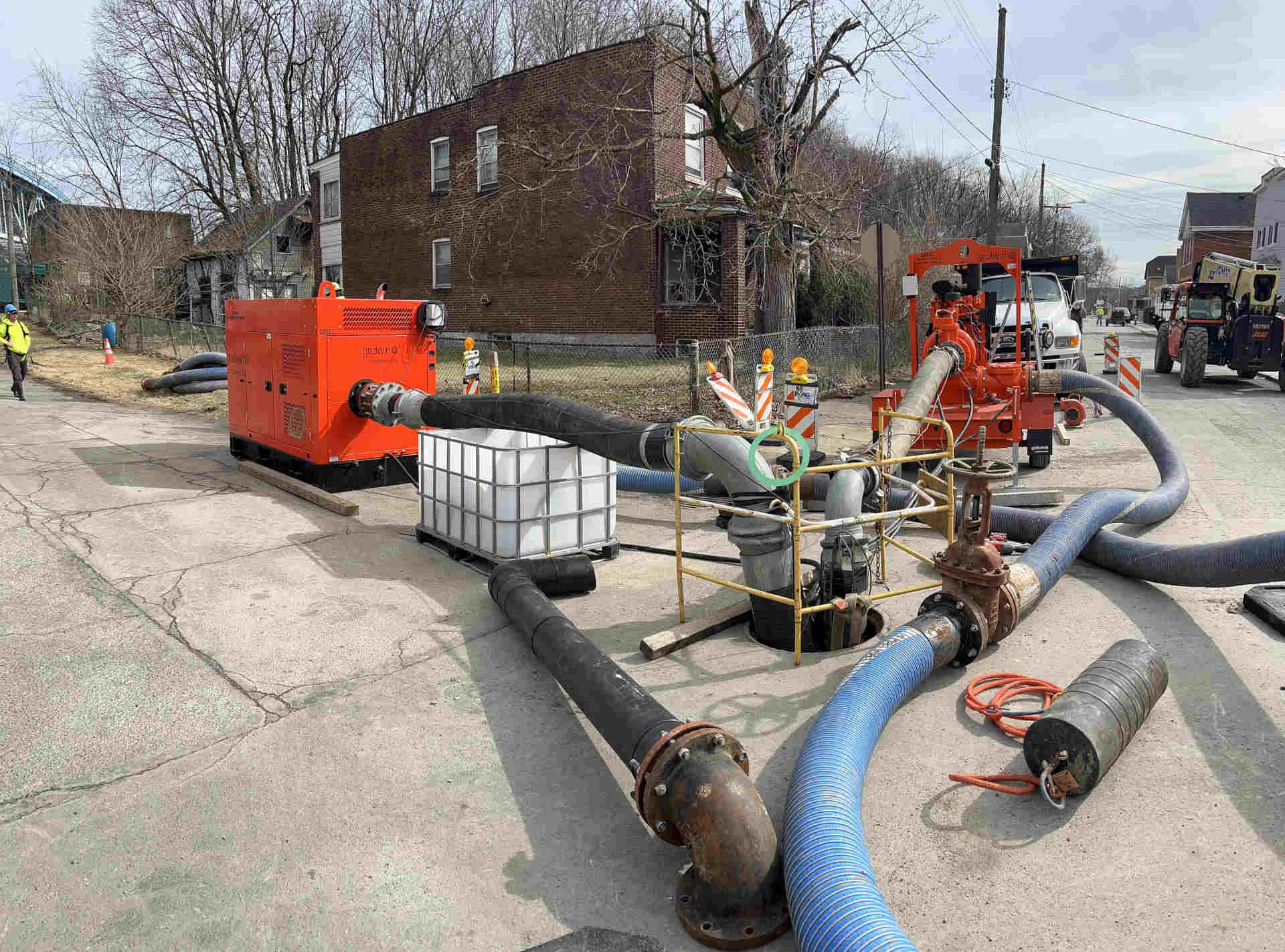
Risk mitigation also extends into system design ensuring redundancy. Standby pumps, dual power feeds, backup generators, parallel piping and real-time alarms should be standard considerations for higher-consequence bypasses. Emergency response protocols should be clearly defined, tested, and supported by personnel who are available when needed — not just during business hours.
Asking for examples of past projects, safety records, and incident response outcomes provides valuable insight into how seriously a provider treats these risks.
3 – Do they have the capability to manage odor control, water treatment and environmental compliance as part of the bypass?
Odor complaints are one of the fastest ways for a sewer bypass project to attract negative public attention. Changes in flow velocity, detention time, or aeration during bypass operations can quickly increase the generation and release of nuisance compounds.
Beyond odor, bypass projects may create discharge challenges or environmental compliance risks, particularly when flows interact with surface waters, temporary treatment setups, or dewatering operations. Regulatory exposure can escalate quickly if these issues are not anticipated.
The right partner should integrate odor control and environmental mitigation into the project scope from the outset. This may include liquid-phase chemical dosing, vapor-phase odor control systems, temporary treatment processes, or monitoring plans aligned with permit requirements.
A provider that understands these issues holistically can help municipalities avoid community complaints, fines and costly mid-project retrofits.
4 – Do they have the operational depth to execute, monitor and support the project 24/7?
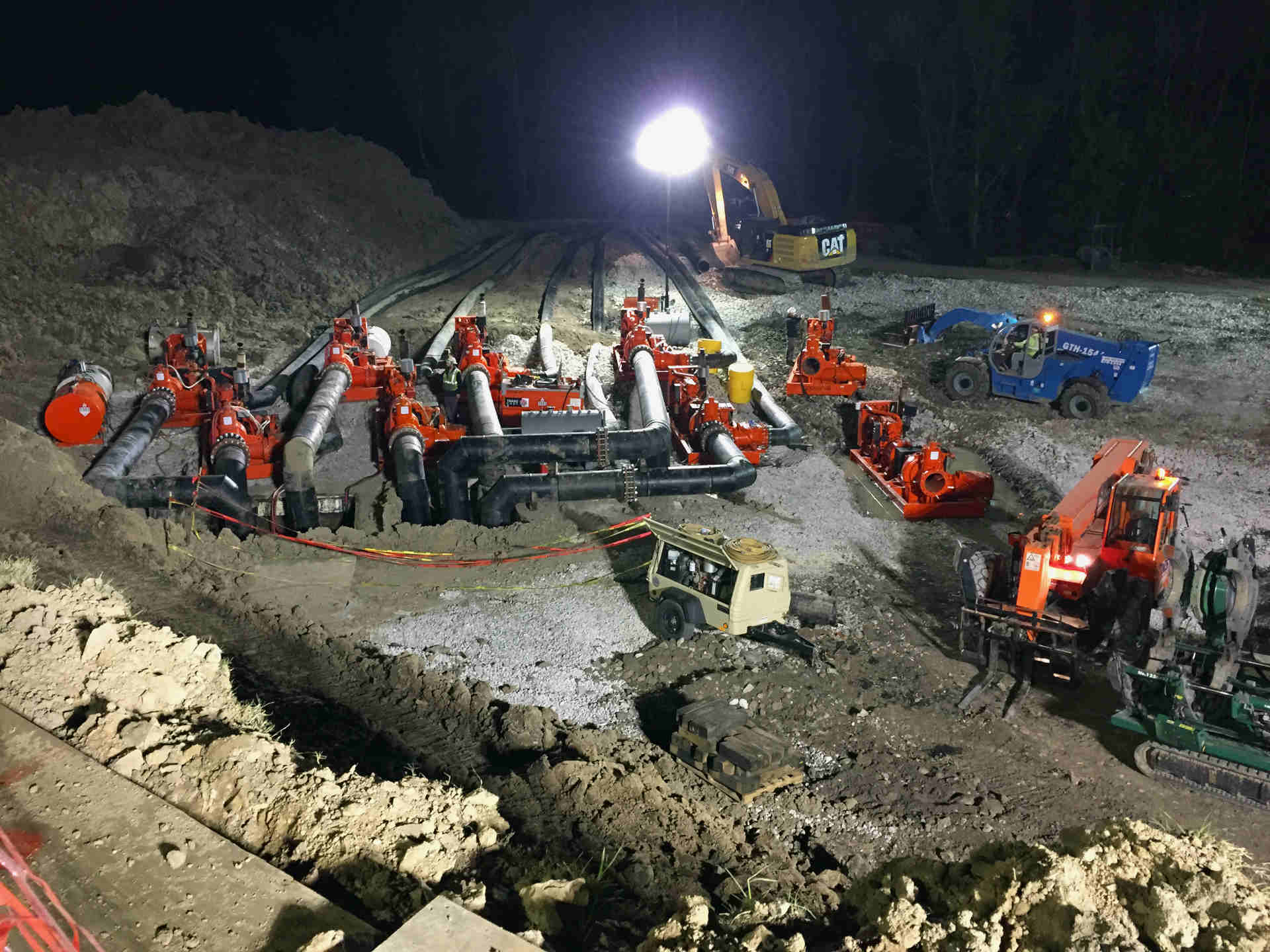
Bypass projects don’t succeed on design alone. They are operations-heavy undertakings that demand continuous attention and responsiveness. Pumps must be inspected, maintained, refueled, monitored and adjusted as conditions change.
For example, well-trained and experienced field technicians ensure problems are addressed before they escalate by continuously tracking remote monitoring data, such as flow, pressure, fuel levels and alarms.
Equally important is organizational depth. A project supported by a single salesperson or a thin local presence may struggle when unexpected conditions arise at night, on weekends, or during storm events.
Providers with dedicated operations teams, maintenance programs, and escalation pathways help ensure continuity throughout the life of the bypass.
5 – Does the provider have proven experience pumping solids-laden flows, not just clean water?
Sanitary sewer bypasses are fundamentally different from moving clean water. Real-world sewer flows include rags, wipes, grease, grit, debris and highly variable solids loading. These materials place significant demands on pump selection, screening strategies and operational planning.
Partners without deep experience in wastewater applications may underestimate these challenges, leading to frequent clogging, manual intervention and unplanned shutdowns. These issues increase labor costs, safety exposure and failure risk.
A qualified partner should have experience selecting pumps suited for solids handling, such as non-clog designs. They should also understand when upstream screening, redundancy, or alternate configurations are needed to maintain reliability. Discussions about past projects involving ragging, grease, or difficult solids offer valuable insight into whether a provider truly understands sanitary sewer realities.
6 – Can they support both temporary bypass and permanent infrastructure needs?
Temporary sewer bypasses do not exist in isolation. They are typically part of a broader infrastructure strategy that includes asset renewal, capacity upgrades, regulatory compliance, or system optimization.
The best pump partners recognize this connection and bring a long-term perspective. Providers who also support permanent pump stations, treatment systems and network improvements tend to design bypass solutions that align more effectively with future-state conditions.
This reduces handoff risk, minimizes rework and improves coordination between temporary operations and permanent construction.
Additionally, partners with broader expertise can offer insights that extend beyond the immediate bypass — helping identify opportunities to improve resilience, reduce lifecycle costs, or simplify future projects.
Choosing a Partner, Not Just a Vendor
Sewer bypass success depends on far more than having enough pumps on site. It requires engineering rigor, operational excellence, safety discipline and a deep understanding of wastewater realities.
By evaluating pump partners against these six criteria, municipalities and engineers can move beyond short-term cost comparisons and focus instead on long-term performance and risk reduction. The right partner does more than keep flows moving.
They help protect communities, the environment and the integrity of critical infrastructure when it matters most.
Latest Posts
- In Memoriam: Leo Barbera, Trenchless Technology Pioneer

- Hinterland Group Marks 20 Years of Trenchless Infrastructure Growth
- Digital Bore Planning Drives Better HDD Decisions

- Trenchless Technology Canada – Association Updates Fall 2026

- Organizers Recap UESI Pipelines 2026 Successes, Look Forward to Louisville

Next Up
HDD Rodeo | December 2-4, 2026 | Perry, Georgia | Learn more
HDD Academy | February 18-19, 2027 | Scottsdale, Arizona | Learn more
Microtunneling Short Course | May 4-6, 2027 | Scottsdale, Arizona | Learn more
Water Finance Conference | August 3-4, 2027 | Cleveland, Ohio | Learn more