
San Jose Water Touts Leak Detection Program
San Jose Water has implemented one of the largest permanent acoustic leak detection deployments in North America. It has installed 13,600 EchoShore-DX nodes across its 2,400-mile distribution network since 2018.
The system represents a comprehensive approach to non-revenue water reduction in an aging infrastructure environment. The system faces drought conditions and population growth create additional operational pressures.
System Deployment and Infrastructure Coverage
The California Bay Area utility operates a complex network consisting primarily of small diameter distribution pipes less than 16 in.. It also has larger transmission mains.
The acoustic monitoring deployment focuses on pipelines 12 in. or less in diameter. It covers diverse service areas including downtown commercial districts, industrial zones, residential neighborhoods, and semi-rural foothill communities. Most monitored infrastructure consists of ductile iron and steel pipes. There is additional coverage on cast iron, asbestos cement, and PVC materials.
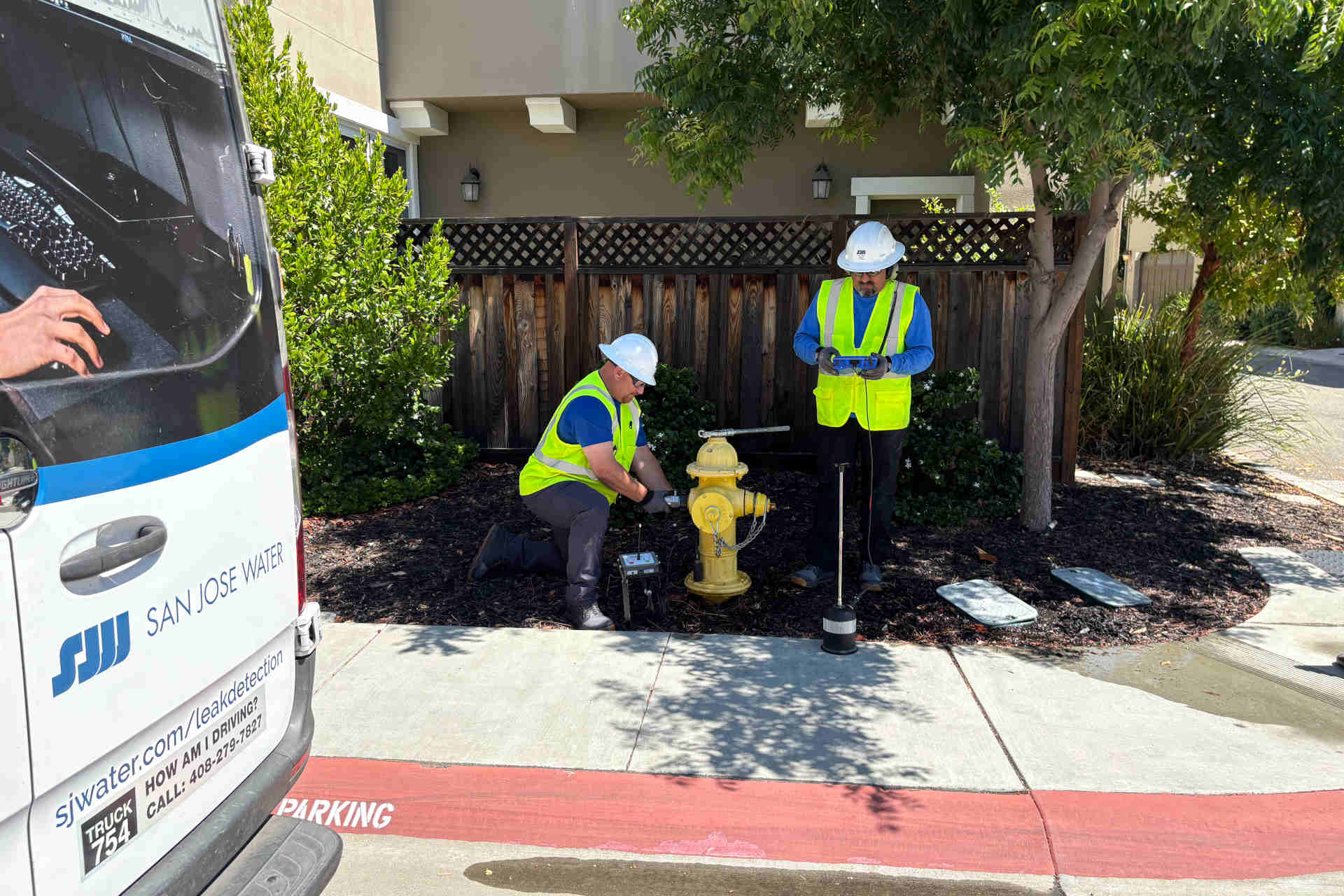
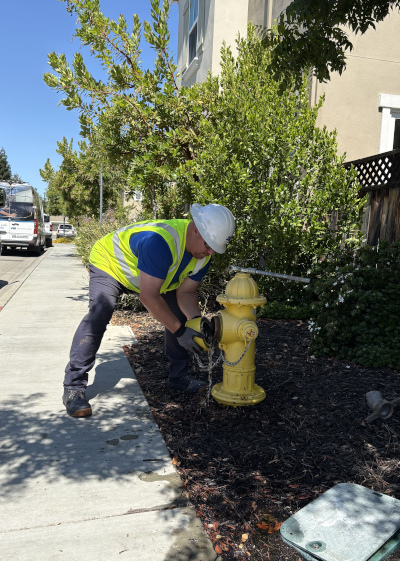
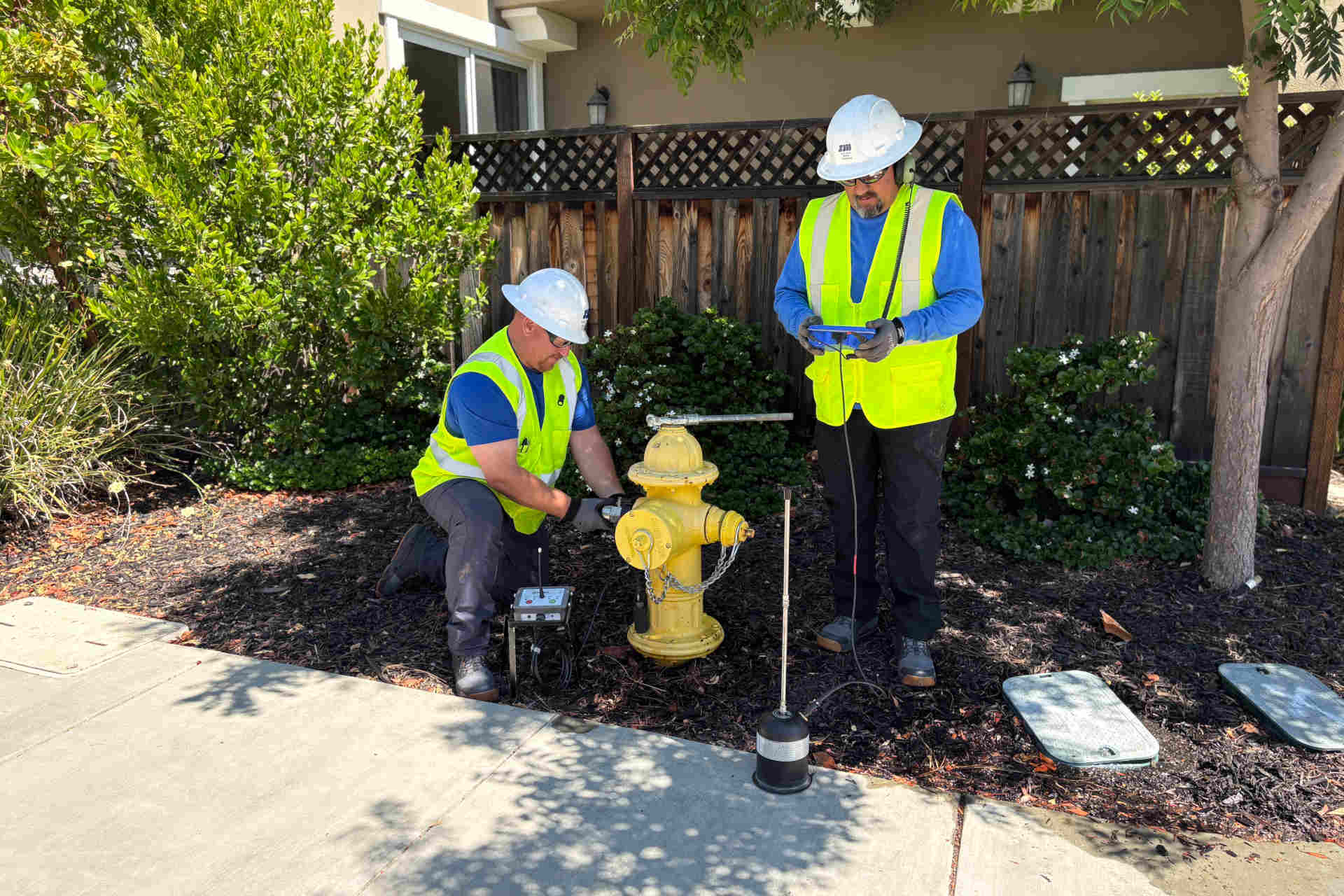
The acoustic sensors are installed on fire hydrants, providing continuous monitoring capabilities without requiring separate infrastructure or below ground installations. Each node employs advanced signal processing algorithms. They are designed to differentiate between legitimate leak signatures and acoustic anomalies that might otherwise generate false alarms. This includes normal water consumption patterns or environmental noise (rivers and streams).
Advanced statistical machine learning tools enhance detection accuracy in high-noise environments. The system processes acoustic data through machine learning algorithms. That is followed by human analyst review to identify potential leaks before field investigations are initiated.
Integration with the utility’s Geographic Information System (GIS) provides spatial context for leak alerts. This enables more efficient deployment of field crews and repair prioritization. The combination of automated detection and human verification has resulted in reduced investigation time. At the same time, it maintains detection accuracy across varied operational conditions.
Performance Results & Detection Accuracy
Performance data indicates the system has identified over 2,000 leaks since deployment began. Analysis shows 55 percent of detected leaks occurred on the utility side of the network. This includes mains, hydrants and service connections. Forty-five percent were consumer-side leaks.
During the most recent 365-day period, 483 leaks were identified and reported. This amounts to more than 400 million gallons of water saved (more than 600 Olympic-sized swimming pools). More than 60 percent of the reported leaks were detected using single sensor detected leaks within the last year.
The system has demonstrated consistent performance across different environmental conditions, maintaining low false-positive (reported alerts that are not actual leaks) and false-negative (i.e. missed leaks) rates even in areas with significant ambient noise, pressure fluctuations from diurnal demand patterns, and pump-related acoustic interference. This reliability has enabled deployment in challenging operational environments where traditional (i.e. survey based) leak detection methods might prove less effective.
Operational challenges associated with large-scale sensor deployment can include battery management across thousands of remote devices, data transmission reliability in areas with limited connectivity, and establishing workflows and maintenance protocols for sensor management and long-term system sustainability. The utility has developed procedures to address these requirements while maintaining consistent monitoring coverage.
Complementary Technologies & Predictive Analytics
San Jose Water employs multiple complementary technologies alongside the permanent acoustic monitoring system. Precision correlators are often used after a Echo-Shore-DX has identified a potential leak to verify location. Portable leak sensors offer flexibility for investigating areas not covered by permanent installations. Ground microphones enable crews to verify acoustic signatures through direct ground contact.
The utility has implemented machine learning to predict pipe leaks using AI algorithms that analyze multiple pipe characteristics including leak history, material composition, diameter, age, geography, soil type, and pressure to identify infrastructure segments with elevated failure probability. This predictive capability enables strategic sensor deployment and maintenance planning before critical failures occur.
The integration of multiple detection technologies creates a comprehensive approach to water loss management that extends beyond traditional reactive maintenance practices. Predictive analytics combined with continuous acoustic monitoring enables utilities to identify and address leaks before they develop into major infrastructure failures or significant water loss events.
Data analysis has evolved to support not only leak detection but also infrastructure asset management decisions. The acoustic monitoring system provides ongoing performance data that can inform pipe replacement prioritization, maintenance scheduling, and capital investment planning across the distribution network.
Industry Implications, Future Applications
The deployment demonstrates how permanent acoustic monitoring can be scaled across large distribution systems while maintaining operational efficiency. The combination of automated detection algorithms, human verification processes, and integrated asset management systems provides a framework for sustainable non-revenue water reduction in complex urban water networks.
Results from San Jose Water show that large-scale acoustic monitoring can effectively address water loss challenges in aging infrastructure environments, particularly when combined with predictive analytics and comprehensive asset management practices. The technology’s ability to quickly detect leaks across water systems has proven to deliver compounding benefits to utilities, their customers, and communities.
Laura Dority is regional manager for Mueller Water Products. Andy Yang is director of asset
management at San Jose Water.
Latest Posts
- In Memoriam: Leo Barbera, Trenchless Technology Pioneer

- Hinterland Group Marks 20 Years of Trenchless Infrastructure Growth
- Digital Bore Planning Drives Better HDD Decisions

- Trenchless Technology Canada – Association Updates Fall 2026

- Organizers Recap UESI Pipelines 2026 Successes, Look Forward to Louisville

Next Up
HDD Rodeo | December 2-4, 2026 | Perry, Georgia | Learn more
HDD Academy | February 18-19, 2027 | Scottsdale, Arizona | Learn more
Microtunneling Short Course | May 4-6, 2027 | Scottsdale, Arizona | Learn more
Water Finance Conference | August 3-4, 2027 | Cleveland, Ohio | Learn more