Pacific Gas & Electric Continues to Grow its Internal HDD Work
When it comes to horizontal directional drilling, Pacific Gas & Electric Co. (PG&E) holds a unique place. Not only is it a pioneer of using the methodology, it’s also one of the few U.S.-based utilities to complete the bulk of its work in-house.
But, before diving into the latter, it’s important to look at the former.
To say PG&E is a horizontal directional drilling (HDD) pioneer is selling the utility short. Many remember that Martin Cherrington completed his first HDD project in 1971. This project – often heralded as the birth of the HDD industry – brought to the forefront, a new technology for installing utilities with minimal surface disruption.
What some might not recall is that the customer who needed the line bored under the Pajaro River was PG&E.
To say the utility has grown in the ensuing years would be an understatement. And one of its crews took home the top prize at the 2025 HDD Rodeo Showcase Presented by Benjamin Media Inc. at the 2025 Utility Expo. And that crew has its eyes set on taking home the trophy again at the 2026 HDD Rodeo.
Who Is PG&E?
Incorporated in California in 1905, PG&E is one of the largest utility companies in the United States. The company provides natural gas and electric service across a 70,000-sq mile service area covering northern and central California.
More specifically, the service area goes from Eureka in the north to Bakersfield in the south, the Pacific Ocean on the west and to the Sierra Nevada mountains in the east. It has approximately 5.5 million electric and 4.5 million natural gas customers.
Its electric system covers 106,681 circuit miles of distribution line and 18,466 circuit miles of interconnected transmission lines. On the natural gas side, the utility operates and maintains 42,141 miles of distribution pipelines and 6,438 miles of transmission.
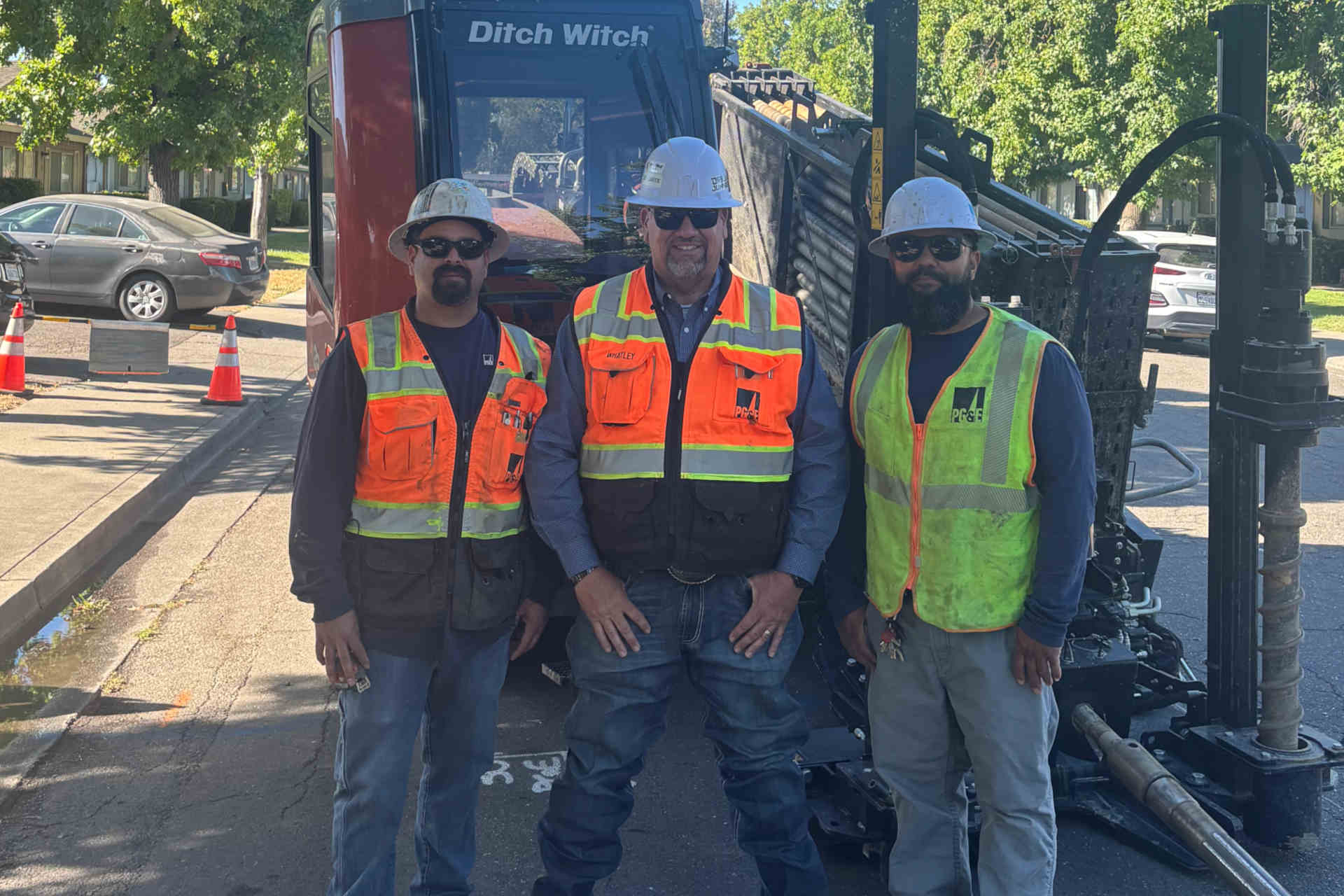
“The drills are in the Gas Department, but we do cover the gas and electric side of the house,” says Jason Whately, Working Lead M&P, HDD Lead/HDD SME.
As such, the bulk of its internal trenchless work is on the gas side. Despite this, the members of the HDD crew all agree they are seeing a shift to the same model on the electric side.
Getting its Start
From the first Cherrington bore in 1971 to 1988, any HDD work was done by contractors. However, looking to improve efficiency PG&E tested the waters by adding an internal HDD crew in 1988.
“Carl Whatley (superintendent) and Richard Amate (supervisor) started HDD in house for the first time in 1988, and Raymond Hester was the first HDD foreman and locator,” says Whatley. “They serviced the whole PG&E territory.”
The similar last names between PG&E’s first drill crew member and its current SME are not coincidental. Carl Whately is Jason’s father and Hester is his cousin.
“I’m a second-generation employee who holds the HDD program at PG&E close to heart due to these family ties,” says Whatley.
What PG&E found was that having internal HDD crews did, in fact, increase efficiency and it also brought down the cost of the projects. It also improved safety.
From 1988 to 2015, the internal program grew from one to five crews. Then things began to ramp up quickly.
The HDD Team
“Omar Macay, who used to operate a drill himself, we’re really lucky to have him as our director,” says Whatley. “He’s initiated a lot of this program.”Today,
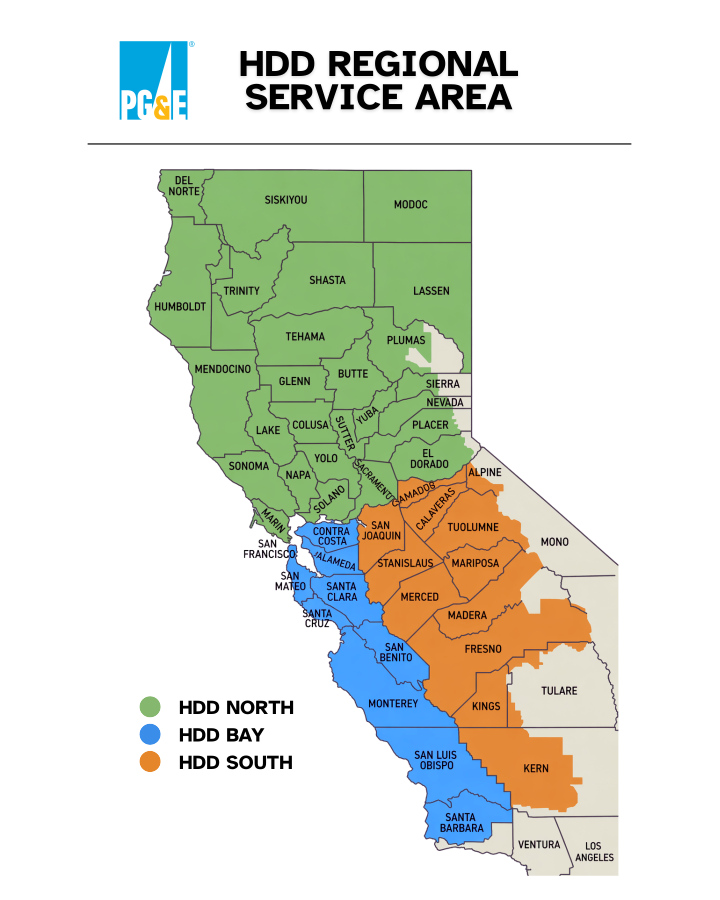
PG&E has 14, two-person crews and 10 alternate crewmembers who float over from general gas construction work as needed. The crews are divided among three PG&E regions. There are five crews in the north, six in the south and three in the San Francisco Bay Area.
Each crew maintains its own schedule. Typically, they work four, 10-hour days, Monday through Thursday.
“We had five crews just 10 years ago. We built the South up from one crew to six and took that model and went North to build that up,” says Whatley. “The Bay Area is so geographically small that those three crews can handle all the work.”
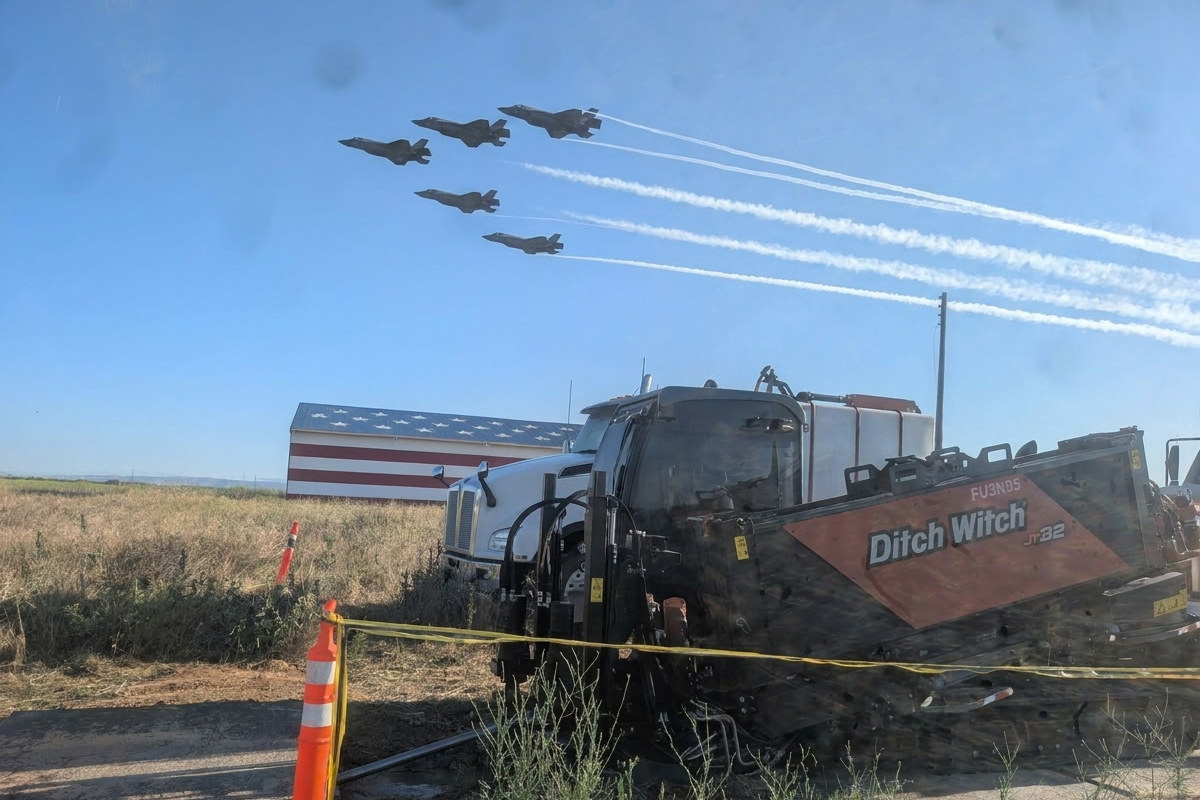
The PG&E HDD fleet is exclusively stocked with Ditch Witch, Subsite Electronics and HammerHead Trenchless equipment. The utility has six Ditch Witch JT32s, six JT28s and two JT21s to handle mainline work. And each mainline rig has a 2,000-gallon capable mud truck. For service line work, each crew has a Ditch Witch JT10. And the crews share 10 service line pipe splitters and 10 mainline pipe splitters from HammerHead.
“The North is relatively new to drilling. Their senior worker has four years of drilling experience. We’ve worked a lot in the south in the last 10 years, and I think our senior driller has 12.5 years of experience,” says Whatley. “In the Bay Area, on two out of the three crews, our senior member has more than 20 years drilling experience.”
The Talent Pipeline
Whatley notes that head count is always a challenge because PG&E’s HDD team members are by-and-large homegrown talent. They come in from the general gas construction side, typically after working at the utility for at least two years.
“We want them to get the installation experience, how our system works and how to recognize things in the field,” Whatley explains.
While it might be easier to find workers from the ranks of California’s contracting community, Whatley notes its better to train people from the ground up. “We get them in the early stages and can train them on our standards, procedures and good habits,” he says.
Training the Next HDD Operators
If a crew member is interested in being on the HDD crew the first step is a five-day manufacturers school, led by Eric Arcia, PG&E global accounts manager at Ditch Witch West. Arcia works closely with PG&E on its equipment and training needs.
The training is mandated by California and Caltrans before a worker can sit on a piece of equipment. Once they are through that training, the worker becomes a drill crew alternate with the goal of getting them at least monthly seat time on a drill rig. Additionally, the alternate crew members keep logs of when they work to ensure they get proper amount of seat time.
By Arcia’s estimate, the attrition rate of new crew members is about 50 to 55 percent, which isn’t a bad thing. “We want people who have the skillset and mindset to be on the crew,” he says. “Training on HDD is a safety thing. We want safe workers with a good head on their shoulders.”
While the training originally started at two days, it has morphed to five, and not just to get them more seat time. Arcia and Whatley note that it’s critical that HDD crew members know and understand PG&E’s standards and practices on the proper installation of gas pipelines and electrical conduits.
“Ditch Witch West has a dedicated team of support employees who work directly with PG&E to make sure they are up to date on the equipment and new technologies,” says Arcia.
Keeping Crews Up to Date
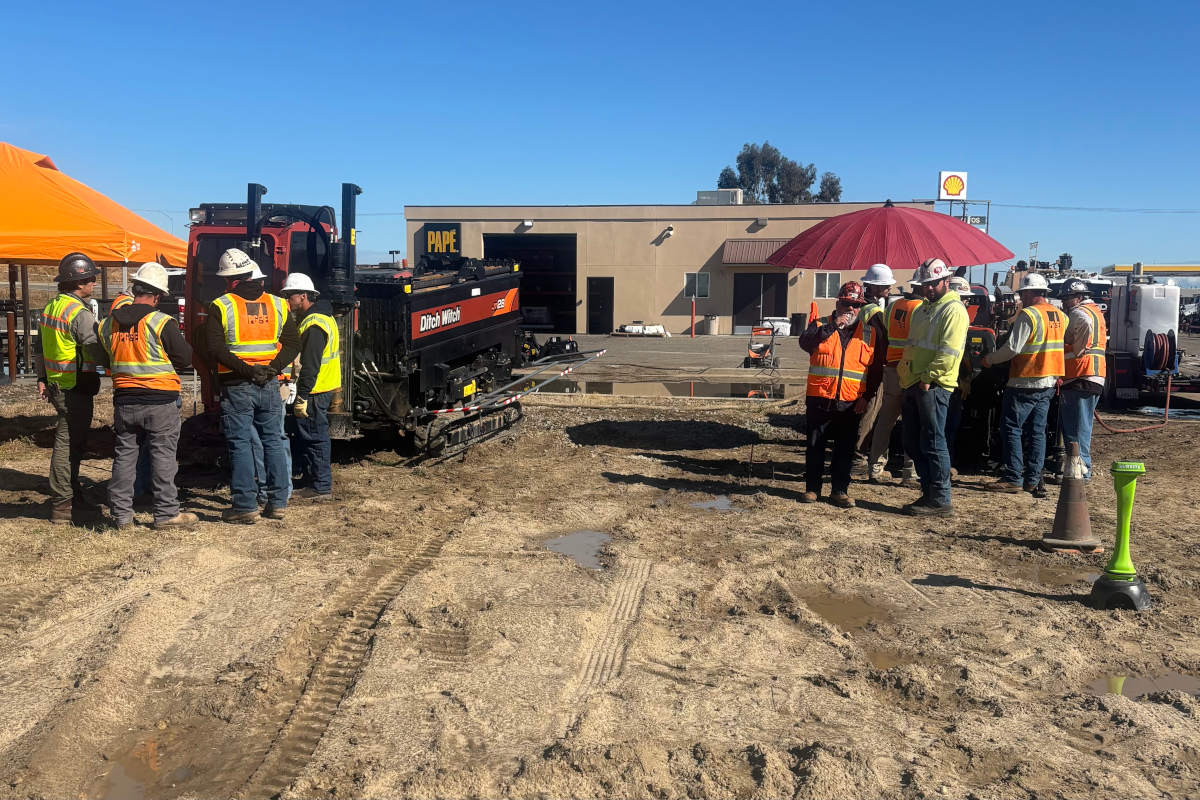
As for continuing education, Macay instituted a mandatory yearly refresher seminar where all the HDD team comes together in the same room for an eight-hour day. The session is a requirement to maintain their HDD operator status at PG&E.
“It brings everyone together in the same room. I feel like we are more of a team,” says Whately. “It expands our communication, which makes us safer and more productive.”
Additionally, Arcia is working with PG&E construction manager Manny Raquiza, Whatley and PG&E’s standards group to update the utility’s bore manual. This is to introduce new technologies, techniques and best practices that have come about since the last update.
Embracing Trenchless Beyond HDD
Beyond HDD work, PG&E’s gas department uses a combination of piercing tools, pipe splitting and pipe extraction techniques. Raquiza helped lead the pilot on the utility’s use of these techniques.
“The initial pilot project to introduce the splitting technology to PG&E took place in Paradise and Chico,” says Eric Arcia, PG&E global accounts manager at Ditch Witch West. “The pilot was to see the cost savings of pipe splitting.”
Raquiza notes that the pilot was unique because PG&E had three crews working on the project. One HDD, one trenching and his crew using pipe splitting.
“There was $1 million in costs savings between restoration and installation by splitting compared to trenching,” he says. “It was scheduled to be a one-year project and were able to complete it in nine months.”
Safety Culture
Being in California, PG&E operates under more stringent safety protocols than similar utilities in other states. But the utility embraces these protocols as they achieve better outcomes for its employees and customers.
“I’ve worked with a lot of other utilities and contractors across the nation and PG&E is the one that spends the most time and money on safety and preventing cross bores than I have ever seen,” says Arcia. “They have a fantastic preventive program. They are the ones spending the most time and money to make sure they do the work safely, productively and protect the integrity of the pipeline.”
PG&E has its own department focused on cross bores that has setup an order of operations to make sure the bore crews are working safely.
“This is a PG&E program,” says Whatley. “We had a lot of cross bore issues 15 years ago, mainly in the San Francisco area where everything is laid on top of each other. PG&E stopped everything and built its cross-bore department. Now, we find and locate everything we will cross as far as sewer and water facilities because…sewer cross bores are probably the most dangerous.”
Cross-Bore Prevention
Once a project is put into motion the gas team maps it out and where all the bores will be. A third-party contractor is brought in to locate all the underground facilities along the bore path. They complete a pre-bore camera inspection of all sanitary and storm water sewers that will be crossed.
A PG&E gas crew comes in with a vacuum excavator to daylight all the facilities that will be crossed. If the bore comes within 5 ft of a service, the contractor will come back, within 30 days of the bore, to complete a post-bore inspection to ensure there are no cross bores.
Raquiza notes that the 30-day window is narrowing and with the help of Arcia and Ditch Witch West, they are pivoting to using more internal resources. Particularly the bore crew.
“They’re completing push camera inspections when the laterals are accessible” he says. “They go in either the same day or next and make sure there isn’t a cross bore prior to gassing up the main. We are doing away with risk by doing this instead of gassing up the system and waiting for a contractor.”
Whatley notes that one addition that they are exploring is that of a dedicated vacuum excavator operator on the crew. This, he says, would help speed the verification process as well as get the alternate team members more opportunities for seat time.
Continuing its Growth
While housed in the gas department at PG&E, the HDD crews are beginning to pick up more work on the utility’s electric side. This is due largely in part to the utility’s planned undergrounding of more than 10,000 miles of lines announced in 2021.
While not all HDD work, since the program was announced in 2021, more than 1,280 total miles have gone underground. There is another 400 projected for completion in 2026.
“We were 100 percent gas two years ago and now it is slowly morphing over to the electrical duct work,” says Whatley.
While much of PG&E’s electric HDD work is contracted, Raquiza notes that the utility completed a cost benefit analysis. It found a huge costs savings for customers and improved safety if the work is done internally.
“HDD was the No. 1 method of installation for the last three years on the gas side. The cost savings went through the roof having the in-house guys,” Whatley says. “The PG&E budgets are slowly shifting to the civil side, which is the electric work.”
New Equipment to Improve Efficiency
What this shift means for the HDD crews is an update on the equipment it uses to complete the work.
Arcia says that PG&E is in the process of upgrading its HDD fleet with Ditch Witch’s All-Terrain drills. This will allow crews to shift between dirt and rock conditions essentially with the push of a button and a tooling change.
He also points to mud recyclers as a major efficiency gain for rock drilling. By reducing water use and limiting trips to refill or dump mud trucks, the recyclers are saving PG&E time, money, fuel and labor, while helping crews gain uptime.
Crews are also adding Subsite Marksman electronics and Field Scout. The latter is a pre-bore planning tool that maps the bore path and required clearances. Once loaded into the drill, Commander 7 electronics allow operators to view that plan live. This makes it easier to see, steer and manage the bore through the entire project.
“PG&E has to conduct themselves at a way higher level being in California when it comes to environmental and safety standards. I’ve worked on different fiber projects and with other utilities and the stringent standards that PG&E has to stick to, the costs are way more,” says Arcia. “But they are willing to do it to make sure it’s done right, safe and protecting the public, its employees and the integrity of the pipeline. Working with this group is eye-opening.”
Mike Kezdi is managing editor of Trenchless Technology.
Latest Posts
- PG&E Files 10-Year Electrical Undergrounding Plan

- HDD Contractor Faces Tough Rock Drilling Under the Illinois River
- Vortex Companies Expands its UK Footprint

- Sprayable Linings Used in Municipal Sewer Manhole Rehabilitation
- AEM Manufacturing Express Celebrates American Augers Workforce in Ohio
Next Up
HDD Rodeo | December 2-4, 2026 | Perry, Georgia | Learn more
HDD Academy | February 18-19, 2027 | Scottsdale, Arizona | Learn more
Microtunneling Short Course | May 4-6, 2027 | Scottsdale, Arizona | Learn more
Water Finance Conference | August 3-4, 2027 | Cleveland, Ohio | Learn more