Hilliard, Ohio’s CMOM Program in Practice
Since 2018, CDM Smith has administered the Capacity, Management, Operations, and Maintenance (CMOM) program for the City of Hilliard, Ohio.
Hilliard, with a population of nearly 40,000, is under consent decree. It is part of the City of Columbus’s USEPA 2008 Director’s Final Findings and Orders (DFFOs).
This article illustrates how Hilliard has moved from understanding legacy system challenges to implementing informed decisions. These decisions improve reliability, reduce risk, and better respond to community needs.
The foundation of Hilliard’s CMOM program was a deliberate effort to establish a comprehensive understanding of the existing collection system. This began with defining the City’s needs and reviewing prior documentation, including a previous sanitary sewer evaluation study. It also includes historical reports related to wet weather impacts and sanitary sewer overflows (SSOs). These documents provided valuable insight into known deficiencies and regulatory expectations.
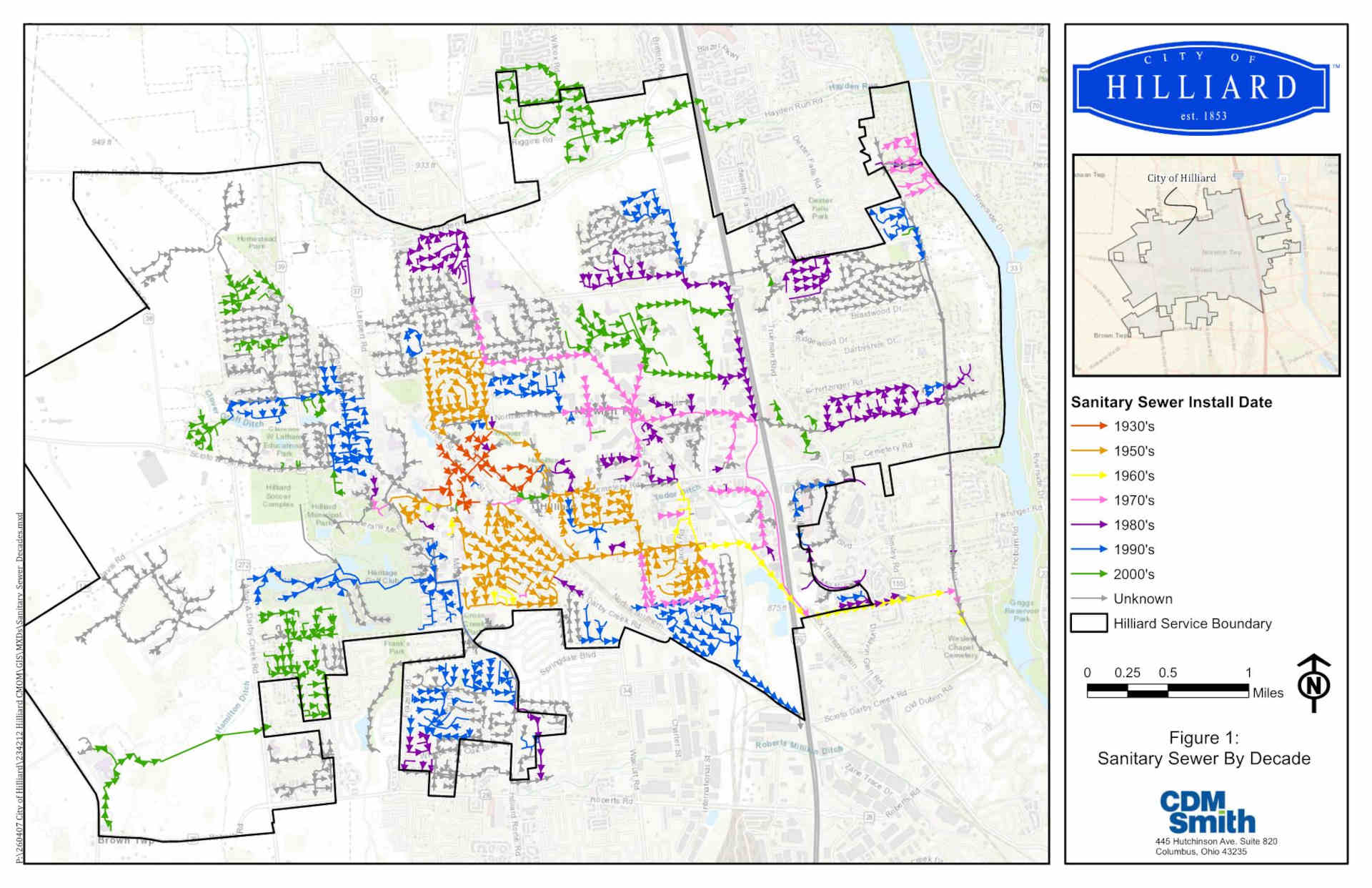
The City examined legacy cleaning and CCTV inspection data to understand pipe conditions, system age, and recurring problem areas. Mapping sewer age revealed substantial portions of infrastructure approaching or exceeding their expected service life. Thus reinforcing the need for a long-term, structured approach to maintenance and renewal. (Figure 1)
The Plan
Hilliard focused on developing a plan that was both strategic and achievable. Central to this effort was a system-wide cleaning and televising program designed to be implemented over a 10-year timeframe.
Rather than relying on one-time, large-scale projects, the City intentionally aligned the CMOM program with its established annual Capital Improvement Program (CIP) budget. This ensured financial sustainability while allowing consistent progress.
Problem areas were prioritized, enabling the City to address the highest-risk assets first. Simultaneously, innovative assessment strategies were explored to improve efficiency and reduce unnecessary costs. The City emphasized targeted rehabilitation and renewal, using condition assessment data to guide decisions rather than defaulting to widespread replacement. Contracts were developed both by priority and geographic area, allowing flexibility and responsiveness as new data became available.
Execution of the CMOM plan began in earnest in 2019. It continues annually through a series of cleaning, televising, and rehabilitation projects.
2019
The 2019 cleaning and televising project covered more than 54,000 lf of sanitary sewer. These range from 8- to 24-in. diameters,. The work was completed at a bid price of approximately $220,000. This initial effort set the stage for future projects by filling critical data gaps.
2020
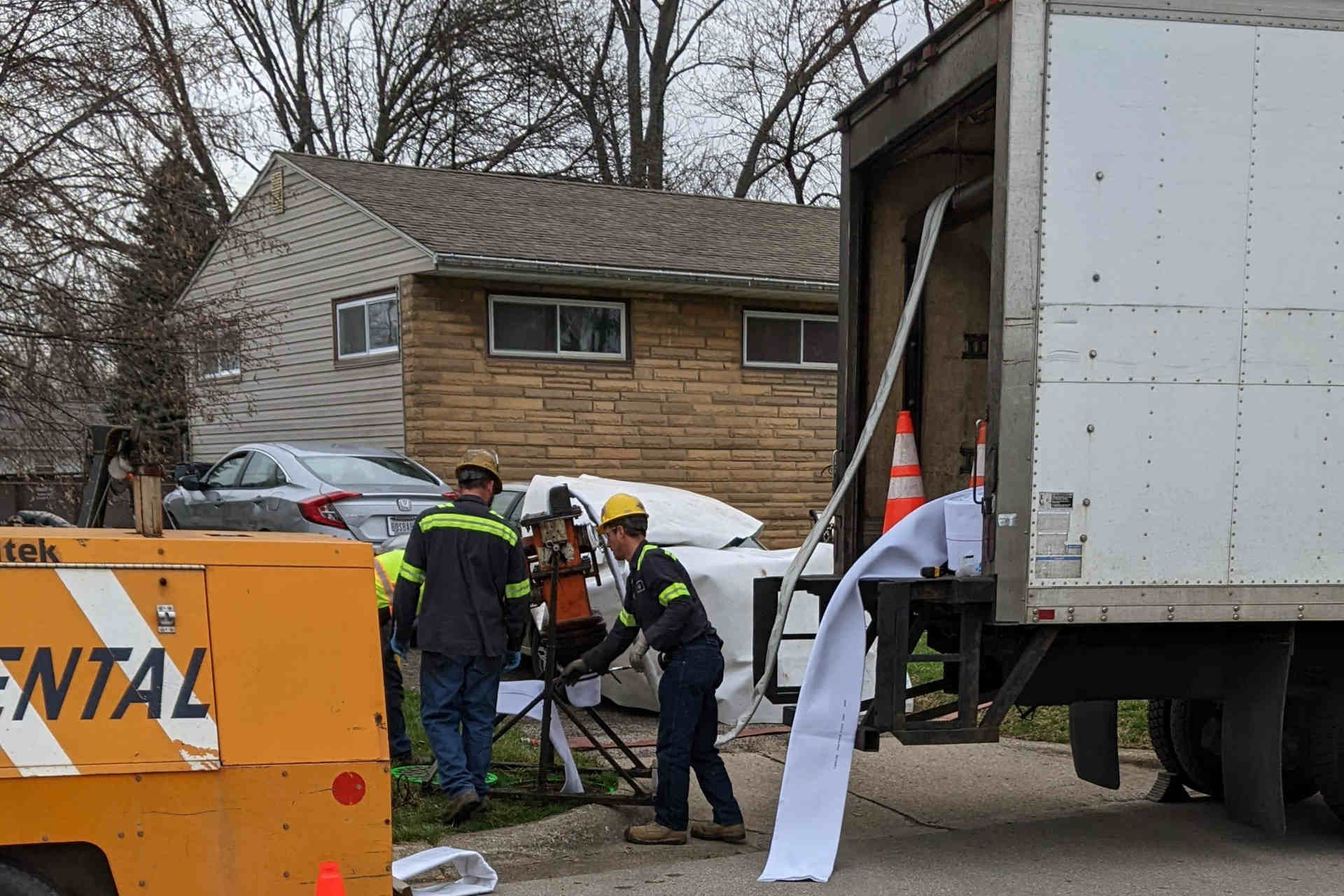
In 2020, the City expanded its cleaning and CCTV work while also initiating cured-in-place pipe (CIPP) lining projects. One notable 2020 CIPP project involved a 30-in. sanitary sewer located in a high-traffic area with a history of previous collapses. By rehabilitating this pipe proactively, the City reduced the risk of a costly emergency failure.
2021
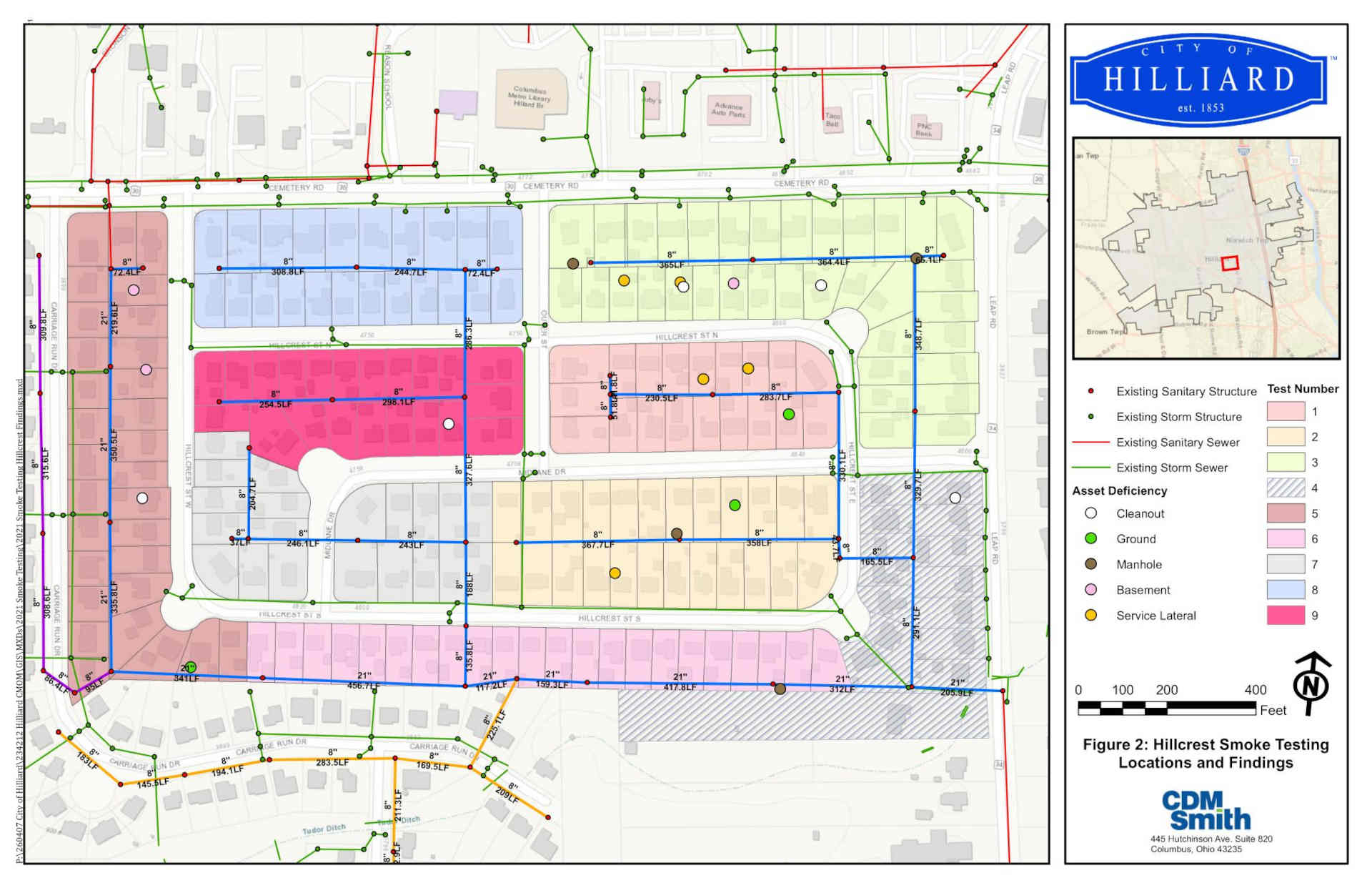
The momentum continued in 2021 with additional CIPP lining, targeting sewer segments identified through legacy CCTV data and a known history of basement backups. Smoke testing was conducted in areas with high wet weather impact identified through customer complaints. Approximately 9,500 lf of sewer and 211 residential parcels were evaluated, helping to pinpoint sources of inflow and infiltration contributing to system stress. (Figure 2)
2022-2023
In 2022, Hilliard attempted to refine its condition assessment approach by conducting pre-screening using an acoustic pipe assessment tool. Pipes that scored below a defined threshold were selected for cleaning and inspection. The 2023 CIPP lining project was planned to rehabilitate more than 3,600 lf of 8-in. sanitary sewer, with additional work proposed as an alternate bid in the same area previously evaluated through cleaning, CCTV, and smoke testing.
2024-2025
In 2024, after cleaning and televising the majority of the vitrified clay pipe in the City, a control project of cleaning and televising PVC pipe from the 1980s was designed and bid. An additional 35,000 lf of PVC sewer was cleaned and televised. As expected, the PVC was in good condition giving the City the peace of mind to continue to concentrate on maintenance activities in the older, high-priority areas of the City. In 2025, 2,500 lf of VCP sewer was lined in the highly populated downtown area, prone to inflow and infiltration.
The CMOM program also demonstrated flexibility in responding to immediate challenges. In 2020, Hilliard experienced several significant wet weather events, including rainfall totals exceeding four inches in a single day. These storms highlighted the vulnerability of certain areas to water-in-basement reports (WIBs) and prompted the City to take additional action.
At the City’s request, staff researched residential backflow prevention programs as a mitigation strategy. This effort included developing a comprehensive overview report, homeowner questionnaires, inspection forms, and participation agreements. Findings were presented to City Council, and upon approval, the program was implemented.
Under the program, homeowners complete a questionnaire, City staff inspect residences for inflow sources, and participants agree to program terms. Approved homeowners are eligible for reimbursement — up to $5,000 — following installation of backflow prevention devices. Since inception, eight installations and reimbursements have been completed, providing targeted relief to residents while reducing stress on the collection system during major rain events.
The final component of Hilliard’s CMOM program focuses on sustaining progress and adapting to new information. The City remains committed to meeting the requirements of its DFFOs, submitting annual WIB and SSO reports, preparing biennial CMOM progress reports, and continued development of systems to access and manage new data.
Future Efforts
Future efforts include enhanced use of GIS tools, such as linking CCTV video directly to mapped assets, updating rehabilitation data within the GIS, and maintaining a flow monitoring database. These tools will allow staff to track system performance more effectively, evaluate trends over time, and refine priorities as conditions change.
Since the inception of a prioritized CMOM program, Hilliard has cleaned and televised approximately 200,000 lf of sanitary sewer and lined 12,500 lf of sanitary sewer. Hilliard has also decreased WIBs and SSOs through proactive cleaning and rehabilitation.
Hilliard’s CMOM program demonstrates how a methodical, data-driven approach can transform the management of a sanitary sewer system. By establishing knowledge, then developing and executing a realistic long-term plan, and finally responding to regulatory requirements and community needs, the City has built a program that balances proactive maintenance with practical execution.
As Hilliard continues to move forward, its CMOM framework provides a solid foundation for protecting public health, managing infrastructure responsibly and planning for the future.
Drew D. Richards, P.E., PMP, is CDM Smith’s project manager in its Columbus, Ohio office.
Latest Posts
- Product Showcase – CETCO HYDROGROUT-EZ

- Groupe ALLEN Joins Pomerleau

- Failure Analysis of Drill Rod Fracture During Large-Diameter HDD Pipeline Reaming
- No-Dig North 2026 Preview – Heading to Calgary

- Contractor Profile – SKE Construction
Next Up
HDD Rodeo | December 2-4, 2026 | Perry, Georgia | Learn more
HDD Academy | February 18-19, 2027 | Scottsdale, Arizona | Learn more
Microtunneling Short Course | May 4-6, 2027 | Scottsdale, Arizona | Learn more
Water Finance Conference | August 3-4, 2027 | Cleveland, Ohio | Learn more