Selecting the Right HDD Tooling Based on Ground Conditions
Horizontal directional drilling (HDD) continues to be one of the most efficient and minimally invasive methods for installing underground utilities. But the success of any HDD project rests heavily on choosing the proper tooling for the ground conditions.
The right bit, reamer, and support equipment determine not only whether the drill head stays on line, but also whether production stays efficient and costs remain controlled. Misaligned HDD tooling choices can lead to lost tooling, stuck pipe, excessive wear, or even a failed bore.
Understanding Ground Conditions
Before any tooling selection can take place, it’s essential to understand the geology of the bore path. Soil conditions are typically divided into three broad categories:
- Soft Soils: clay, silt, loam, organic materials
- Mixed Soils: combination of soft soils, gravel, cobble, and small boulders
- Hard Soils & Rock: sandstone, limestone, shale, granite
Tooling for Soft Soils
Soft soils may seem simple to drill in, but they still demand the correct tooling. Clay-heavy ground can pack onto tooling, while sandy soils may collapse or cause instability.
Recommended Tooling
- Steerable Dirt Bits: Large carbide teeth, open flow paths, and aggressive steering plates work best. These bits allow for quick corrections and higher rotation speeds.
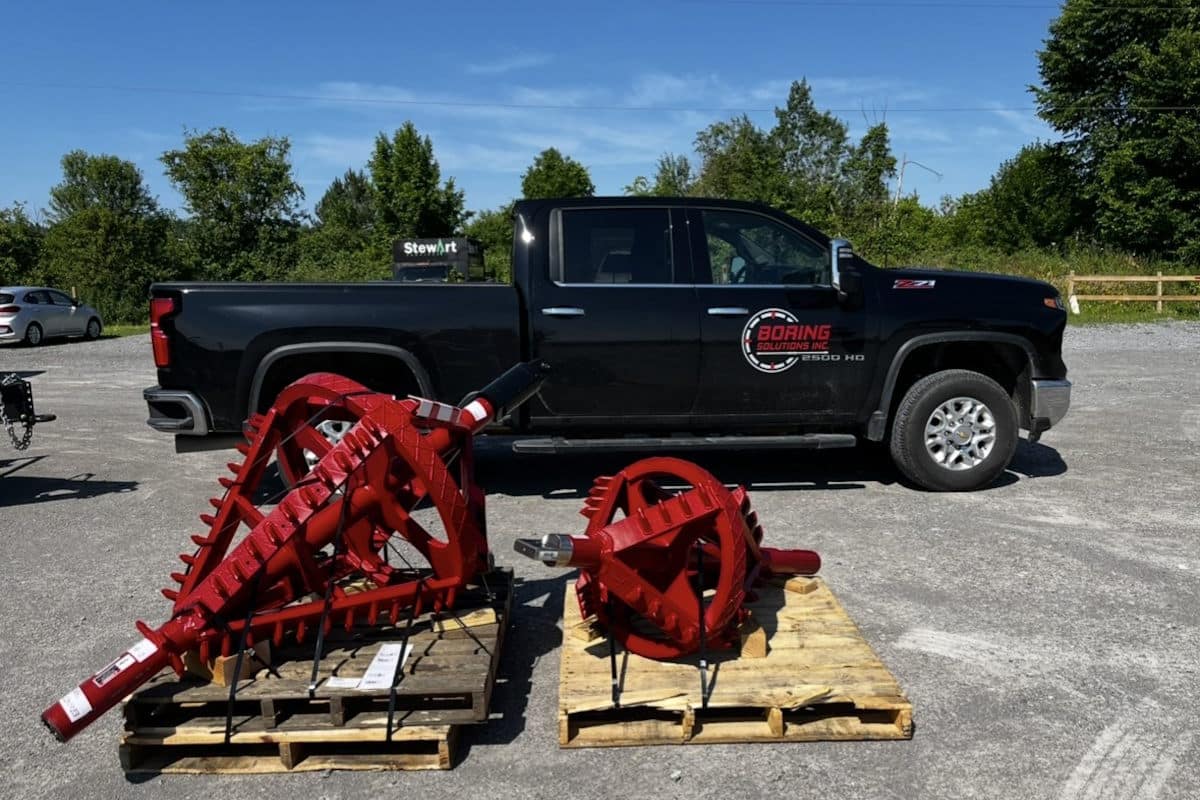
- Open and Wing Style Reamers: In clay, these help shape the hole without over-cutting. The open wing style reamer such as Melfred Borzall’s Tornado reamer are light weight and offer incredible cutting and mixing action. It is important to mix the soil with your drilling fluids so that the cuttings can be easily pumped out of the bore hole.
Operational Considerations
- Maintain high flow to keep soft material suspended.
- Avoid over-rotating in clay; heat buildup can cause balling.
- Use drilling fluids with clay inhibitor and run a detergent to stop clay from sticking to your tooling.
Tooling for Mixed Ground Conditions
Mixed ground conditions challenge even experienced HDD crews. Gravel, cobbles, and small boulders introduce unpredictability, and tooling must be durable enough to withstand impacts while still maintaining steerability.
Recommended Tooling
- Cobble Rock Bits: A high-performance cobble bit uses a reinforced, heavy-duty body equipped with strategically positioned carbide cutters or conical teeth. These cutters are designed to fracture and displace individual cobbles rather than attempting to grind them like solid rock.
- Stack Plate Reamers: Strong, versatile, and designed to shed cobbles rather than trap them. Stack plate reamers are heavier than conventional fluted reamers. Their added weight gives them increased inertia which aids the tool in destroying everything in its path. Lots of teeth and deep flutes let the tool cut a displace soil much quicker than a conventional fluted reamer.
Operational Considerations
- Reduce rotation speed to prevent tool damage in rocky sections.
- Increase drilling fluid volume to float debris out of the hole.
- Use patience when drilling in mixed ground conditions and get your front and rear locate points more often to ensure you are still on the intended bore path.
Tooling for Hard Soils & Rock
Rock drilling demands specialized tooling designed to cut, grind, or fracture the formation. Tool durability and the ability to maintain steerability are key.
Recommended Tooling
- Tri-Cone Bits: Effective in softer rock formations. They provide consistent cutting action and can handle variations in hardness.
- PDC Bits (Polycrystalline Diamond Compact): Best for medium to hard rock with continuous cutting surfaces. They offer long life when matched with appropriate ground.
- Rock Reamers: Often equipped with roller cones, carbide buttons, or fixed cutters depending on rock type. A properly sized rock reamer prevents over-torquing and premature wear.
Operational Considerations
- Maintain steady pressure and avoid spikes that can damage cutters.
- Use low-viscosity drilling fluid to flush cuttings without creating backpressure.
- Monitor torque closely; rising torque is an early warning sign of trouble.
- Matching Tooling to Bore Diameter & Drill Rig Capacity
- Ground conditions are only one part of the tooling equation. Bore diameter, drilling rig thrust/torque capacity, and rod diameter must all align with the tooling chosen. Even the best tool will fail if paired with a rig that cannot spin it effectively.
- A larger reamer requires more torque. Using a tool that exceeds rig capacity increases the risk of stuck tooling.
- For long bores, select tooling designed for longevity—carbide-enhanced, reinforced welds, and streamlined bodies.
- Consider the fluid system: pump output must be sufficient to support the tooling and hole size.
Drilling Fluid: The Unsung Hero
Tooling selection is only half the battle—drilling fluid is the partner that makes the system work. The right drilling fluid mix stabilizes the hole, cools the tooling, removes cuttings, and reduces friction.
- Soft soils require higher viscosity to suspend fine particles.
- Mixed soils benefit from additives that prevent sand settling and reduce fluid loss.
- Rock drilling typically uses thinner fluids but increased flow.
A well-designed fluid program extends tooling life and makes challenging bores more predictable.
Why Tooling Matters for Success
Selecting the right HDD tooling helps ensure:
- Increased production
- Less wear and tear on your equipment
- Reduced risk of frac-outs or bore hole collapse
- Cleaner borehole and smoother product pullback
Smart tooling choices aren’t about having the most expensive tool—they’re about having the right tool for the ground conditions and drill rig size.
Conclusion
Choosing HDD tooling based on ground conditions is one of the most important decisions a drilling crew makes. While every project has unique challenges, understanding soil classifications, matching tooling design to geology, and pairing these tools with a proper mud program sets the foundation for a successful HDD installation.
As the industry continues to grow and jobs become more complex, drilling crews who master tooling selection will maintain an edge in productivity, cost control, and job-site performance.
Russell Black is the owner of Boring Solutions Inc. in Ontario.
Latest Posts
- UV CIPP Scales Up for Large-Diameter Culverts

- Learn how a Vermeer 24×40 HDD helped a contractor grow
- Kondex Cited as Best Downhole Tools
- Tri-Con™ Drilling System: Redefining Speed and Strength in HDD Tooling
- Verifying Quality Throughout the Manhole Rehabilitation Process
Next Up
2026 Microtunneling Short Course | May 5-7, 2026 | Scottsdale, Arizona | Learn more