
Getting a Closer Look
All around the world cities are in a race to inspect and repair their aging underground assets. This is a race we have been running for decades, but its importance has increased in recent years due to the accelerating failure rate of our underground assets as they reach the end of the useful life, increased government regulation and an increased awareness of the need to protect our environment.
Faced with these challenges, municipalities and contractors are increasingly relying on pipeline inspections of existing assets to determine rehabilitation requirements. Determining which pipeline inspection technology will work best for you is very important.
Video Inspection
Video inspection has become the standard for most pipeline assessments throughout the world. People have been inspecting pipelines with video cameras since 1957. There are many different applications and propulsion methods for video inspection. These methods should be used based upon pipeline diameter, flow conditions, access and other factors.
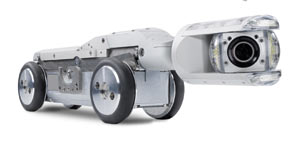 When making general observations, nothing can replace the human eye, so visual inspection is often your best choice. Just remember: You will only see what the camera sees — you won’t be able to see through dirty water or debris and you cannot capture accurate geometric data. In those conditions, you will need to use the other technologies described below. If the operator is unskilled or distracted, you may miss important observations — so training and quality control is key. Because video inspection has been available for so long, there are many differences in quality, design, features and price between brands.
The key information you will require is the size of your project and the diameter of the pipelines you will inspect. And most importantly, if you are purchasing a system or contracting to have work done, make sure and have them provide you with a video sample — there are enormous differences in image quality between manufacturers. A better video image will lead to more accurate assessments and fewer missed observations.
Sonar Inspection
Sonar inspection is used when pipe flow is too high to use traditional methods and/or when you need accurate debris measurement for cleaning. The typical system is capable of inspecting 12- to 120-in. pipelines. Sonar works by pulling, driving or floating a sonar transducer through the water filled pipeline. The sonar equipment used in our industry will only capture data through fluid.
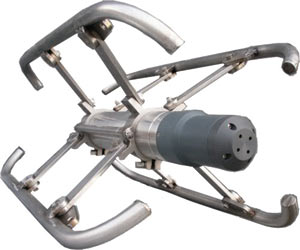 The sonar transducer emits a conical beam of sound and as that sound encounters a dense object, it will echo back. The transducer will then receive this echo. By this method, the sonar is able to determine the distance the dense surface is from the sonar head. The head rotates, continuing to send out and receive these sonic waves creating a profile of the pipe wall at the sonar’s location. These profiles can then be measured to determine debris level, water level and pipeline diameter at any point in the pipeline where the data was acquired. Due to the conical nature of the sound wave, the “resolution” of the sonar profile decreases as the distance from the sonar transducer to the pipe surface increases. Example: In a 48-in. pipeline, the sonar will look for a “best response” from a point in an area of approximately 4 in. in diameter on the pipe wall. For this reason, sonar is perfect for debris calculation and general internal geometric data, but cracks, joints or laterals will often be indistinguishable from the rest of the data. These types of sonar cannot “see through” the pipe to determine wall thickness or material surrounding the outside of the pipeline.
Sonar has been used since the 1990s for inspecting sanitary and storm pipelines, but its use has been limited due to the specialized nature of the work and the scarcity of qualified contractors. However, it is an invaluable resource for certain pipelines that could not be inspected by any other means. Typical uses include siphons and large diameter pipelines with flow. In particular, the debris quantification provided by a sonar inspection of large diameter pipe can dramatically impact the cost of cleaning because the cleaning contractor will know exactly how much debris will be removed. Interpretation of sonar data should be conducted by qualified personnel who understand the technology, its limitations and are able to differentiate between good data and false images.
Laser Profiling
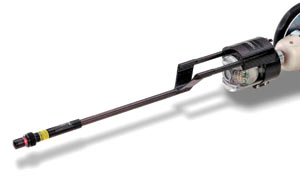 One of the fastest-growing new technologies for pipeline inspection is laser profiling. Laser profilers capture geometric measurements in dry or very low flow pipelines. These systems project a laser on to the pipe wall and calculate the geometric shape of the pipeline to within a fraction of an inch. This data is useful for measuring pipe size, quantifying deformation, erosion, encrustation, debris, holes and lateral protrusion. Many state departments of transportation are requiring that newly constructed pipelines undergo laser profiling to ensure that they are within specification. These systems are also being used to determine the pipeline condition before and after rehabilitation. Laser profiling is often used in concert with video inspection to provide engineers with a visual representation of the pipeline as well as accurate geometric data.
360º Pipe & Manhole Scanning
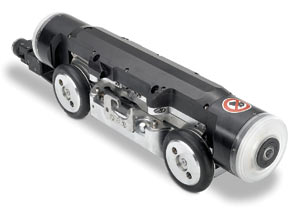 One of the newest and most exciting new technologies being used for pipeline inspection is 360º Pipeline Scanning. These systems move through the pipeline, capturing visual information, at increased speeds, reducing the time spent out in the street. The data acquired can be viewed any time after the inspection is complete. This revolutionizes the process for pipeline inspection and analysis. Pipe analysis can happen back in the office, in a quiet and safer environment. Engineers and managers can view the entire pipeline from their office and make more informed rehabilitation decisions. Some systems actually have two cameras — one facing forward and one facing rear — and are able to capture a complete 360º view of the pipeline. These systems allow you to view the interior of the pipe or manhole from any position and any angle. These systems are capable of increasing productivity, accuracy and safety, while reducing production costs and project length.
Choosing the correct technology is important. Make sure that the manufacturer, if you are purchasing a system, or the contractor, if you are contracting work, is reputable and knowledgeable. No technology is a panacea, but these technologies have become widely accepted and can provide system owners with critical information regarding their underground infrastructure.
Matthew Sutton, M.B.A., is vice president of sales and marketing for RapidView IBAK North America.
