Trenchless Technology Canada Roundtable 2026
Checking the Pulse of Canada’s Underground Infrastructure Construction Sector
To gauge the pulse of the trenchless industry in Canada, Trenchless Technology Canada periodically conducts an editorial roundtable that features a cross section of the industry.
The discussion included the perspectives of an engineer, two representatives from the Region of Peel and a contractor. The panel’s expertise is vast.
During the hour-long discussion we discussed many facets of the sector including where it is growing, the challenges the sector is facing and what’s on the horizon. What appears here is a recap of that discussion with edits made for clarity.
Trenchless Technology Canada managing editor Mike Kezdi was the moderator for the discussion.
Joining him for the discussion are:
Ben Campbell, The Tunneling Company
BC: At The Tunneling Company, my current role is in technical sales. But I’ve been in the industry since I was a kid. I kind of grew up in it. My grandfather started a trenchless company in 1969, before trenchless was really kind of a thing. I’ve spent my career coming from the field to working into project management. And now I get to — the favorite part of my job — which is helping people solve technical problems on complicated underground projects.
Anthony Gagliardi, Region of Peel
AG: I’m a senior project manager with the Region of Peel. I’ve been in the industry for about 20 years, starting with my first co op in 2006. Over the last 12 years, my work has focused on construction, heavy civil, tunneling, and trenchless delivery. Earlier in my career, I worked in rehabilitation, design, and asset management.

Anna Lee, P.Eng., Region of Peel
AL: I am the acting manager of the Condition Assessment and Rehabilitation team at Peel Region. When it comes to water and wastewater, I have 15 years of experience primarily in condition assessment for pressurized pipelines, specializing in PCCP. I also have eight years of roads asset management and condition assessment experience, so over 23 years in total.
Jason Lueke, Ph.D., P.Eng., Associated Engineering
JL: At Associated Engineering, I’m the national discipline leader for trenchless technologies and work on projects across the country from Ontario to British Columbia. I’ve been with Associated for more than 20 years and in the industry for over 26 years. Earlier in my career I spent some time in academia in the United States and also worked briefly on the contractor side, but most of my career has been in consulting. My work focuses primarily on directional drilling, microtunnelling, and concept design for large-diameter municipal water and sewer infrastructure. I don’t work much in oil and gas — most of my experience is in the municipal sector.
JL: When you look at the challenges facing underground infrastructure, to me the biggest issue is the condition assessment gap. It varies somewhat across the country. In Eastern Canada pipelines are a little older and are undergoing or planned to be rehabilitated or replaced, while in Western Canada underground infrastructure is now reaching that age when issues are starting to emerge.
I think there are still challenges around getting the right condition assessment done at the right time, in the right locations, and then interpreting that data properly. It can also be expensive, which sometimes limits how much assessment is actually carried out.
What often happens is that municipalities end up making major infrastructure decisions based on partial or incomplete information. That can lead to situations where money is spent where it may not be the most needed, while other higher risk locations remain unidentified. So to me, the biggest challenge is improving condition assessment programs and then using that information effectively to guide infrastructure decisions.
BC: Obviously there’s a few issues in Western Canada on underground infrastructure that are in the news and I’m glad Jason brought it up.
I think some of the issues that we’re seeing in the City of Calgary right now are causing a lot of municipalities to really take a good look at their underground infrastructure and see where those deficits and those risks are. Both for the cities and for the taxpayers.
As a contractor, we don’t do a lot of rehabilitation work. Most of what we do almost predominantly is new installation and we work across sectors. We work on municipal projects, but we also work in the energy sector and on transportation projects.
If we’re talking specifically about challenges globally, I think that there’s issues around funding, regulation and permitting. That’s one of the big hang-ups that we see as a contractor. Whether those permits are in place, or how long the permits take to get. And that’s happening whether you’re working in an urban or rural environment. Specific to trenchless, I’d say sometimes just a lack of understanding of some of the new installation techniques and what the limitations around those are.
And if you’re doing rehabilitation, as Jason said, some of those things get expensive. There is a lack of understating of rehab techniques vs. new installation techniques and what the right solution is.
At the federal level, every time I hear a federal announcement, it’s about housing, electrification or EVs. There’s underground infrastructure that is needed to support that. People don’t see that because it is out of sight and out of mind. There is a lack of appreciation of what the costs around those things are.
AL: Along the lines of condition assessment, just the sheer magnitude of work. The increasing needs that are coming our way due to aging and deteriorating infrastructure coupled with growth. Peel, in particular, is expecting rapid growth. We’re looking at about 800,000 people and jobs over the next 15 years. So that’s a lot of pipes going in the ground to support the future population.
The amount of effort and funding needed to support both the old and new continues to increase significantly. Keeping in mind that 80 per cent of an asset’s lifetime cost is in operations, maintenance and repair. All of that together is probably one of our biggest challenges.
AG: To build on Anna’s point, Peel Region is managing enormous growth. We’re home to the third- and fourth largest cities in Canada — Brampton and Mississauga — behind only Toronto and Ottawa. That scale drives the volume and complexity of the infrastructure we deliver.
When you look at the federal government’s top 10 priority projects, they’re extremely ambitious. The province’s growth projections are equally aggressive. Much of that work — highways, transit, major utilities — relies heavily on trenchless and underground construction. At the same time, municipalities and regions have their own major capital programs under way.
One of the biggest challenges we face is staffing. Skilled people are being pulled in every direction. Consultants are moving between firms, contractors are moving between companies, and there simply aren’t enough experienced professionals to meet demand.
Another challenge, particularly in Canada, is limited exposure to emerging technologies.
COVID restricted travel, and, even now, travel to certain conferences is limited. We’re relying more on in-house experience, but we don’t have the same long track record with new technologies that European or U.S. markets have.
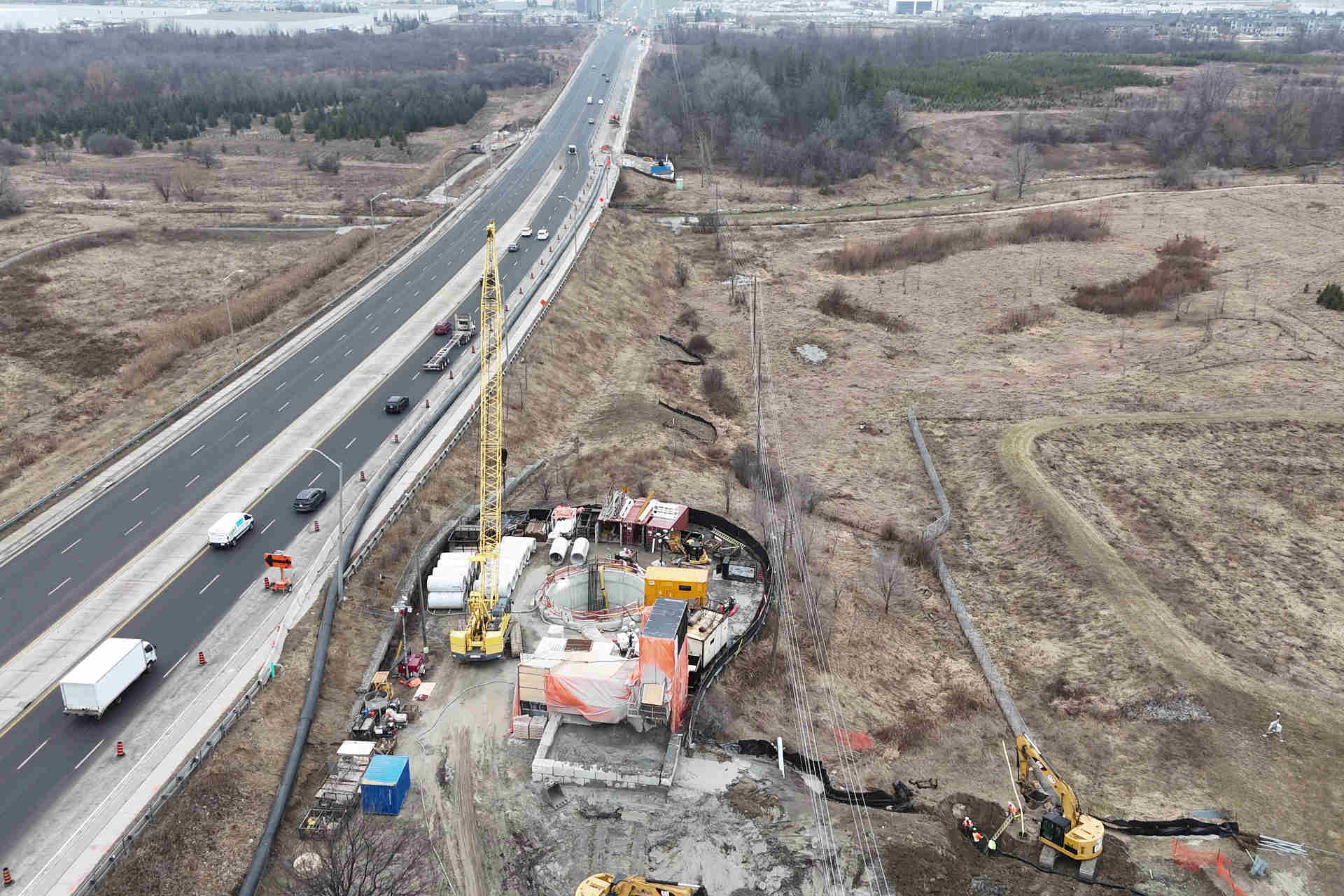
AG: When we talk about underground design and maintenance, rehabilitation is a major component. For example, we recently installed a 1.5-km bypass to rehabilitate a 2,700-mm gravity sewer. One of the biggest challenges was modelling the bypass capacity.
A “100-year storm” isn’t a 100-year storm anymore — they’re far more frequent due to climate change. That makes it difficult to determine the level of redundancy needed to avoid environmental impacts.
BC: When I think in the past 10 to 12 years, just local to this region [Alberta], the number of storm water management projects and flood mitigation projects that we worked on, it’s become a lot more regular. The frequency, as Anthony said, of the 100-year event. It isn’t a 100-year event anymore. There isn’t enough storage capacity in the system. So, it’s trying to utilize green spaces, or you increase pipe size that are underground, which typically involves new installation.
AL: I’ll share an example based on something we experienced recently. Climate change has continued to impact our maintenance holes and valve chambers near water bodies because of accelerated creek and riverbank erosion from large flood events.
During the summer of 2024, we had a significant flood event that exposed one of our manholes to the Credit River. We had to intervene immediately to abandon that structure. Since then, we’ve completed an erosion assessment that has looked at all our infrastructure close to creeks and rivers within Peel. With that, we’ve started work to address the highest risk assets first.
It’s amazing how quickly that one manhole ended up in the Credit River. In a matter of a few months, we observed significant channel migration and bank erosion at that location.
JL: Across Canada, the engineering regulatory bodies are very clear that climate change is no longer just something to consider — it is now part of an engineer’s duty of care. When we design infrastructure today, climate considerations must be incorporated into the design criteria.
One of the biggest challenges engineers face is determining what those criteria should be. Historical records are no longer as reliable as they once were to predict the future state, so the question becomes: what do you model and what assumptions do you use moving forward? Even when you have access to climate modelling, there is still a level of professional judgment required to determine how those projections translate into design decisions.
Building on what Ben mentioned earlier, these events are also exposing the vulnerabilities of existing infrastructure. In many cases, projects are now being defined by where systems fail or where they are most at risk due to climate-related events.
That ultimately affects how municipalities and utilities prioritize investments, plan long-term programs, and allocate infrastructure funding.
BC: Again, obviously the trenchless world split into the rehab world and the new installation world and I sit squarely in the in the new installation world. So, I look at some of the innovations that have come like just in the past 10 years, the projects that would never have been specified trenchlessly because of the limitations.
We’re doing long distance curved microtunnels, Direct Pipe, we really are pushing the limits on all this stuff. The company I work for does all these techniques, and we can push those limits. Whether it’s on the equipment side or guidance, every single year we kind of try and push further. Whether it’s equipment suppliers or material suppliers, it’s just getting better. Looking into the future with respect to new installation techniques and trenchless technologies, I can’t see that stopping.
AG: Technology adoption in our industry tends to be slow. Microtunneling has existed for decades, but in the GTA it only became mainstream 10 to 15 years ago. Now we’re seeing longer drives — sometimes over a kilometre on a curve — depending on ground conditions.
Equipment is advancing quickly. GPS, LiDAR, and other tools are improving accuracy. But for owners to adopt new technologies, there has to be trust. Contractors need to demonstrate reliability, consultants need confidence in the design and owners need assurance that the public interest is protected. No one wants a project to fail, especially when new technology is involved. Success depends on communication, understanding and partnership.
On the rehabilitation side, we’re seeing materials migrate from other industries into water and wastewater — carbon fibre reinforcement, for example. Ten years ago, CFRP was something you associated with aerospace or hockey sticks. Now it’s becoming a viable solution for structural renewal. It’s encouraging to see a once stagnant industry evolving.
AL: You read my mind. I was going to speak to AI. I spent a few years very early on in my career in data analysis. So, I do know how tedious it can be. At that time, everything was done very manually, and a pair of eyes was needed to interpret all the anomalies in the collected data.
This is a major step forward. The integration of AI into condition assessment. You can use it to process massive amounts of data that could simply not be done with a human being. And AI can consume any kind of data. It can consume images from a robotic camera or from any type of sensor. I think this industry will continue to grow and improve.
That being said, I don’t think it replaces the end result, the last call, that still may need human interaction. But AI can at least narrow down areas that need further review. I’m a big fan of it for that. As long as the right decision-making framework is in place, it can be really good for the overall process.
AL: We talked a little bit about this with the first question. As our infrastructure continues to age, we have to deal with a larger quantity of assets that need to be monitored. Really it comes down to a strong asset management framework that considers risk based on both the likelihood and consequence of failure.
I will say that age is one factor that determines likelihood and that it may or may not correlate to condition. We all have seen pipes that are fairly new, deteriorate and fail. And pipes that are very old doing just fine underground.
It comes down to knowing that you don’t need to pay the same amount of attention to all your assets. Especially when dealing with large quantities of inventory, you can use lower resolution tools or methodologies to pre-screen and narrow down the areas that really need a lot of attention. That’s where you’ll need to invest in your higher resolution tools to obtain actionable data. It’s a systematic approach.
AG: A recent bill will transition Peel into a public utility. That creates opportunities — particularly around data. If we’re all under one umbrella, we can consolidate failure data within our asset management branch. That leads to better strategies and more proactive decision making.
Across Canada, we’ve seen major failures — Calgary, Montreal and even the York Peel feeder main, where I was involved in two repairs. Those could have been catastrophic if we hadn’t been proactive.
Sharing data across municipalities could help predict failures using more than just age or condition. For example, we’re exploring whether road salt practices contribute to corrosion and premature watermain failures. Collective data will help answer those questions.
JL: Anna and Anthony have already highlighted some of the key issues municipalities face with aging infrastructure. From my perspective, most of the projects I’m involved with tend to focus on large-diameter pipeline that are the backbone of systems for water conveyance and feeder mains.
In some cases, new infrastructure is actually required to enable rehabilitation of the existing system. With large-diameter pipelines, bypassing the flow is often the biggest challenge. You simply can’t take the pipe out of service to inspect or rehabilitate it unless an alternative conveyance route is in place.
For example, some work we’ve done in Edmonton involves constructing a new bypass tunnel roughly 1,800 mm in diameter and 1.5 to 2 km long. That tunnel allows us to divert flow and rehabilitate a section of existing infrastructure that otherwise couldn’t be taken offline.
You see similar approaches in projects like Bearspaw South in Calgary. Addressing aging infrastructure often requires building parallel or supplementary infrastructure to restore resilience and capacity while maintaining service.
BC: Yeah, as I mentioned if there’s a rehab project and it’s got some new installation side, it’s usually just like this. It’s kind of a run [the system] to failure model. I don’t think the average taxpayer understands what the value of the assets underground in their city is. Every government has different priorities, and as long as everything’s operating, this tends to not be a priority. So, most people don’t understand what it takes to maintain these systems.
JL: One interesting example we’re seeing locally involves EPCOR in Edmonton. They have a program exploring whether older sanitary tunnels can be repurposed as stormwater management facilities. I’m currently involved in one of those projects, where we’re assessing the feasibility of converting an existing sanitary tunnel into stormwater storage.
It reflects something Ben mentioned earlier — the value of recognizing the infrastructure that already exists underground can be reused. Instead of abandoning those assets outright, the question becomes whether they can be repurposed to provide additional system capacity or resilience.
It’s an approach I hadn’t seen applied much before. I’m not sure whether EPCOR is unique in pursuing it this way, but it’s an interesting example of how utilities may begin to think differently about the assets they already have in the ground.
BC: I think EPCOR is unique in a lot of ways because they’re a business operating the utility as opposed to a municipality. So, their view of those underground assets is just different than most municipalities. I think most municipalities would be well-served to take the model that
EPCOR uses.
BC: I’ve always said that governments usually have a certain amount of money that they can spend and they have a wish list of projects. They do as many projects as their wish list or the budget allows. I think right now most, most municipalities or orders of government are doing less work because it’s all gotten more expensive.
Particularly for our company, whether it’s concrete or steel and steel Is in the news because the price on that can fluctuate from day-to-day depending on tariffs and those things. There’s a lot of risk especially in publicly tendered work. The way the contracts are written, it’s tough to accommodate that and somebody must absorb that risk. Some municipalities are a little bit more sophisticated in understanding that, and some just want to pass that risk on to the contractor.
AL: I think that the “Dirty T” word was already said: Tariffs. It’s something that we’re keeping a close eye on. In November 2025, as you may have heard, Bill 72 was introduced in Ontario, the Buy Ontario Act, which is the latest series of measures to favor Ontario business sector purchasing.
Buy Ontario right now is just a framework, it doesn’t have any directives but those are to come. So here at Peel we’re closely watching and looking at different scenarios to determine how tariffs could impact our costing. We are also keeping track of additional increased costs that are tariff related.
AG: Coming out of the post COVID period, we were fairly flexible. We added escalation clauses to multi year contracts tied to specific indices, sharing risk with contractors. It wasn’t reasonable for contractors to absorb unpredictable spikes—like concrete increasing 10 per cent in a year. That collaborative approach helped stabilize projects.
Tariffs have created another challenge. Some high quality products manufactured in the U.S. are no longer competitive in Canada because tariffs price them out of the market. That opens opportunities for Ontario and Canadian manufacturers, but reduced competition has driven prices up. Municipalities have long wish lists, but the dollars don’t stretch as far as they used to.
JL: Over the past few years we’ve seen a steady increase in construction costs when tenders come in. As Ben mentioned, that does influence how much work municipalities are able to undertake. That said, I haven’t really seen a slowdown in activity—if anything, with aging infrastructure and population growth, the industry still seems very busy—but the cost impact is definitely noticeable.
BC: So, can I ask Jason, when you guys are doing the estimates for your projects, what’s happened to those estimates? Just in the past like say two or three years.
JL: We’ve definitely seen steady year-over-year increases. I can’t quote exact percentages off the top of my head, but when you compare today’s estimates to what similar projects cost five to seven years ago, the difference is significant. For example, when we look at estimates for things like abandoning a large tunnel, the numbers today are dramatically higher than they used to be. Much of that comes down to materials—concrete, cement, and other inputs that have increased substantially in price.
AG: We’re also seeing consultant contingencies rise — from the traditional 10 per cent to 15 to 20 per cent — because the volatility makes pricing difficult. It’s not a criticism. It’s a reflection of the market.
JL: I would agree with that. Much of it comes down to risk management. Part of the consultant’s role is to make sure the owner understands the potential cost implications and is prepared for them.
That means going into a project with clear expectations and building appropriate contingencies into the estimates. When those risks are recognized early and reflected in the budget, there are fewer surprises later in the project.
AG: From a regulatory standpoint, things are fairly straightforward. One of our biggest challenges is coordinating with utility companies. Lead times to relocate infrastructure are long, and each utility has its own processes and constraints. Even when our designs are ready, utility delays can hold up construction.
I’d like to see provincial or federal regulations that streamline or prioritize relocations for municipal, regional, and provincial infrastructure. These projects aren’t just about water and wastewater—they’re tied to broader economic and transportation goals.
AL: Yeah, I think permitting is probably one of the biggest pain points for our project managers. It can really slow down a project and a lot of them can’t be avoided. So you really must identify them very early on in the planning process.
You should have folks in your project team who know about the application process. They should know who to contact and what information they need. You may get restrictions that limit when you can work, or additional conditions to meet depending on what environment you’re disturbing. You really must do your homework to account for all that extra time, because at the end of the day it is extra time that will be added to your project.
We also try to coordinate with other projects. Whether with another group at Peel or a local municipality like Mississauga, Brampton, Caledon, or with a third party doing work in the same area.
There’s a lot of fatigue that happens in our community when things are not coordinated properly. What residents see is just construction. It can be hard for them to recognize that there can be different levels of government working in the same area. We often get complaints for work that we’re not even involved with. Coordination is something that we deal with all the time. We work with different stakeholders to try to come up with the best approach to improve the overall corridor. But again, it’s never perfect and an area that can always be improved.
BC: I think the impact that we usually feel is time. Time is money. As an example, we bid an emergency project last May. We just received the final permit last week. That’s 10 months. I think the permitting process is significantly longer than the actual construction process. All those things delay projects, and there’s cost involved with those. And I don’t think those costs are necessarily always captured or understood.
The other thing sometimes, and Anthony spoke about it, is if what we’re trying to do is novel or the technique is something that’s out of the ordinary, it even slows down that process. If there’s not an understanding of the method being used, whether that’s rehab or new installation, sometimes it can slow that permitting process down.
[Those hurdles and delays ] basically makes it impossible to schedule anything, but it’s also on the cost side. Like we spoke about the price of steel. Compare what is what last May to now. It’s nice to hear that there are owners out there willing to work with contractors around some of those risks. I think that sort of openness, communication and coordination between owner and contractor helps alleviate a bunch of these issues.
JL: When I first read this question it sounded somewhat negative, but I don’t necessarily see regulatory requirements that way. Regulatory processes today are certainly more rigorous than they were a decade ago, but they also reflect the broader range of considerations that projects must address—such as environmental impacts, wildlife, social impacts, and Indigenous consultation.
When those elements are recognized early and integrated into the project lifecycle, they can be planned for and managed effectively. Environmental review and Indigenous consultation are no longer peripheral steps in a project—they should be treated the same way we treat other design criteria such as hydraulics or geotechnical conditions. If they are treated as afterthoughts, that is when delays tend to occur.
In my experience, integrating those considerations early generally leads to better project outcomes and stronger long-term relationships with stakeholders and rightsholders. There will always be unexpected issues that arise, but identifying known requirements early and addressing them proactively is ultimately the right approach.
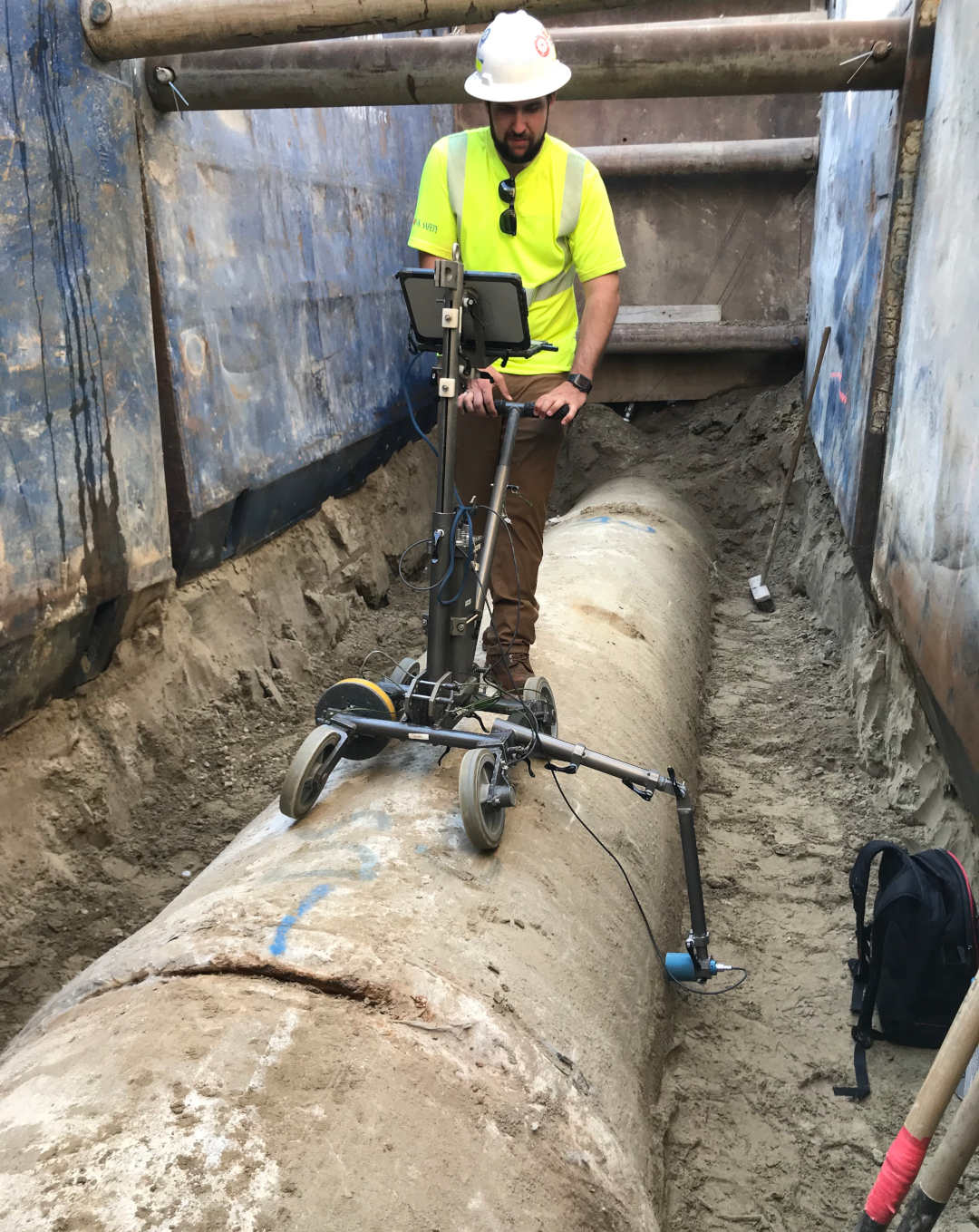
AG: Urban densification adds another layer of complexity. More cars, more utilities, tighter corridors. We need contractors who can work effectively in constrained environments. And since COVID, we’re more aware of the impacts on small and medium sized businesses. Large LRT or tunneling projects can restrict access and reduce customer traffic. We need to consider not just the infrastructure we’re building, but also the social and economic impacts on surrounding communities.
There’s also more scrutiny than ever. With social media and smartphones, every misstep is visible. It raises expectations—and that’s a good thing. It pushes us to deliver at a higher standard. The work is more challenging, but it’s part of what we signed up for.
AL: This question is really relevant to Peel as we are going through rapid population growth. I look at it in a different way. With densification and growth, the stakes are a lot higher where failure could impact many more people. We’ve really been focusing on system resiliency.
For example, in our water system, we’ve been focusing on putting in strategic interconnections and operational strategies so we can divert flow as needed when we have planned or unplanned work activities. We also try to develop good relationships with the industry. This includes pipe manufacturers, consultants and contractors. We have several rosters that we can use to rapidly respond to emergencies if we ever need to call upon those services.
JL: From a broader planning perspective, I’m seeing larger municipalities and utilities increasingly focus on the resiliency of their supply and collection systems, as Anna mentioned earlier.
Much of the work I’m involved in now relates to long-term concept planning—identifying corridors and securing rights-of-way for future infrastructure. In many cases those projects may be 10 to 15 years away, but those routes need to be identified today so that municipalities are not scrambling to secure land once the infrastructure becomes urgent.
BC: When I think about being a contractor with this sort of growth, whether it’s densification or new development, there’s more demand for trenchless. We’ve seen more and more growth of contractors in the space. I think, generally speaking, there’s probably some more education that could be had on the owner’s side.
It’s grown so much over the past decade, like Anthony said, the amount of microtunnelling work done in his region. Sometimes it just takes a little bit of time for those techniques or particular methodologies to pick up steam. But once you see the results, the low impact, the costs come down and there is more demand for it. As we see population growth, there’s just more and more demand for contractors.
JL: Building on what Ben and Anthony mentioned, one thing that often gets overlooked is how much the industry has evolved over the past 25 years. When I first worked with Terraco Excavating, we spent a lot of time promoting and advocating for trenchless technologies because most municipalities simply weren’t familiar with these construction methods. At that time, open cut construction was the default approach, and it often took a lot of effort to convince owners that trenchless methods could work.
Today the situation has changed significantly. In many cases trenchless methods are now the default solution, and part of the consultant’s role is actually helping owners determine when trenchless approaches are appropriate and when they may not be the best option.
Adoption of these technologies can still vary across Canada. In larger urban centres like Edmonton, Calgary, Vancouver, or Toronto there is a strong contractor market that supports these methods. In smaller communities, however, the scale of work may not always justify mobilizing specialized contractors for relatively small rehabilitation projects.
That’s one reason why adoption can sometimes occur more slowly in Canada than in parts of Europe or the United States. Our market is spread across large distances with smaller populations, which makes it more challenging to build the consistent workload needed to support specialized trenchless services.
BC: Yeah, it’s not a particularly sexy industry. I’ll just put that out there. As much as what we do is cutting edge technology, not a lot of people – young people who are going to school – are thinking, “I want to work for a trenchless contractor. I want to work for a microtunneling contractor or an HDD contractor.”
There aren’t schools really to go to and learn how to operate some of this equipment. So, we do a lot of training in-house like any other sort of construction industry. In most of the heavy civil construction world, it’s difficult to find young people who want to enter it. Couple that with the fact that we’ve got guys with 30 and 35 years of experience who are retiring. How do we capture all that wealth of experience and get it to this smaller group of young people who are interested in it.
I think the construction industry in general has a harder time than some of the more high-tech kind of sexy industries, to attract people. But I’m also confident that it is a bit of a self-selecting group. The people who get into it love it once they start, but it’s a matter of getting them through the door first.
AG: Absolutely. We simply don’t have enough contractors, labourers, or union resources to deliver the volume of work in front of us. One statistic from one of our local unions really stands out: for every three people retiring, only two new workers are coming in to replace them. Our workforce is shrinking, and there’s very little marketing or outreach to bring new people into these trades.
To Ben’s point, there’s no dedicated educational pathway for trenchless technology, sewer and watermain construction, or even general underground labour. You can go to school to become an engineer or a technologist, but beyond that, the pipeline drops off. It would be incredibly valuable to have a Red Seal trade or a formal training program that exposes people to this work early—something structured that builds awareness and interest in these careers.
The demand is only increasing. Federally, there’s pressure around energy projects; provincially, it’s transportation; regionally and municipally, it’s water and wastewater. And the skill sets required for all of these sectors overlap heavily—pipe installation, trenchless operations, labourers, equipment operators. Without a stronger workforce pipeline, we’re going to continue feeling the strain across all levels of government and industry.
AL: From a municipal perspective, we’ve also seen a lot of people leaving or retiring. It really hurts to see those people walk out the door because they can have decades of institutional knowledge in their head. And while we try our best to capture that in SOPs, you really can’t. Nothing really beats the knowledge that they get from working with and touching the infrastructure every day. They really know the system inside and out. Those are the people who can really help move projects along.
We need to encourage the younger generation to join the water/wastewater sector. We need to have a greater appreciation of the different learning styles of the folks who are leaving the industry and the younger generation coming in. We need to evolve the way we attract the new generation. What motivates them? There needs to be a change and a greater focus on that so we can attract that talent.
JL: Echoing what others have said, the pool of people available to work in this field is limited and in many cases it seems to be shrinking. Some of that is due to experienced professionals retiring, while in other cases there is competition from other sectors that may appear more attractive to younger engineers.
What’s interesting is how this varies across the country. In some regions we’re short on experienced professionals, while in others the challenge is attracting younger people into the field. In some cases the intermediate level is also being drawn into municipal roles. As a result, many organizations end up competing for the same relatively small group of people.
That requires a lot of thought in terms of how work is distributed across offices and teams so projects can still be delivered despite localized shortages of certain skill sets.
One area where consultants can improve is retention—engaging younger engineers earlier and giving them opportunities to work on meaningful projects. In my experience it’s much harder to bring someone into underground consulting mid-career, although quite possible, as Anna has demonstrated. When people enter the field early and develop their experience within it, they tend to stay and build long-term careers.
JL: I’ll make a small plug for the Canadian Underground Infrastructure Innovation Centre (CUIIC), which is a university-based organization focused on raising awareness of the underground infrastructure sector. In recent years we’ve expanded its activities, including establishing a young professionals group that engages primarily with graduate students. The goal is to provide exposure to the industry through technical talks, site visits, and opportunities to connect with experienced professionals. That kind of early exposure is important for attracting people into the field.
From the Associated Engineering perspective, one initiative I’ve been involved with focuses on developing discipline-specific training for municipal infrastructure engineers. The idea is to take civil engineering graduates and provide structured training, experience, and mentorship that helps bridge the gap between university education and professional practice. Programs like that can help young engineers better understand what the industry requires and how to build the skills needed to succeed in it.
BC: I think you’ve been doing that for the past 20 years, Jason. Now you’re just formalizing this process of taking all these nice young engineers and turning them into trenchless guys.
AG: If I can add to that, something really stood out to me during our introductions. Ben is a third generation professional in this craft. Jason talked about the range of roles he’s held across the industry. Anna came into this sector after working in roads. When you look around, you realize something unique about our field: very few people leave it. Once they’re in, they tend to stay until retirement. And even then, many come back in some capacity because they still want to be part of it.
From my own experience, every single day brings something new. It’s never monotonous, never the same routine on repeat. That’s a big part of why I love what I do. When I interview young professionals or co op students and I talk about the passion I have for this industry, you can actually see them light up. I think a lot of them are looking for something meaningful—something that sparks that interest.
Our own testimonials are some of the strongest marketing tools we have. They show why people stay in this industry for 20, 30, even 40 years. There’s a reason we stick it out—pardon the pun—through the trenches. We love it. And sure, sometimes we hate it. But we love it all the same.
BC: The more people that I talk to about the industry – and I’m really passionate about it as well – I find that if you find somebody who’s interested in it, it’s really easy to keep their attention. This is a problem-solving industry. If you want challenges, they’re there every day. I think trying to get that message out just like any other industry.
Speaking as a contractor, I don’t think we do a good job as an industry in a way that speaks to young people. I certainly think we can improve on that.
JL: I often find that the trenchless side of the industry is actually easier to attract people to than general municipal engineering. Once someone is exposed to the scale and complexity of the work—directional drilling, microtunnelling, large diameter tunnels—it tends to capture their interest pretty quickly. These projects are unique and technically challenging, and that tends to keep people engaged.
Anthony touched on this earlier as well. The types of projects we get to work on are often the ones that other engineers find fascinating. When you’re dealing with large tunnels, long HDD crossings, or major conveyance infrastructure, it’s a very different scale of work than many traditional municipal projects. For many engineers, once they see this side of the industry, it becomes something they want to be part of.
AL: We have some really big tunneling projects going on. And luckily we have a shaft location that’s very close to our headquarters. So the project manager Nicole has invited staff on tours. A lot of people have had a chance to go down and walk into the tunnel, a surreal experience. I think we need to do more than that to advertise the work that we do. We had our CAO down there, and he shared a photo on his LinkedIn profile. It’s a small way to get the word out. Our work is underground so everyone just sees the fence around it. They don’t see that really cool shaft and tunnel.
BC: And to your point, Anna, when we’re doing work on a construction site, whether we’re working as a subcontractor or the general, all the construction workers want to come over and see what we’re doing. It’s the cool bit. What we do is unique and it always draws attention.
BC: We have a presence in Canada and the United States. A lot of work that we’re doing there is on the data centers and usually those data centers need power. So, there’s natural gas work that is usually related to that side and expanding the grid to accommodate what the electrical demands are.
I think Canada’s just a little bit behind what’s happening south of the border. But I think with as much as we are in a bit of an uncertain time in Canada – for a couple of reasons that we’re all aware of – it’s also kind of exciting.
We’ve got maybe some ambitious plans around growth, and across industries. Whether that’s in energy or manufacturing any growth requires utilities underground. And if you want to do it in an environmentally safe, low impact way, there’s lots of ways that this industry can help contribute to that. I think with any type of growth that we see, there’s going to be opportunities for the underground construction world and particularly for trenchless.
AG: One of the projects I’m involved in is the Lakeshore LRT, which includes a combined gravity sanitary sewer and district energy piping. At Peel, we’re exploring an opportunity to recover effluent heat from one of our largest wastewater treatment facilities. The idea is to capture that naturally warm water, extract the thermal energy, and distribute it to a nearby district energy facility for local connections.
It’s still very early, but it’s an exciting direction for us. The opportunity emerged because the LRT corridor work aligned perfectly with our long term planning. It’s a great example of forward thinking from our senior leadership—leveraging existing infrastructure projects to unlock new energy recovery potential.
I can see many more Enwave-style and district energy projects emerging from this approach. There’s significant untapped value in the thermal energy produced at wastewater treatment plants, and integrating that into broader energy systems is a smart, sustainable path forward.
AL: Taking it back to condition assessment. The failures that we’ve had recently, in Montreal and Calgary have been very unfortunate, but they have put a spotlight on condition assessment. We’ve been approached by other municipalities inquiring about the technologies that we use because they don’t know where to start.
I think it’s been a wake-up call for a lot of municipalities and utility owners. That’s a big area of growth. Utility owners that did not pay as much attention to condition assessment will start to do so now. There will be a push to come up with robust inspection programs, and to take a better look at the data that is collected so that good rehabilitation plans can be developed.
JL: While there will continue to be significant investment in new infrastructure to support growth and resiliency, I believe we are approaching a tipping point where greater attention will shift toward the condition and renewal of existing systems, particularly in Western Canada.
As Anna mentioned earlier, this will likely lead to a stronger emphasis on condition assessment, asset maintenance, and extending the life of existing infrastructure. In many cases that may involve renewing, rehabilitating, or even repurposing infrastructure that already exists underground.
Ultimately there is only so much funding available, so utilities and municipalities will increasingly look at how to make the best use of the assets they already have. While new infrastructure in developing areas will remain important, I expect revitalization, renewal, and rehabilitation to become a much stronger focus in the coming years as owners better understand the cost implications of deferred maintenance.
Mike Kezdi is managing editor of Trenchless Technology Canada.
Latest Posts
- Trenchless Technology Canada Roundtable 2026

- City of Newark Goes Trenchless to Repair Historic Pequannock Aqueducts
- NUCA Convenes in Tucson for 2026 National Convention
- Product Showcase – Denso Archco 456
- DCA Holds 65th Annual Convention in Miami


Next Up
2026 Microtunneling Short Course | May 5-7, 2026 | Scottsdale, Arizona | Learn more