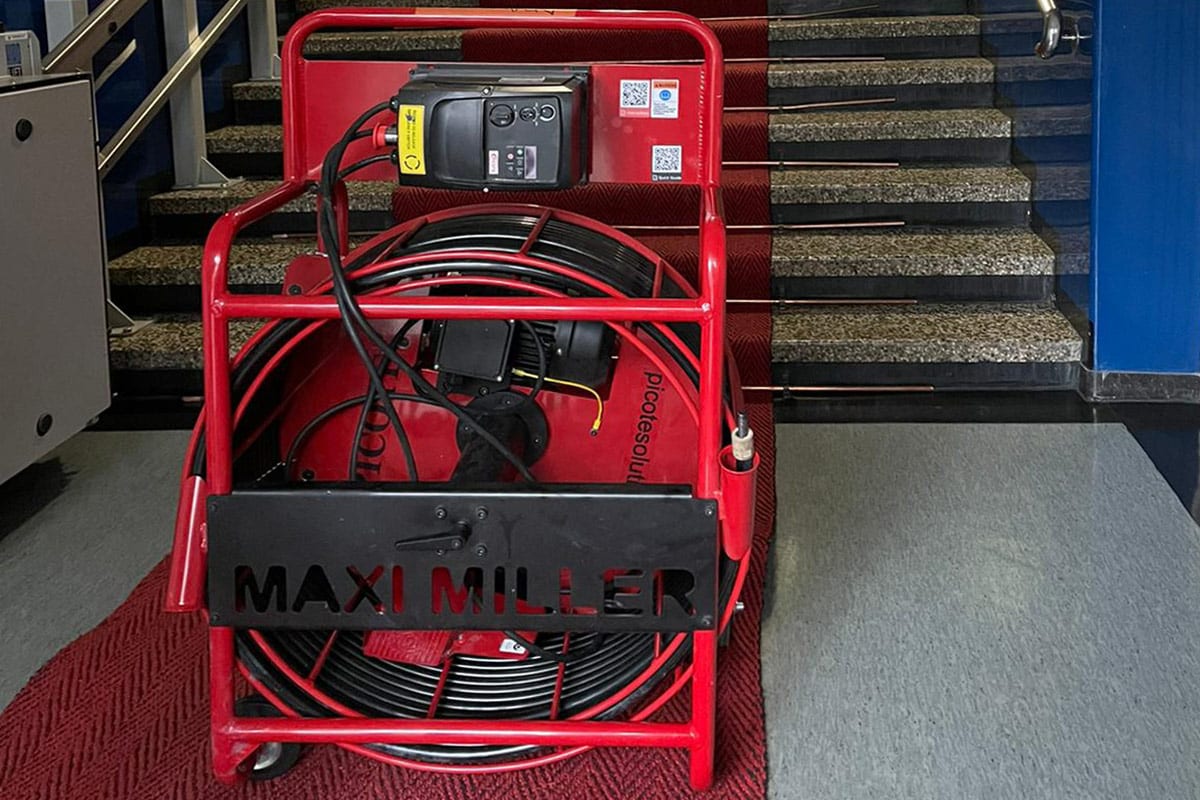
How to Reestablish Service Connections After In-Building CIPP Rehab
In-building cured-in-place pipe (CIPP) trenchless rehabilitation has come a long way. Today’s resin systems cure faster, liners are more flexible to reduce wrinkling in bends, and installers have more tools than ever for lining and reinstatements inside residential and commercial structures. Yet even with these advancements, one step still separates a successful rehabilitation from a problematic one — properly reinstating service connections.
Inside buildings, the stakes are high: spaces are tight, pipe materials often shift within a single run, and the geometry of older structures virtually guarantees unique challenges on every project. Reinstatements must be precise. Connections that are not fully opened, cleanly finished or are damaged by improper cutting can restrict flow. This leads to leaks, blockages, costly callbacks and even structural damage.
A structured approach, combined with tools designed specifically for in-building reinstatements, is critical to achieving consistent results.
Begin With What You See, Not What You Expect
Every successful reinstatement starts long before cutting begins. A thorough camera inspection, with accurate measurements and documentation — not assumptions — reveals the true conditions of the system and helps determine which tools and methods will safely reach and open each connection.
In older buildings, decades of renovations may obscure original layouts. Branch connections may not align with drawings, may sit at unexpected angles, or may not appear on plans at all. Careful inspection and mapping are essential.
Key details to identify and document include:
• Pipe diameter of main and lateral
• Exact distance to the center of each connection
• Type of fitting (tee, wye, double-wye, or non-standard)
• Pipe material transitions (cast iron, PVC, clay, etc.)
• Offsets, deflections, sharp bends, and obstructions
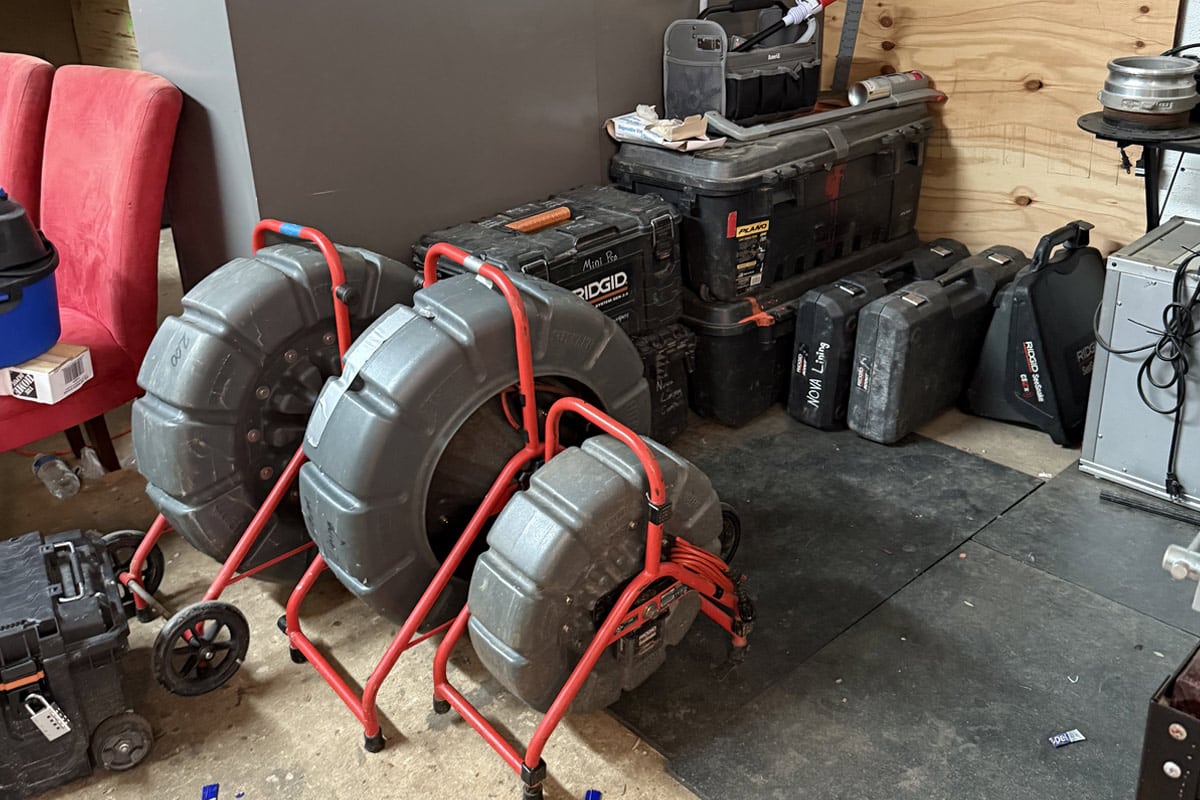
Measured reinstatement distances should be marked on the camera reel and recorded. These measurements should then be transferred to the cutter shaft or push rods prior to starting any reinstatement. This is especially important for reinstatements from inside the lined pipe. While liner bulges may sometimes indicate a connection location, this is not always reliable; accurate measurements help prevent overshooting or undershooting the target.
Backside vs. Mainline Reinstatements
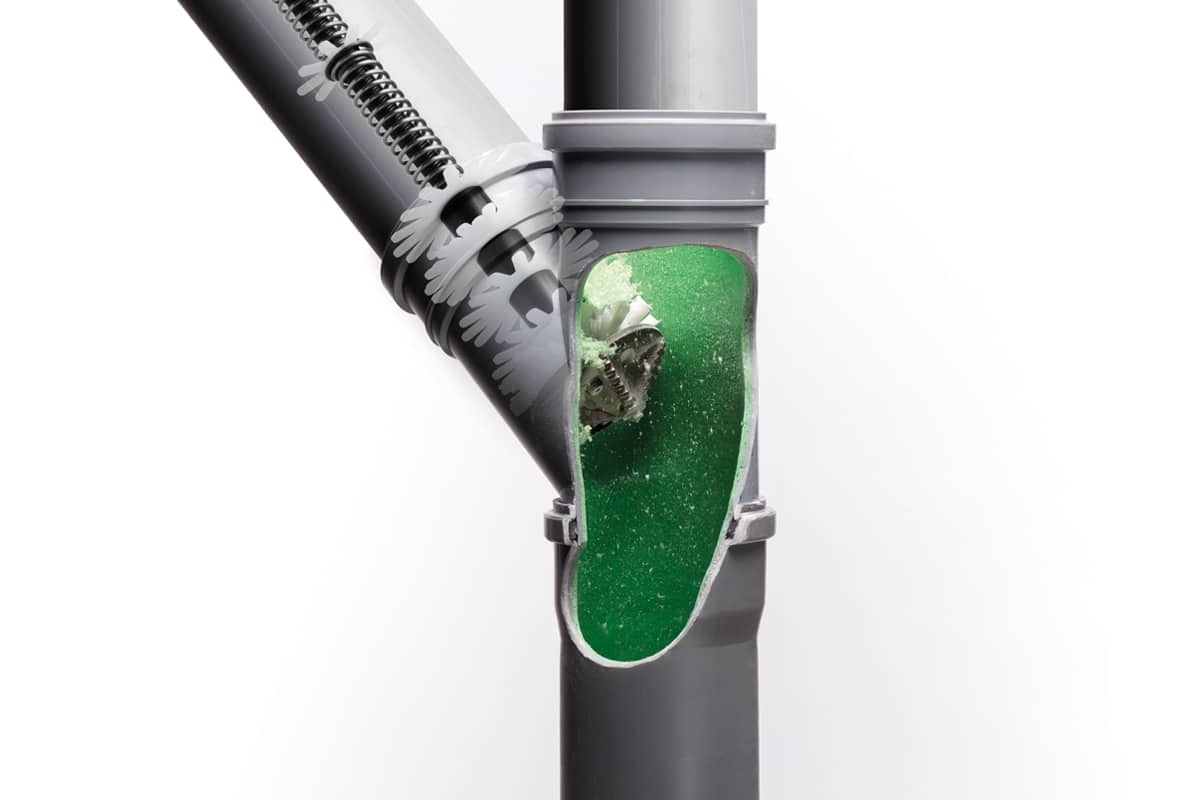
Backside reinstatements approach the lined-over connection through the branch pipe itself. They are typically performed using a flexible shaft milling unit with cutting heads, followed by a finishing process using sanding panels. This approach excels at navigating multiple bends, offsets, and even P-traps before reaching the connection. The equipment is generally less expensive, easier to operate, and carries lower risk of major errors, making it an accessible option for newer operators and a practical choice for many in-building applications.
If backside reinstatements offer so many advantages, why would a contractor reinstate from the mainline at all? The answer often comes down to preparation and access.
For backside reinstatements to be efficient, branch lines must be cleaned — even if they are not being lined or coated.
In pipe runs with numerous connections, this additional preparation time can exceed expectations, increasing both project duration and cost. Skipping this step often results in scale and debris being pushed onto the lined-over opening, dramatically increasing reinstatement time or making it impossible altogether.
When heat curing is used, cure strategy also matters. Step curing can help limit the formation of expansive resin slugs into branch openings, reducing the amount of material that must be removed during reinstatement.
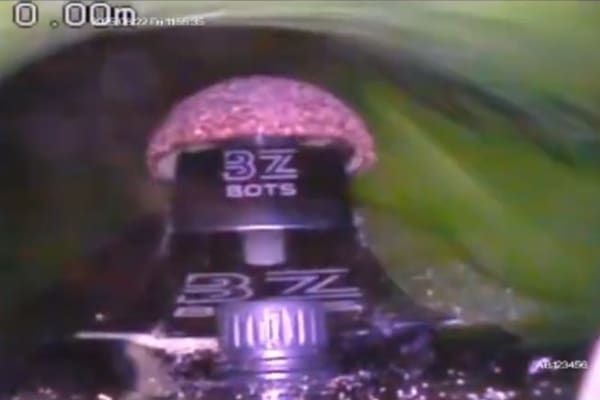
In other cases, backside access may simply not be possible due to limited entry points, excessive bends, or long distances. In these situations, contractors often turn to compact robotic cutters designed for smaller diameter pipes. More advanced versions of these compact cutters offer the ability to navigate multiple bends, cutting head articulation for adjusting cutting angles, and integrated cameras with air or water lens cleaning.
Create a Controlled Initial Opening
Regardless of the equipment used, the initial goal is not to produce a fully finished reinstatement. The objective is to create a clean, well-positioned opening that preserves liner integrity and prepares the connection for final finishing.
Best practices include:
• Maintaining continuous camera visibility
• Removing material gradually
• Pausing frequently to confirm position and alignment
Finishing, Inspection and Documentation
After the opening the connection, attention turns to finishing. Reinstated edges should be smooth and as close to the original pipe diameter as possible to prevent debris accumulation and flow restrictions. For backside reinstatements, hub and sanding panel assemblies are highly effective. The panels are positioned within the rough opening and rotated to remove remaining liner material and smooth the edges.
With robotic cutters, finishing the outer edge presents one of the greatest risks. Operators should work slowly and deliberately to maximize the opening without cutting excessively wide, which can damage the pipe or connection. Grinding-style panel attachments for robotic cutters aim to reduce this risk while combining the advantages of both methods.
Before leaving the site, contractors should record and document the finished reinstatement. Clear documentation minimizes future questions and provides valuable reference information for maintenance or future rehabilitation work.
Conclusion
Refining a technician’s in-building CIPP reinstatement skills happens through training, repetition and the right tools. By prioritizing thorough inspection, selecting appropriate reinstatement methods, and focusing on high-quality finishing, contractors can consistently deliver durable, obstruction-free connections — even in the most complex building environments.
Ryan Boldan is director of Picote Solutions.
Latest Posts
- NASSCO Report – The Key to Long-Lasting Sewer Structure Rehab: Think Holistically

- Jason Lueke Is the 2026 Trenchless Technology Person of the Year
- How to Extend Centrifugal Pump Life and Improve Operation
- NASTT Appoints Kim Hanson as New Executive Director
- How to Finance Your Growing Construction Company




Next Up
2026 Microtunneling Short Course | May 5-7, 2026 | Scottsdale, Arizona | Learn more