How to Maximize HDD Tooling Efficiency in Hard Rock
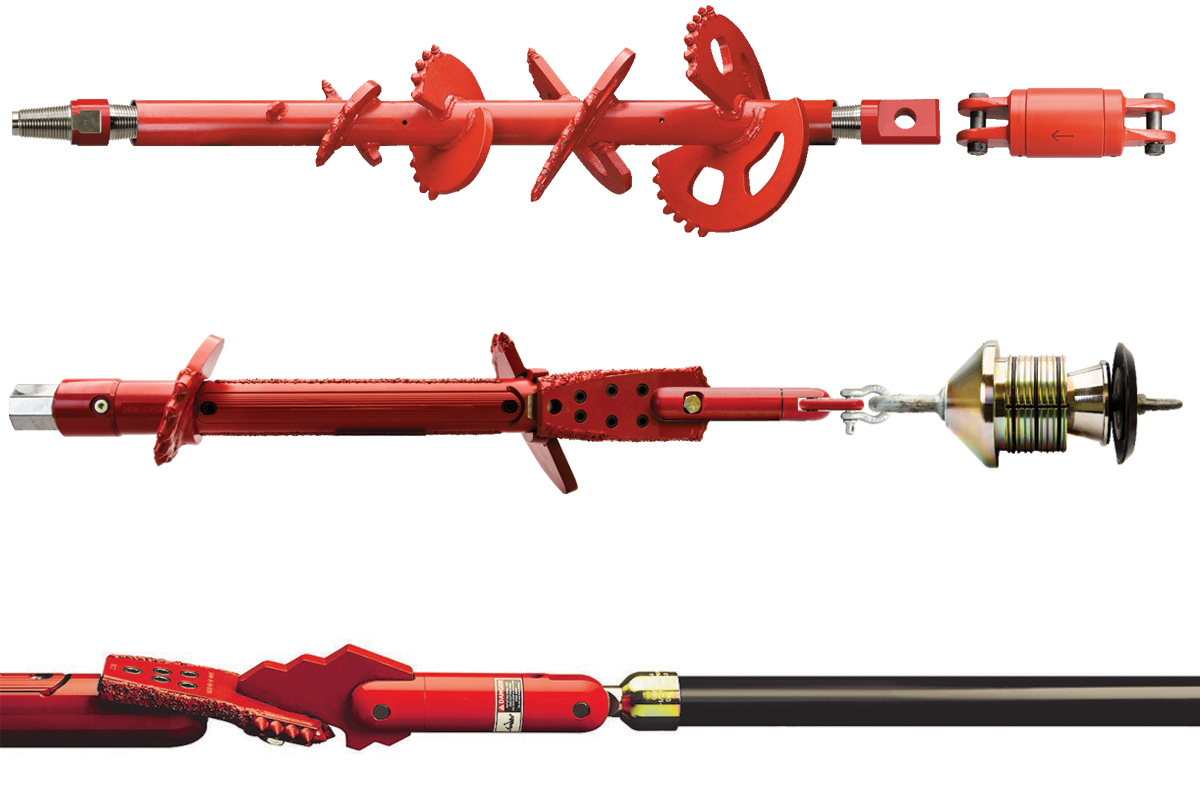
Whether your bread-and-butter is a 10-ft rig or it takes six semi-truck loads to get your equipment to a crossing, the consensus is bits and reamers that gouge and claw won’t get it in hard rock. Harder rock, like dolomite, hard limestone, or shale, and abrasive formations like chert, require bits and reamers that will chip or shear.
HDD operators also have learned, sometimes the hard way, that patience is a virtue. Brute force will only get you in trouble.
The “elephants in the room” — air hammers and mud motors, have become the go-to solutions in hard rock. Respectively, these solutions are widely used and successful. Here, the discussion will focus on maximizing penetration in hard rock using bits and reamer assemblies, either directly threaded to the drill pipe or bolted to a compatible transmitter housing.
Hard Rock Planning Checklist
[] Complete a soil survey and analysis from several points along the bore path
[] Match the right horsepower to the size and hardness of formation
[] Collaborate with a reputable tool supply technician
Cutter Pattern Checklist
[] Symmetrical intentional placement
[] Unique contact with rock face
[] Avoiding cutting redundancy
[] Match attack of cutter length to hardness: pointed vs. dome vs. button
[] Strategically placed fluid ports
[] Consult with a fluids engineer
After checking the boxes (Hard Rock Planning Checklist), the underreported discussion in hard rock drilling is cutting action downhole and how spoils are removed, more specifically, PDC (polycrystalline diamond compact) and roller cone pilot bits and openers. Does the tool shear and break rock? (The only way to efficiently penetrate hard rock.)
Cutters that Shear or Break
To maximize penetration rates in hard rock, pilot bits and reamers need to either shear the rock into fine shavings or break it down into small pieces. Tools that just try to grab and rip rock only tear things up in hard formations.
PDC Cutters
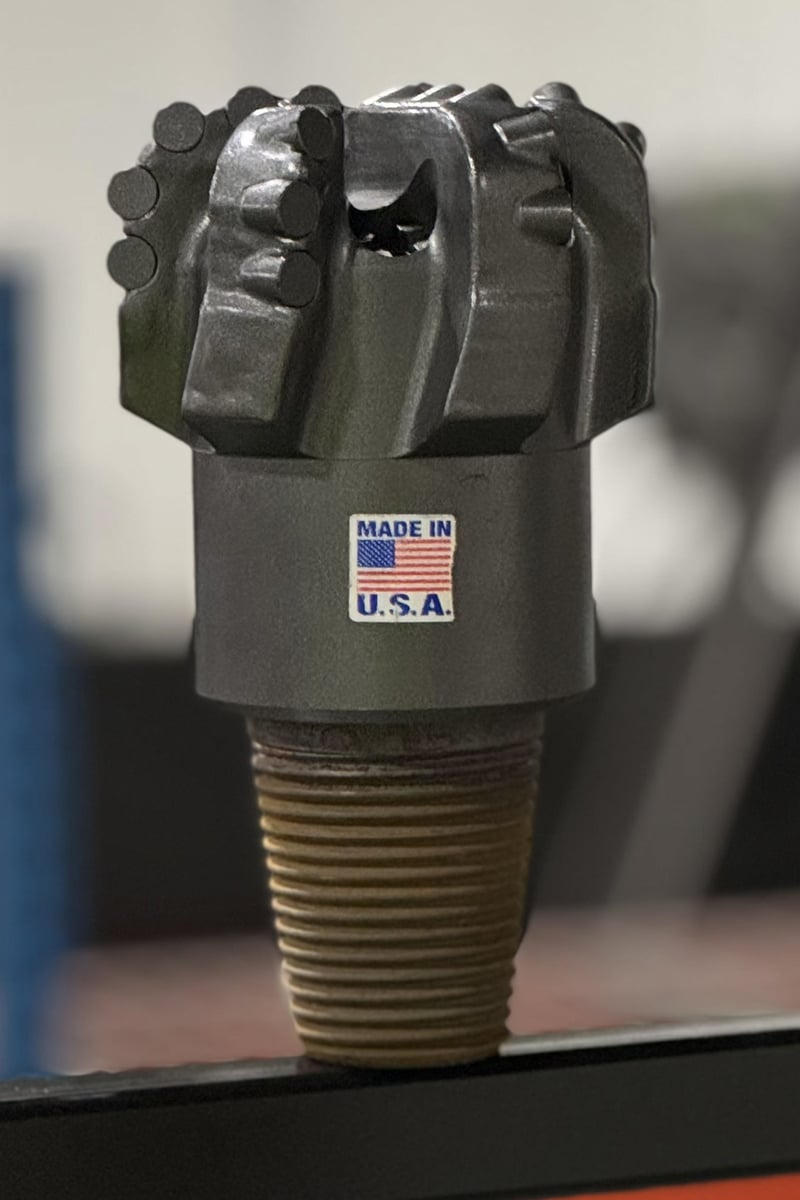
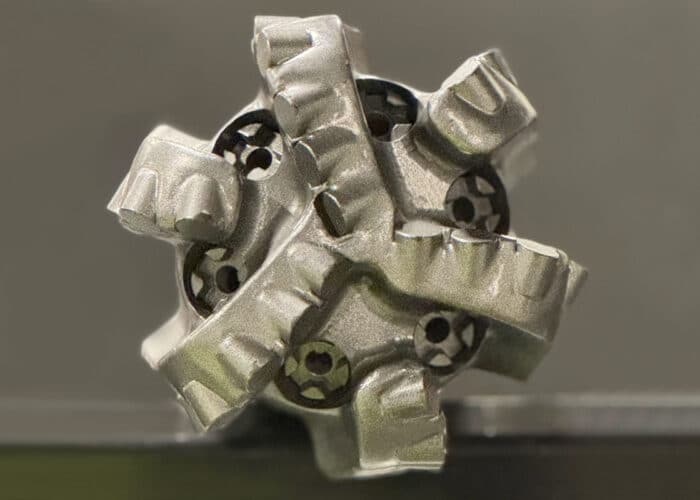
PDC bits, pilot bits, and reamer cutters embedded with polycrystalline diamond compact teeth are designed to shear the rock. The cutting action scrapes thin layers off the face of the rock and turns them into tiny shavings. This method works best when the rig operator supplies steady, smooth penetration without a ton of torque.
Hard rock pushes back when you push too hard in hard formations. The bit bounces, the drill pipe chatters. The rock is saying, “you’re pushing too hard.” Smooth forward progression shears and slices a few small pieces each time the PDC bit rotates.
Roller Cone Bit
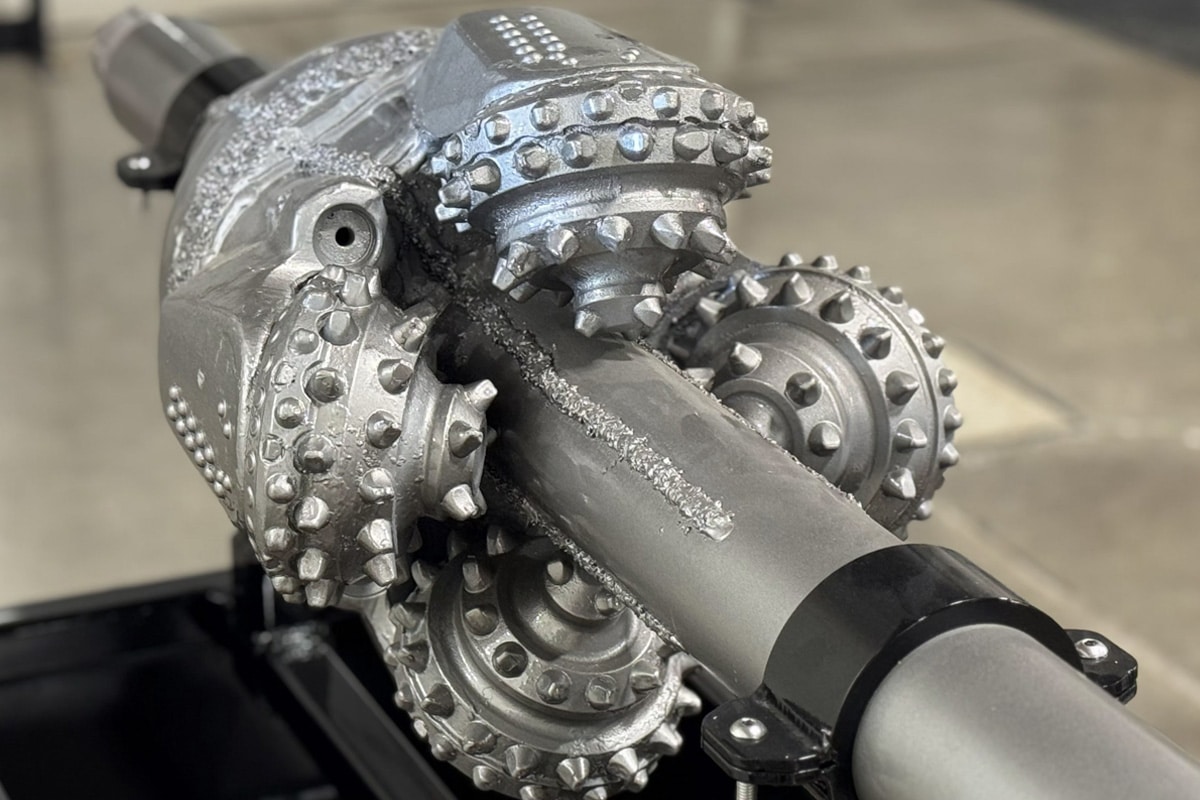
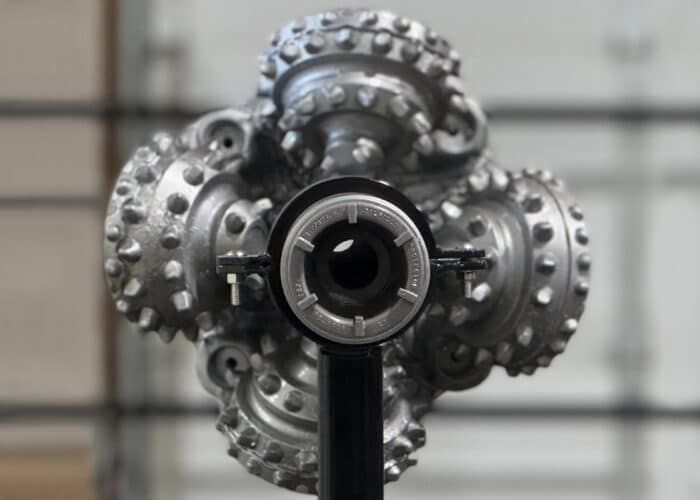
Roller cone and tri-cone bits offer cutting action that crushes and chips, using tungsten carbide inserts. The spinning cones take small powder-size bits of rock away from the face of the rock every time the cone spins.
That said, the hardness of the formation determines the most efficient size, shape, and quantity of the carbide inserts on the cones. In hard rock formations, smaller carbide inserts work better. Smaller “teeth” allow the cones to take more frequent but smaller bites of rock.
Longer, wider-spaced carbides work better in medium-hard rock and mixed-ground materials. Greater material removal per contact can be achieved without overstressing the cutting structure. But, as with PDC bits, the forward motion must be smooth. If the bits are grabbing rock, the drill string is chattering, you’re only damaging the tooling.
Reality Check
Solid hard rock formations are usually predictable, but in the real world, most bore profiles include “transition zones.” A more typical bore may include a combination of competent rock, fractured zones, cobble, or clay seams, placing uneven loads on the drill string and tooling.
For example, at the far side of the river crossing, you hit really hard rock — that’s why the river is there. These scenarios can create more problems than drilling in uniform rock formations.
The critical factor in intermittent zones is operational discipline: slowing advancement, adjusting flow, and, if necessary, switching out the downhole cutting assembly before failure occurs. Again, operator finesse is critical, especially when responding to changes in penetration rate, downhole noise, and, in the case of unexpected softer or mixed formations, rotational speed.
Air-Assisted Drilling Fluid
Properly mixed drilling fluids are fundamental to the overall success of a horizontal rock bore. The job of drilling fluids is to carry spoils out of the hole. Assuming you are consulting with a drilling fluids engineer, underreported is the practice of injecting air through the drill pipe mixed with properly prepared drilling fluid on the pressure side of the cutting action. Air-assisted drilling in rock formations is a game changer.
Air more effectively keeps the cutting area clean, minimizing regrinding of spoils, which extends the life of downhole tools. Air mixed with drilling fluids may also reduce drilling fluid consumption when the contractor is not recycling the drilling fluids.
Summary
Maximizing HDD tooling efficiency in hard rock can be boiled down to using bits and reamer tools that can either shear or crush the rock and adding air to the drilling fluid mix at the cutting action side of the tool assembly.
Matching the cutting action of the pilot bits and reamers to the rock’s strength is key. If you’re shearing, you need a tool that slices cleanly and stays engaged; if you’re breaking rock, you need a tool that crushes rock into tiny fragments. Adding air to the drilling fluid more efficiently keeps the cutting action clean. Add to this, patience. Rock boring takes time.
Jay Cary is president of StraightLine HDD.