How to Hydro Excavate Safely When Working from a Distance
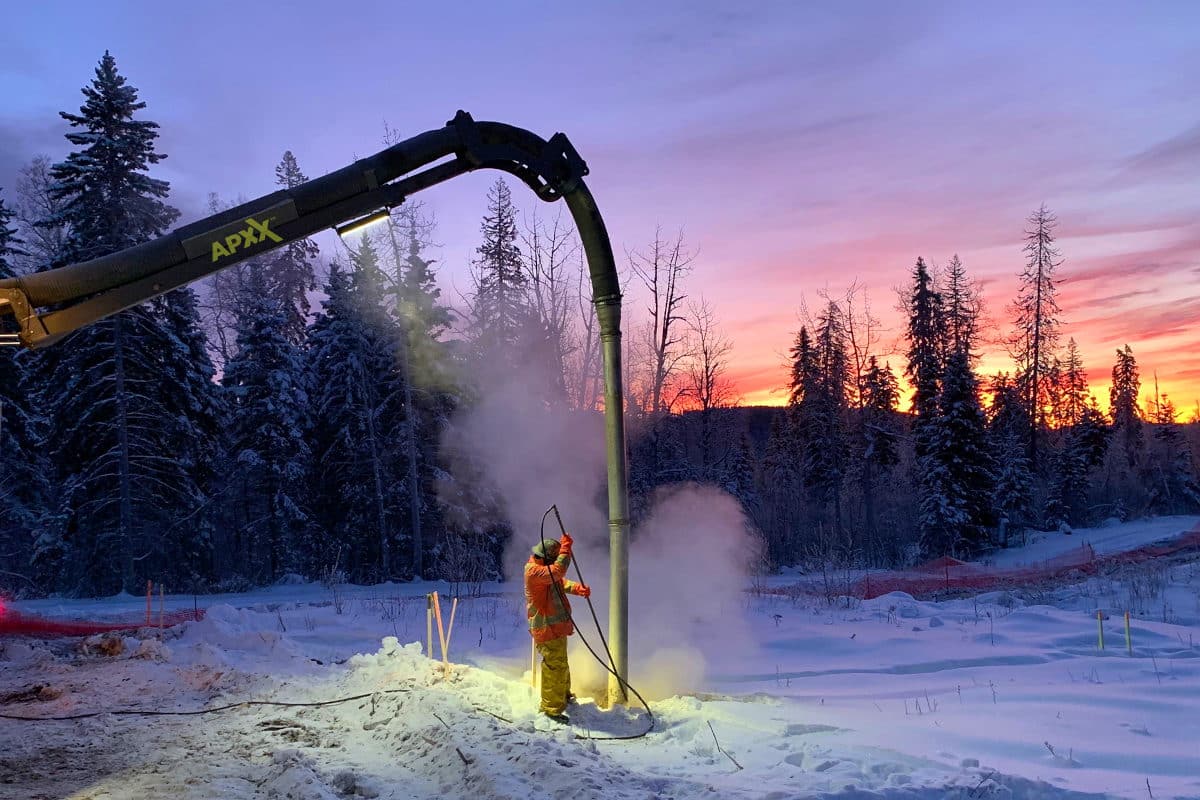
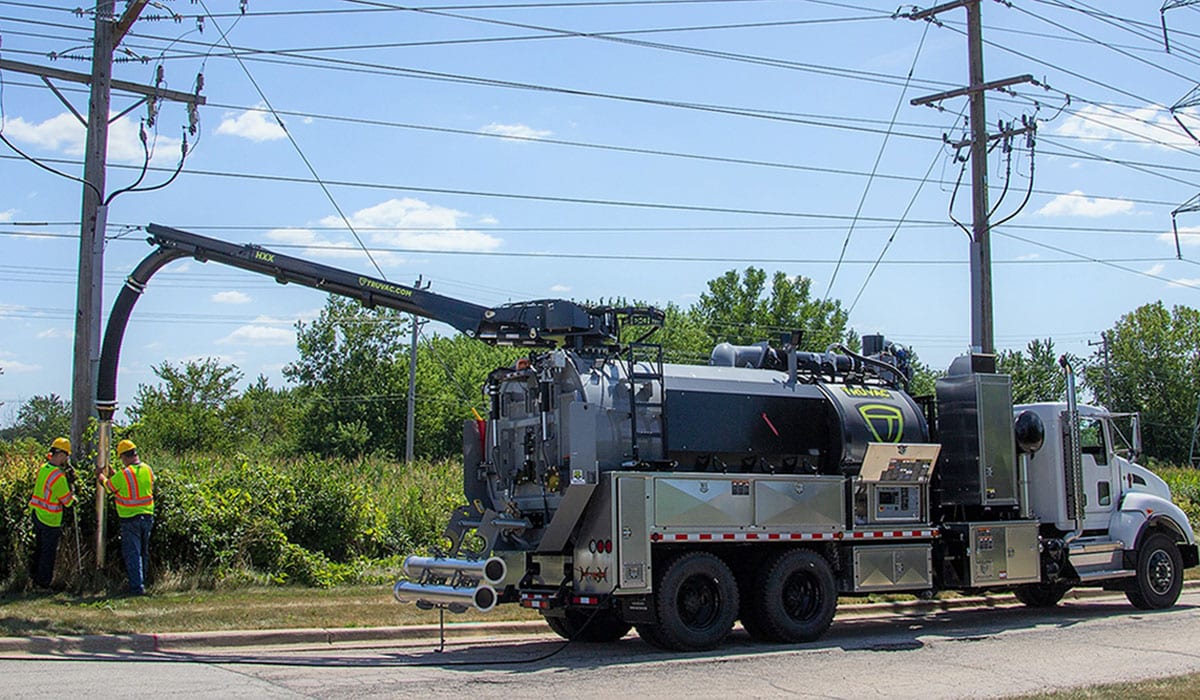
Utility work rarely happens in wide-open spaces. Alleys, narrow easements, fenced setbacks and congested rights-of-way often force crews to park where they can—and excavate where they must. Long-distance hydro excavation isn’t just a convenience; it’s a practical approach for maintaining access, minimizing disruption and keeping people out of the hazard zone.
1) Start with access: measure the “working gap”
Before setup, walk the route from truck position to the dig point and note obstacles (walls, parked cars, landscaping, poles) and elevation changes (vaults, pits, slopes). Confirm the hose path will stay clear of sharp edges, traffic pinch points and trip hazards. The goal is to choose a stable parking location that protects the work area and supports efficient hose management.
2) Match the boom reach and articulation to the site
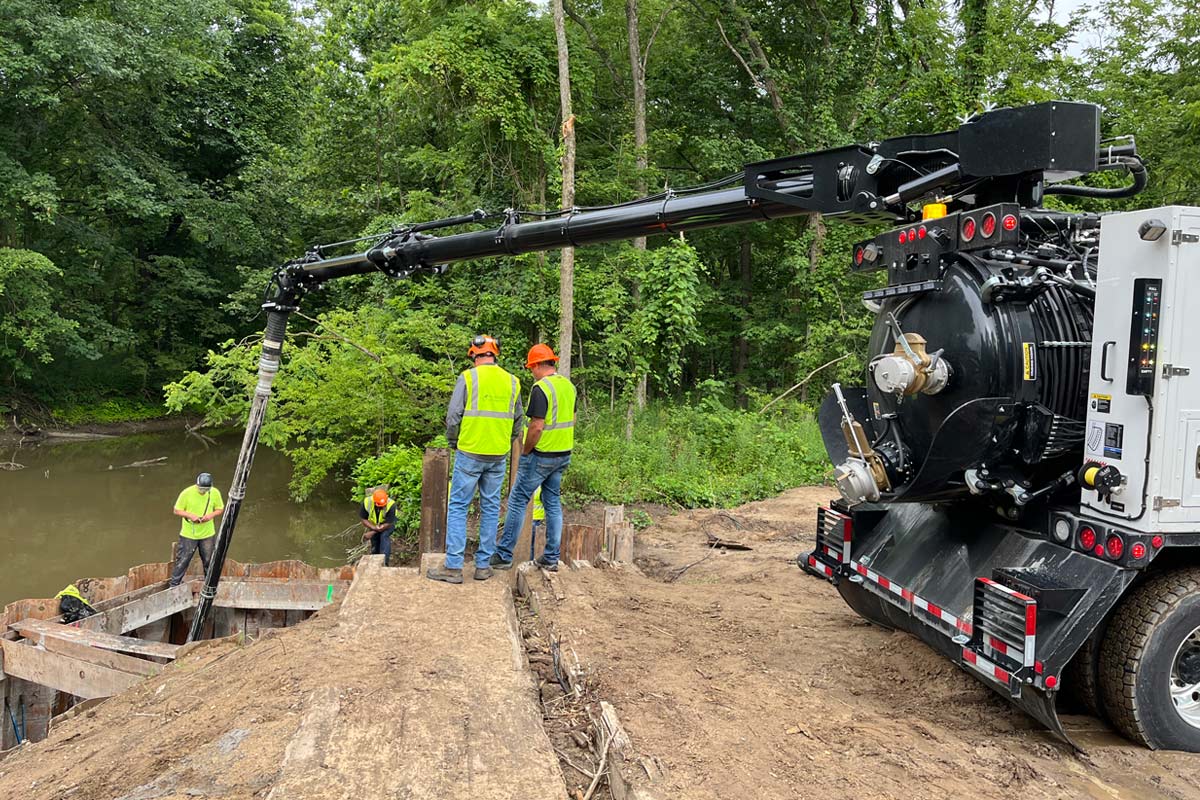
In blocked locations, boom reach and control determine whether you can stay parked and still place the tube precisely. Plan for the type of access you need: reaching over a barrier, working down into a vault, or extending along a tight corridor. Equipment configurations with multidirectional boom movement can help crews maintain accurate placement when the truck can’t reposition easily.
3) Reduce interruptions: plan around debris capacity and disposal
Distance work often comes with longer setup and more complicated access—so interruptions cost more. If dumping requires leaving a congested alley or backing out of a confined staging area, productivity can drop quickly. Build your plan around debris capacity, disposal locations and haul routes so excavation can continue without frequent breaks.
4) Optimize conveyance: airflow plus vacuum power
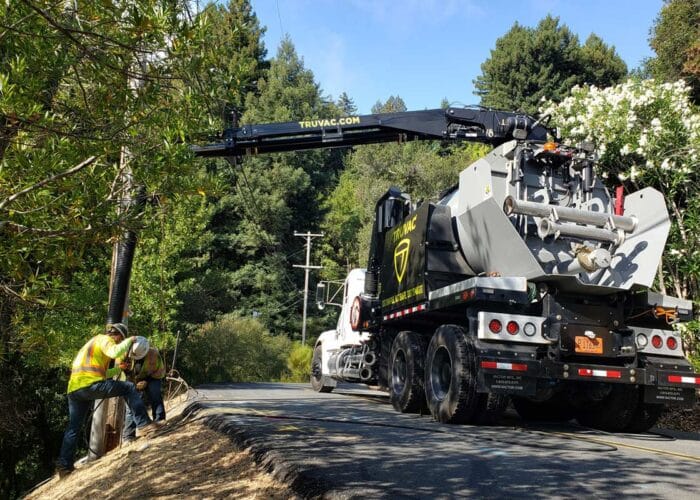
When excavating from farther away, conveyance efficiency matters. High airflow helps determine how quickly material moves through the hose, while vacuum power supports pulling heavier, wet or sticky spoil. Together, they enable crews to keep material moving without repeatedly relocating the truck—helping maintain pace and reduce surface disruption.
Field tip: Keep hose routing as smooth as possible. Avoid unnecessary bends, protect the hose from abrasion, and maintain good housekeeping so the line isn’t kinked or pinched during repositioning.
5) Control water pressure for precision in dense corridors
Long-distance excavation frequently happens near complex utility bundles. Water pressure management is central to safe daylighting and controlled production. Systems designed to set and hold a pressure limit can help operators stay within job requirements and reduce the risk of damage when working near gas, electric or communications infrastructure.
6) Use distance to improve safety and shrink the footprint
Distance capability should translate into safer work. When crews can operate effectively with the truck staged away from the immediate excavation point, they reduce exposure to cave-in hazards, flying debris and close-quarters utility conflicts. A smaller active footprint can also ease coordination with pedestrians, traffic control and adjacent stakeholders—especially in space-constrained urban environments.
Long-distance hydro excavation works best when it’s treated as a deliberate setup strategy—not an afterthought. Measure access, choose the right reach and capacity, protect conveyance performance, manage water pressure tightly, and use the stand-off distance to make the job safer and less disruptive.