ERT, CCTV and AI Redefine Leak Detection in Pressurized Water Mains
By integrating electrical resistance testing (ERT), CCTV, and artificial intelligence (AI) particle tracking, utilities can now locate, confirm, and prioritize leaks inside live pressurized water mains.
For decades, water utilities have relied on aboveground acoustic surveys, reactive main breaks, and age-based replacement programs to manage pressurized water mains.
While these methods have value, they fail to identify leakage — especially leaks that never surface or generate audible noise. Closed-circuit television (CCTV), long used in wastewater condition assessment, historically offered little benefit for potable water systems because cameras alone cannot “see” leaks.
That is changing.
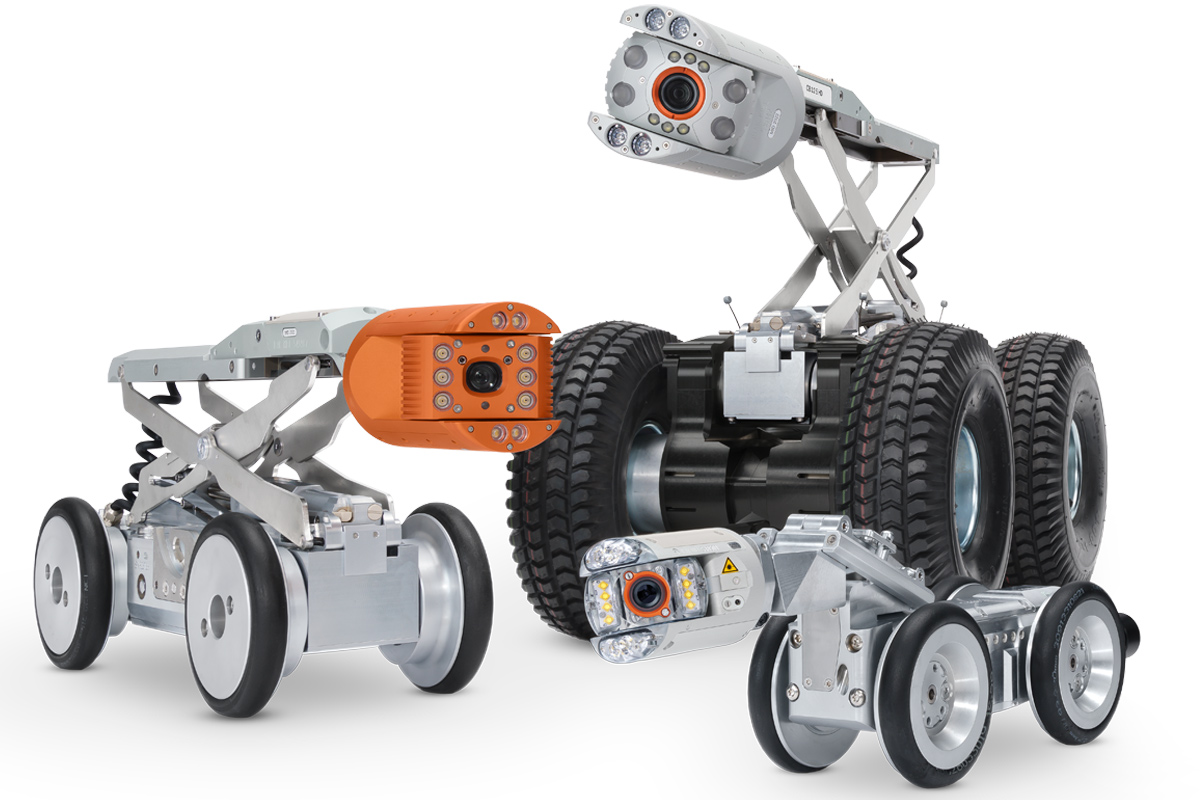
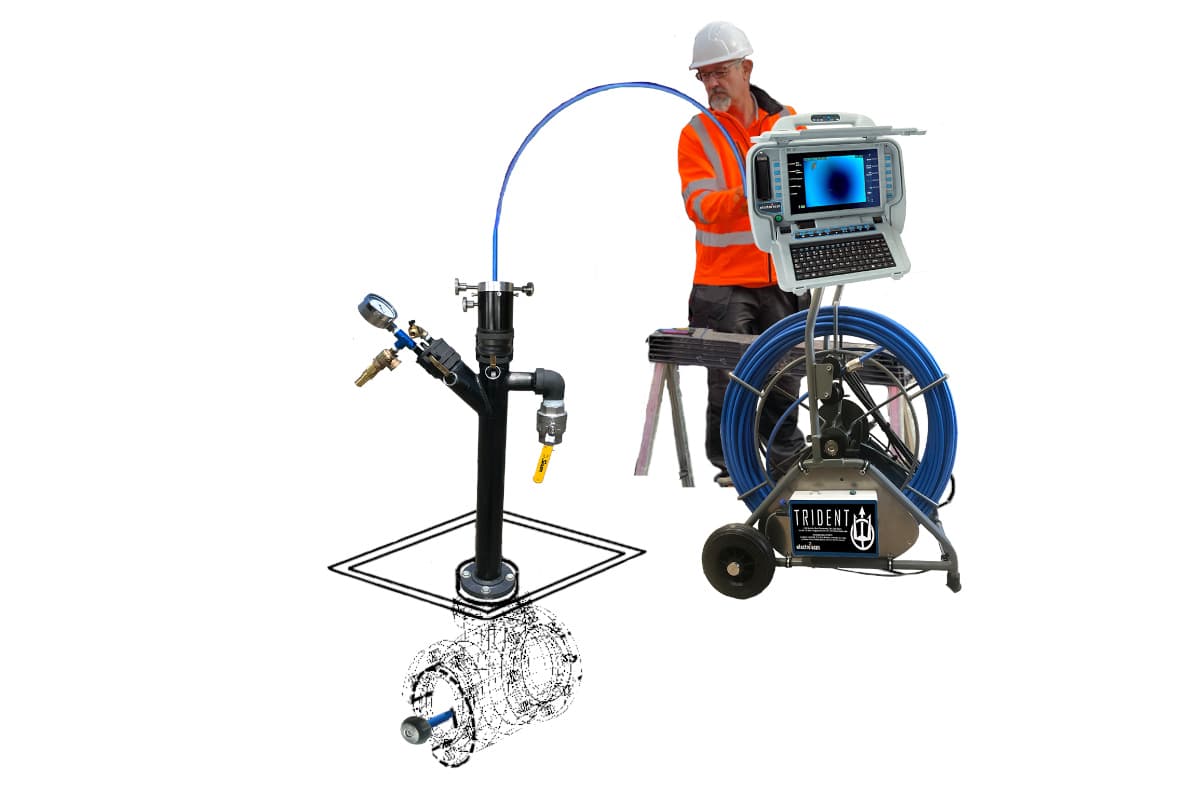
Electro Scan’s TRIDENT multi-sensor platform represents one of the most advanced applications of this combined approach of ERT, CCTV and AI.
A recent project with the City of Cleveland, demonstrates why CCTV of pressurized water mains — when paired with physics-based sensing and AI — should become a standard tool in the water condition assessment toolbox.
Why CCTV Alone Was Never Enough
Traditional CCTV inspections can identify visible features such as corrosion, construction debris, misalignment, or missing gaskets. However, whether reviewed by human operators or AI algorithms, cameras cannot distinguish between superficial cracks and cracks through pipe walls. More importantly, CCTV cannot determine water tightness at joints.
Continuous camera movement further limits effectiveness. In a pressurized main, internal flow often appears visually uniform, masking subtle indicators of leakage. As a result, CCTV produced limited actionable data, despite the operational complexity of inserting cameras into live water mains.
Electrical Resistance Testing
Electrical Resistance Testing addresses these limitations. TRIDENT introduces a low-voltage electrical current into the water column. The pipe wall and surrounding soil act as a return path. Where water escapes through joints, cracks, or defects, the electrical current follows the same path, creating a measurable signal.
The magnitude of the signal correlates to defect size and estimated leakage potential that can be expressed in gallons per minute or liters per second. Unlike acoustic methods, ERT is unaffected by background noise, flow velocity, or pipe material variability. It provides precise distance, clock position, and repeatable measurements — data that utilities can use to plan targeted repairs instead of exploratory excavations and dry holes.
The Power of Combining ERT, CCTV and AI
The real breakthrough comes from combining ERT with CCTV and AI-based particle tracking. Rather than deploying CCTV as a continuously moving inspection tool, TRIDENT uses ERT to identify exact leak locations first. Operators then stop the camera and allow it to “loiter” at confirmed defect zones.
When stationary, AI algorithms analyze the movement of suspended particulates in the water column. These particles reveal flow vectors toward the pipe wall, confirming leak locations — visualizing exact exit points. This transforms CCTV from a passive recorder into an active confirmation tool, delivering defensible, high-confidence results.
Case Study: Cleveland
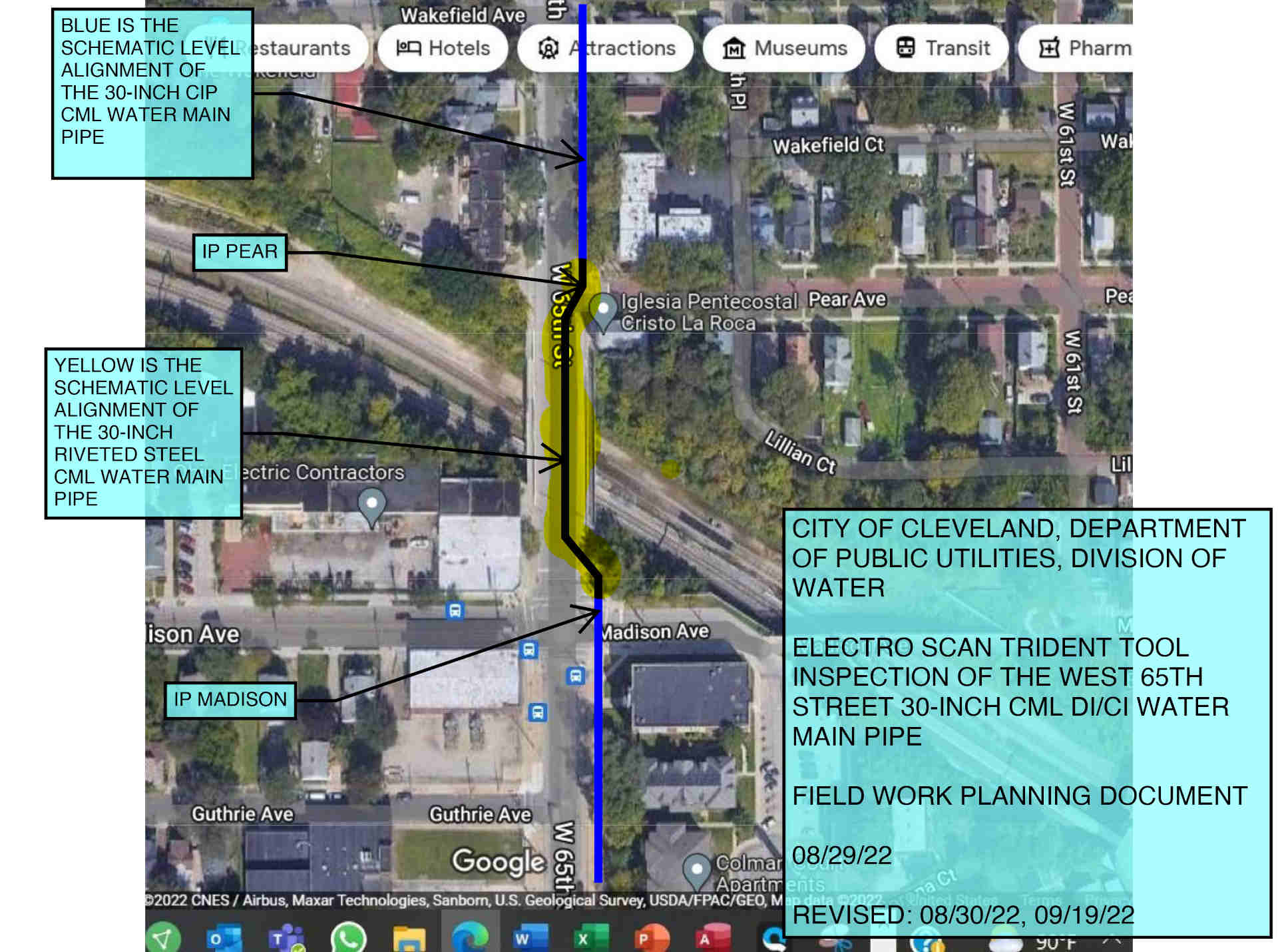
In November 2022, Electro Scan partnered with the City of Cleveland Department of Public Utilities, to inspect a 30-in. cement-mortar-lined ductile iron/cast iron transmission main along West 65th Street. The main runs beneath a railroad corridor and bridge abutments — an area where leaks are difficult to access and even harder to locate from the surface.
Using two insertion points at Pear Avenue and Madison Avenue, TRIDENT was deployed under live conditions. Initial CCTV-only passes were conducted to locate previously lost cleaning equipment inside the pipe, reducing risk before deploying the combined CCTV and conductivity sensors.
ERT results identified dozens of defects at pipe joints — areas often assumed to be watertight. Several defects were classified as medium and large, indicating measurable leakage. In one section, CCTV alone suggested no active leak, yet ERT clearly detected water losses consistent with water escaping the pipe.
From the Madison Avenue insertion point, CCTV identified a significant defect near a bridge abutment. The internal location closely matched a known surface leak observed beneath adjacent railroad tracks. The correlation between internal inspection data and external evidence validated the accuracy of the technology.
Aligning with AWWA Water Loss, Asset Management Frameworks
The American Water Works Association (AWWA) emphasizes that effective water loss control requires accurate, repeatable, and defensible data. Traditional methods — such as break history, acoustic surveys, and age-based replacement — often fail to identify real losses occurring below reporting thresholds.
TRIDENT directly supports AWWA M36 Water Audits and Loss Control Programs by enabling:
- Identifying Real Losses at their source
- Quantifying leakage potential for prioritization
- Shifting from age-based to condition-based management
- Reducing uncertainty in Infrastructure Leakage Index (ILI) calculations
The Cleveland project demonstrates that installation-related defects and joint leakage, rather than pipe age alone, often drive leakage. By grading defect severity, utilities can defer unnecessary replacement while targeting repairs that deliver measurable water loss reduction.
Conclusion
The City of Cleveland case study shows that when Electrical Resistance Testing, CCTV, and AI work together, utilities gain unprecedented visibility into the hidden performance of their networks.
CCTV of pressurized pipes is no longer about watching pipe walls scroll past a screen. It is about knowing where to stop, measure, and act. For utilities facing increasing regulatory scrutiny and water loss accountability, this combined approach deserves a permanent place in the toolbox, with clear application to sanitary sewers given inaccuracies of AI CCTV used in sewers.
Chuck Hansen is CEO of Electro Scan Inc.
Latest Posts
- ERT, CCTV and AI Redefine Leak Detection in Pressurized Water Mains

- Don’t Miss the UESI Pipelines 2026 Conference in Detroit
- UV CIPP Scales Up for Large-Diameter Culverts
- Learn how a Vermeer 24×40 HDD helped a contractor grow
- Kondex Cited as Best Downhole Tools



Next Up
2026 Microtunneling Short Course | May 5-7, 2026 | Scottsdale, Arizona | Learn more