City of Newark Goes Trenchless to Repair Historic Pequannock Aqueducts
During its first major rehabilitation since 1885, the discovery of a 16-in. crack on one of the twin Pequannock aqueducts prompted Newark engineers and QuakeWrap Inc. to execute a trenchless structural repair with carbon fiber lining technology. As a result, they successfully restored its structural integrity to its original form.
In the same year the Statue of Liberty arrived from France to be assembled in the New York Harbor, the City of Newark, New Jersey, finished an engineering project of similar epic portions.
Two 21-mile riveted steel water pipes were laid side by side to carry clean water from the Pequannock Water Treatment Plant to the state’s largest city. The city was steadily growing in population and industrial importance. Additionally, the gravity-fed, 19th century aqueduct is 4 ft in diameter and traverses three counties and six municipalities. It snakes under schools, businesses, golf courses, highways and residential homes.
Extensive Work Begins
Since then, there have been about five repairs in the aqueducts’ history. In 2024, extensive rehabilitation work began to extend its lifespan.
“This is the first major rehabilitation of the aqueducts since first constructed,” said John George, P.E., consulting engineer for the Newark Water and Sewer Utility.
The first six miles of the aqueduct, regarded as the most vulnerable portion due to challenging topography and high erosion, is being rehabilitated with new air release chambers, valves, and appurtenances.
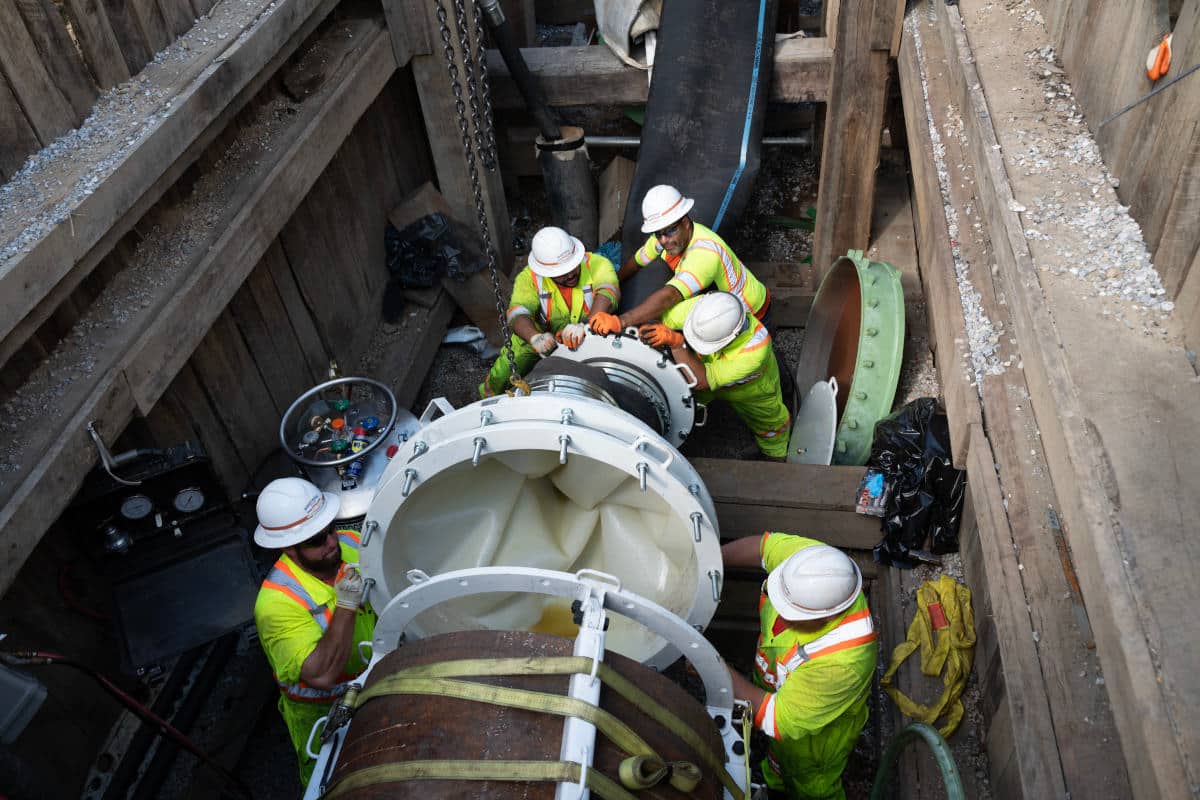
However, in October 2025 during the ongoing rehabilitation work, a significant 16-in. crack was discovered within a 20-ft segment of the 48-in. pipeline, threatening its structural integrity. When determining methods for repair, Newark engineers and partners ruled out replacement of the damaged section. They cited high costs, lengthy repair time, ongoing rehabilitation work disruptions, and site disturbances via excavation adjacent to an existing railroad in proximity.
“The City decided that a trenchless structural repair is the most practical and viable path forward,” said Mohammad Inti Athar, P.E., chief engineer at the Newark Water and Sewer Utility. “Specifically, using a carbon fiber lining material for repair is the best option to restore the aqueduct’s structural integrity in the shortest possible time.”
Choosing Structural Trenchless Repair
In collaboration with QuakeWrap, Newark chose the StifPipe design, a fiber-reinforced polymer (FRP) system recognized in 2016 by the American Society of Civil Engineers (ASCE) as the world’s first green and sustainable pipe. The material is designed to fully withstand the aqueduct’s internal pressure requirements of 35 psi to 150 psi. Additionally, it can resist the external load from the ground above it.
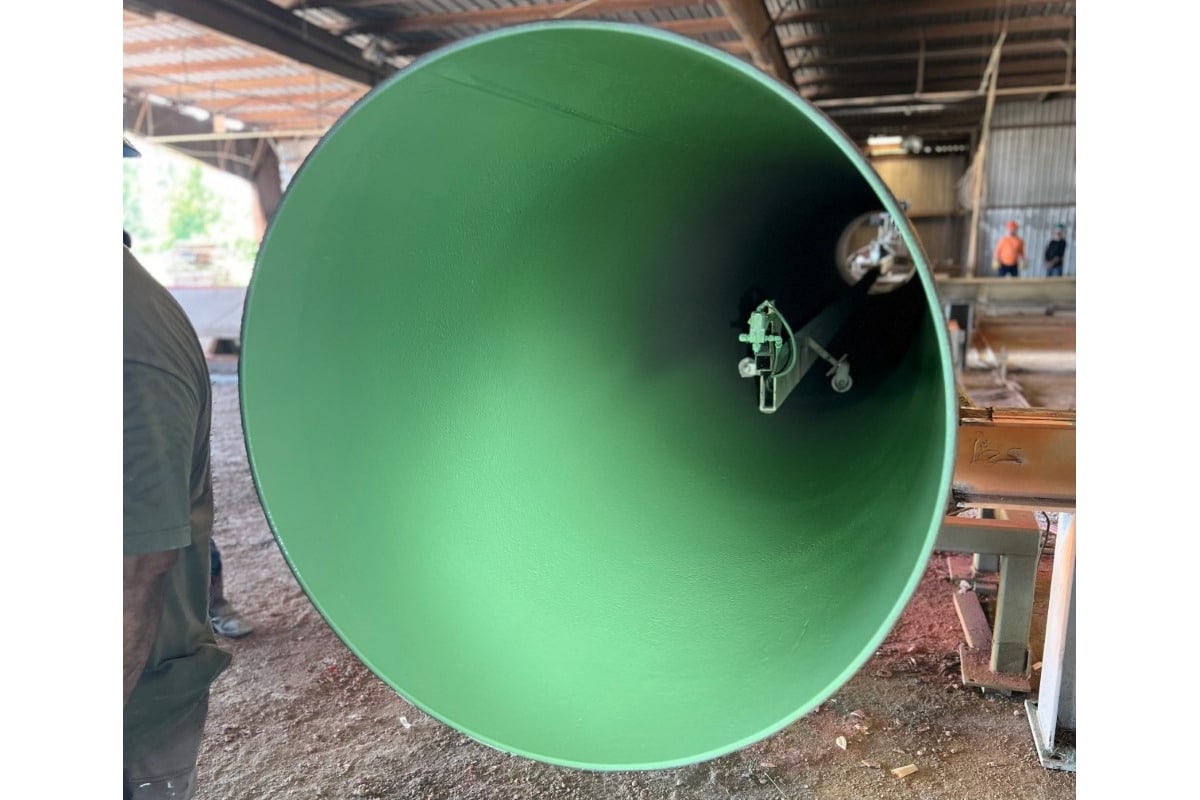
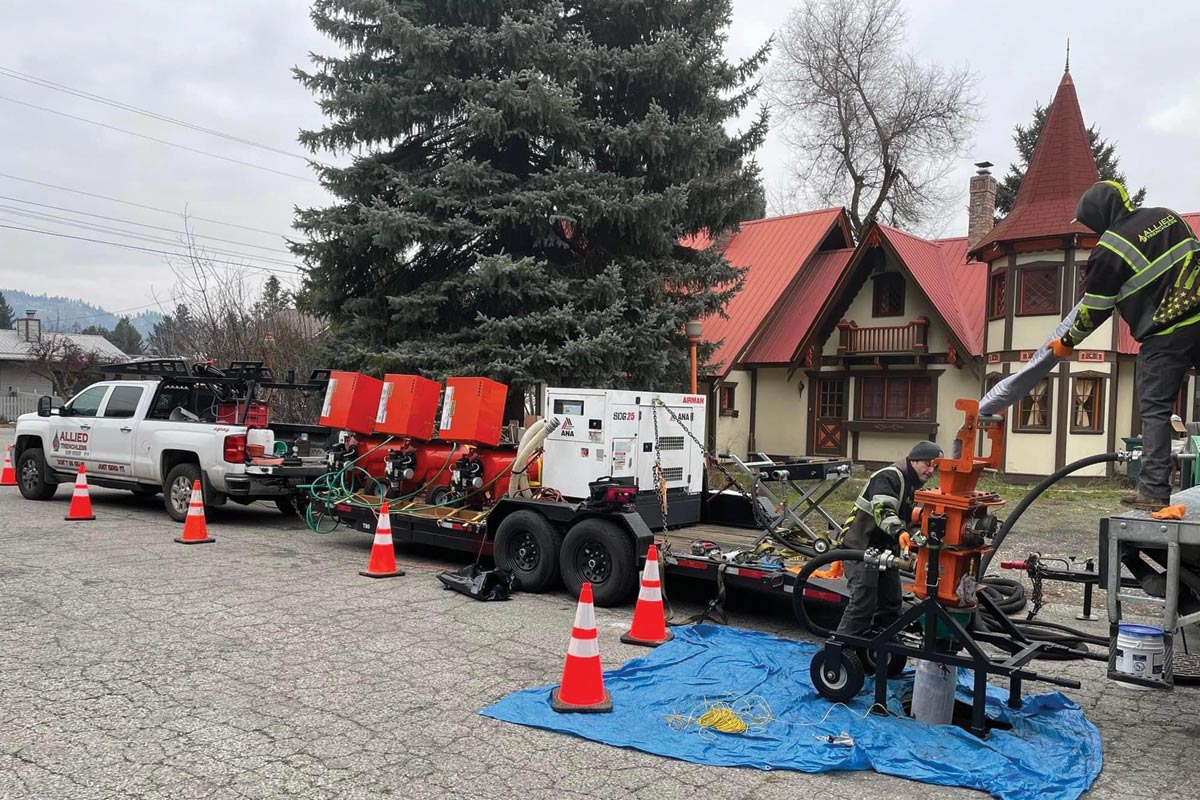
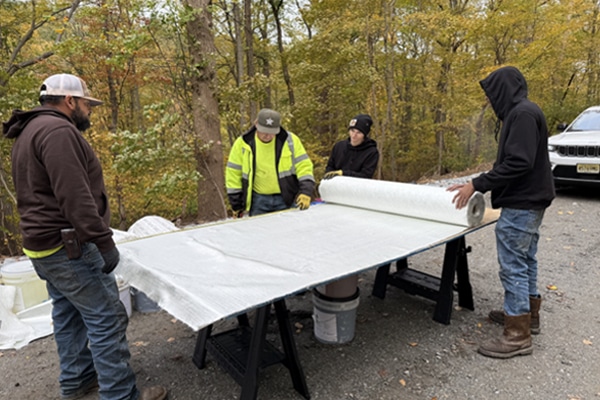
The composite material consists of one layer of B2408G glass fiber, one layer of a 10-mm thick 3D core, and finally lining the pipe is one layer of high-strength B20C biaxial carbon fiber fabric. The layers were applied in a sandwich construction, each saturated with QuakeBond 300SR, an NSF-61 compliant epoxy suitable for potable drinking water. The design met AWWA C305, ASTM D2412, and ASTM F1216 compliance standards. Moreover, all repairs were made with virtually no impact to the aqueduct’s hydraulic capacity.
All materials were transported through a 24-in. access opening, allowing for an entirely trenchless repair.
“This method of repair is unmatched for its speed, cost-savings, and efficiency due to gains in structural strength,” said George, who has served over 35 years at the city’s water and sewer utility. “The repair took only four days. Newark has employed carbon fiber lining repair of the aqueduct on several occasions in the past, and will consider carbon fiber lining as a top choice for future pipe repairs.”
Future Planning
In 2026, Newark will embark on a full condition assessment of the entire 42 combined miles of aqueduct using Xylem’s PipeDiver platform. The free-swimming platform utilizes electromagnetic or ultrasonic data to identify and quantify wall loss, corrosion, cracks, or other damages that jeopardize the pipe’s structural integrity.
“The assessment will define the scope of future repair needs to help extend the lifespan of our aqueducts,” said Athar. “Once the findings are finalized, Newark will develop a comprehensive blueprint to guide any further rehabilitation efforts.”
With the support of low-interest principal forgiveness loans from the New Jersey Infrastructure Bank, the first phase of rehabilitation began in 2023 and is expected for completion in mid-2027.
“The twin aqueducts are just one example of how forward-thinking Newark’s founding fathers were when designing the system,” said George. “The twin design gives us wide flexibility to make repairs with absolutely no disruptions to water service. Not every utility can say the same.”
Long-Term Stewardship
Newark’s Pequannock water system ranks in the top six largest water purveyors in the state of New Jersey. The municipality also owns portions of the Wanaque North and Wanaque South water systems managed by the North Jersey District Water Supply Commission (NJDWSC), holding 40.5 percent and 11.8 percent of storage allocations, respectively. Combined, Newark provides water to nearly half a million direct and bulk customers.
“It is our duty to maintain and upgrade the system so it lasts another century,” said Athar, who led in overseeing Newark’s nationally recognized Lead Service Line Replacement (LSLR) program. “Methods like the carbon fiber lining repair allow us to deliver on this commitment.”
Since 2014, Mayor Ras J. Baraka’s administration has invested over $400 million in water and sewer infrastructure upgrades and repairs. As a result, they have ensured a long-lasting and more reliable system for future generations of Newark residents.
- City of Newark Goes Trenchless to Repair Historic Pequannock Aqueducts

- NUCA Convenes in Tucson for 2026 National Convention
- Product Showcase – Denso Archco 456
- DCA Holds 65th Annual Convention in Miami
- How Is the Trenchless Rehab Market Faring in Today’s Economic Climate?

Next Up
2026 Microtunneling Short Course | May 5-7, 2026 | Scottsdale, Arizona | Learn more