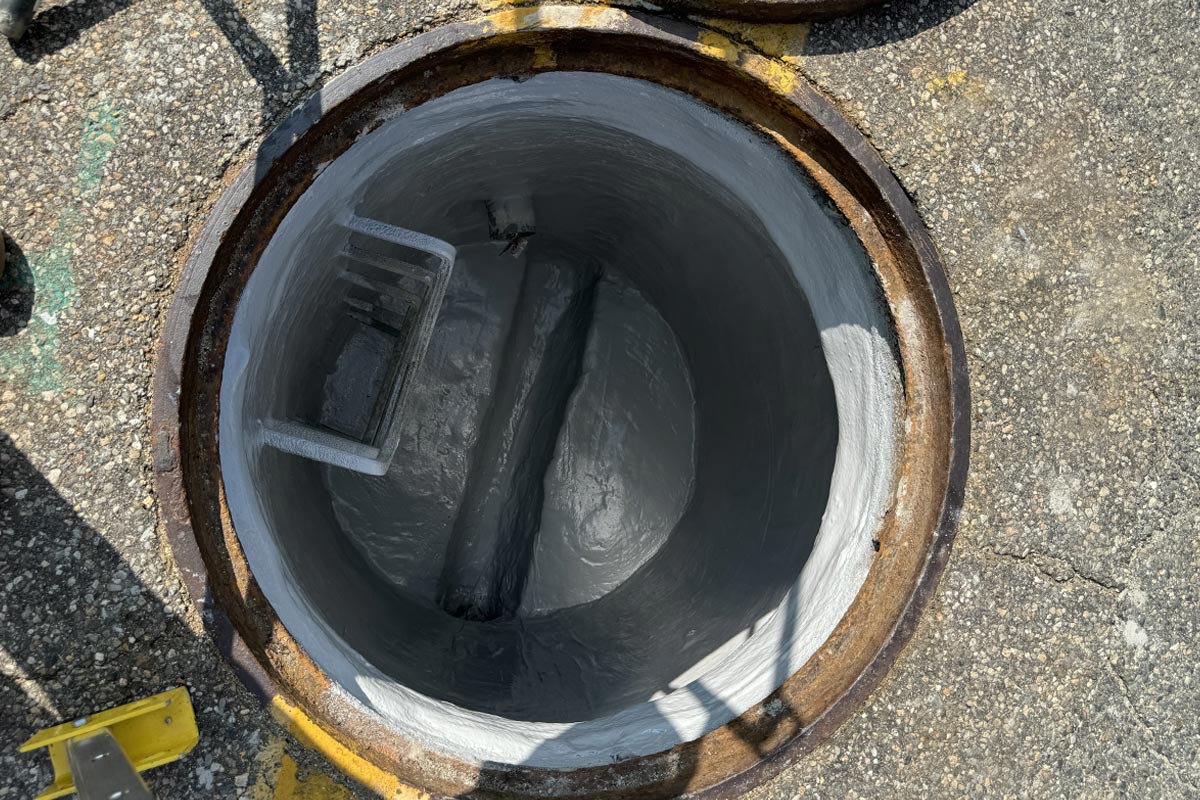
Rehabilitation of a Deteriorated Sanitary Manhole Using Spray-Applied Protection
Municipal wastewater collection systems often include aging manholes that experience deterioration due to long-term exposure to hydrogen sulfide, aggressive flow conditions, and environmental factors. When left unaddressed, defects such as spalling concrete, voids behind pipe penetrations, and deteriorated bench areas can lead to infiltration and inflow (I&I). As a result, these issues increase treatment costs and accelerate structural decline.
Trenchless rehabilitation methods provide municipalities with an effective alternative to full replacement by restoring structural integrity and mitigating infiltration with minimal surface disruption.
This case study highlights the rehabilitation of a sanitary manhole located in a residential neighborhood in Connecticut. The structure exhibited extensive concrete deterioration and infiltration issues. Therefore, it required a comprehensive repair approach to extend its service life and restore performance.
Project Background
The project involved the rehabilitation of a single sanitary manhole serving approximately 500 customers within a residential area. The manhole measured 7 ft in depth with a 4-ft diameter. This resulted in a total interior surface area of approximately 113 sq ft. The structure was part of an active sanitary sewer system and remained in service throughout the rehabilitation process.
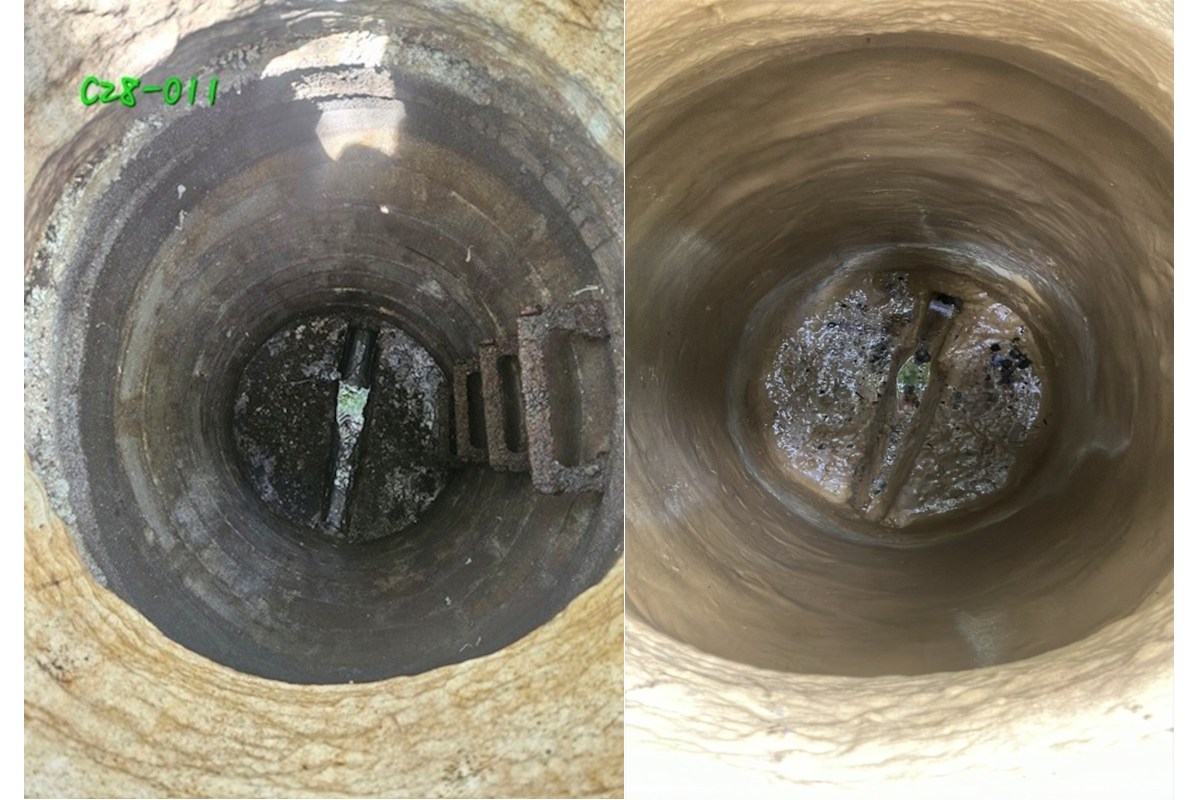
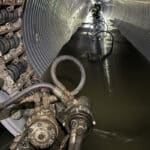
Initial inspection identified heavy deterioration throughout the manhole interior, including concrete failures around pipe penetrations and along the flow line. These conditions allowed groundwater to infiltrate the structure, increasing the volume of wastewater requiring conveyance and treatment. Additional deterioration was observed near the top rim of the manhole. This indicated material loss and long-term exposure to moisture.
Identified Challenges
The primary challenge associated with the project was the extent of concrete degradation within the manhole. Spalling concrete ranging from approximately ½ to ¾ in. deep was observed on interior wall surfaces. This required thorough removal of unsound material prior to rehabilitation. Deterioration was also present at the pipe table, where loose brick and compromised mortar joints reduced the structural integrity of the bench area.
A significant void space was identified behind a 4-in. force main pipe penetration, estimated at approximately 18 in. by 18 in. This void posed a risk of continued infiltration and further structural damage if not properly addressed. In addition, an existing coupler attached to the end of a pipe was no longer required, as the owner did not intend to reconnect a previously broken drop connection.
The rehabilitation approach needed to address both visible deterioration and concealed defects. In addition, it was necessary to ensure compatibility with active sanitary service conditions.
Rehabilitation Methodology Surface Preparation
Rehabilitation activities began with comprehensive surface preparation to remove deteriorated material and contaminants from the manhole interior. High-pressure water blasting was used to clean the walls, bench, and flow line, exposing sound substrate and identifying areas requiring repair. All debris generated during surface preparation was removed using a vacuum truck. Disposal was completed onsite per owner approval.
Proper surface preparation was essential to ensure adequate bonding of repair materials and the final lining system.
Concrete Repairs and Pipe Table Rehabilitation
Following cleaning, localized concrete repairs were performed to restore damaged areas of the manhole interior. The invert was inspected, and loose brick was removed where necessary, followed by repointing to stabilize the invert and surrounding surfaces. Repairs were completed to reestablish a smooth, continuous profile and provide a suitable substrate for lining application.
Deterioration observed at the top rim and along the flow line was also addressed during this phase. Repairs in these areas were critical to restoring structural continuity and preventing future infiltration.
Void Filling and Penetration Sealing
To address the large void behind the 4-in. force main penetration, a void-filling operation was performed using MortarTec Hydrxx-1. The material was injected to fill the estimated 18-in. by 18-in. void, stabilizing the surrounding area and preventing water migration behind the manhole wall.
The existing coupler attached to the end of the pipe was removed in accordance with the owner’s request, as the drop connection was not scheduled to be reinstalled. This allowed the penetration area to be properly prepared and incorporated into the rehabilitation system.
Spray-Applied Lining and Resurfacing System
Once all repairs and void filling were completed, the manhole interior was rehabilitated using a multi-step resurfacing and lining system. First, the structure was resurfaced using Epoxytec MortarTec Silicate, an industrial-grade resurfacing material composed of Portland cement, graded silica sand, fibers, and microsilica. The material was applied at an approximate thickness of 1 in. to restore the interior surfaces and address areas of concrete deterioration.
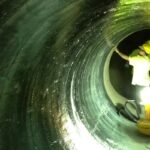
Following resurfacing, a spray-applied CPP Sprayliner was installed as the final protective lining. The material is an ultra-high-build, structural-grade, microfiber-reinforced polymer (FRP) modified polyamide epoxy, applied at a thickness of approximately 200 mils. The lining formed a continuous, protective barrier over the rehabilitated surfaces, enhancing resistance to moisture intrusion and long-term deterioration. Installation was completed in accordance with manufacturer guidelines to ensure proper thickness, adhesion, and curing.
Project Execution Schedule
The rehabilitation was completed over a three-day period, with work sequenced to maintain quality control and efficiency:
- Day 1: Water blasting and vacuum removal of debris
- Day 2: Resurfacing with Mortar-Tec Silicate, localized concrete repairs, invert rehabilitation, void filling, and penetration work
- Day 3: Application of the spray-applied CPP Sprayliner at approximately 200 mils
This phased approach allowed each stage of work to be completed under appropriate conditions while minimizing downtime.
Results and Conclusion
Upon completion of the rehabilitation, the sanitary manhole exhibited restored structural integrity, with deteriorated concrete repaired, voids stabilized, and infiltration pathways addressed. Repairs to the pipe penetrations, flow line, and top rim contributed to improved durability and performance. Moreover, the application of the fiber-reinforced polymer lining provided long-term protection against future deterioration.
This project demonstrates how trenchless manhole rehabilitation techniques can effectively address concrete failures, voids behind pipe penetrations, and infiltration concerns within active sanitary systems. By combining thorough surface preparation, targeted repairs, void filling, and spray-applied lining installation, municipalities can extend the service life of critical infrastructure assets without the need for full replacement.
Anna Breen is a marketing coordinator at Savy & Sons.
Latest Posts
- Rehabilitation of a Deteriorated Sanitary Manhole Using Spray-Applied Protection

- HDD Proves Vital to New Mount Holy Pump Station
- Suggested Daily Maintenance Checklist for HDD Mud Reclaimers
- Macomb County Uses Spiral Wound PVC to Renew 15-Mile Interceptor
- Trenchless Technology Canada Roundtable 2026
Next Up
2026 Microtunneling Short Course | May 5-7, 2026 | Scottsdale, Arizona | Learn more