
Ensuring Quality and Longevity in UV-Cured CIPP Liners
As the trenchless rehabilitation industry continues to innovate, ultraviolet (UV) cured-in-place pipe (CIPP) technology has emerged as a reliable solution for renewing aging infrastructure. At the core of this process is a UV-cured CIPP liner. The liner is engineered for consistency, strength and longevity. These qualities depend on precise manufacturing and rigorous quality control from start to finish.
Engineering the UV-Cured Liner
UV-cured pipe liners are built from layers of fiberglass mat, carefully assembled to create a structural composite that can be cured into a new pipe within an existing one. Each liner consists of several key layers: an inner foil, a fiberglass mat system, an outer scrim, and an outer foil. The inner and outer foils encapsulate the resin during the wet-out process. This ensures the resin remains within the liner wall rather than migrating to the interior or exterior surfaces.
This containment is critical. The resin is specifically formulated to react only to UV light. This means the outer foil is UV-resistant, preventing premature curing during manufacturing, handling, or installation. Once assembled, the liner can be produced in continuous lengths. These lengths range up to 1,800 ft for smaller diameters and 300 to 1,000 ft for larger diameters. This offers flexibility and efficiency across a range of pipe rehabilitation applications.
The manufacturing process combines automated machinery with skilled labor, balancing consistency with craftsmanship. Automated systems precisely control the layering and resin impregnation. Meanwhile, trained technicians oversee the nuances of the process, such as fold alignment, foil placement, and material transitions.
Commitment to Quality: ISO 9000 and Beyond
ISO 9000 certification is a benchmark for quality manufacturing that ensures every step in production is documented, repeatable and verifiable. This is a standard and certification that Omega Liner operates under. “ISO 9000 dictates a lot of our quality control processes,” says the company’s production team. “It’s the foundation of our assurance that each liner meets exacting standards before it ever leaves the plant.”
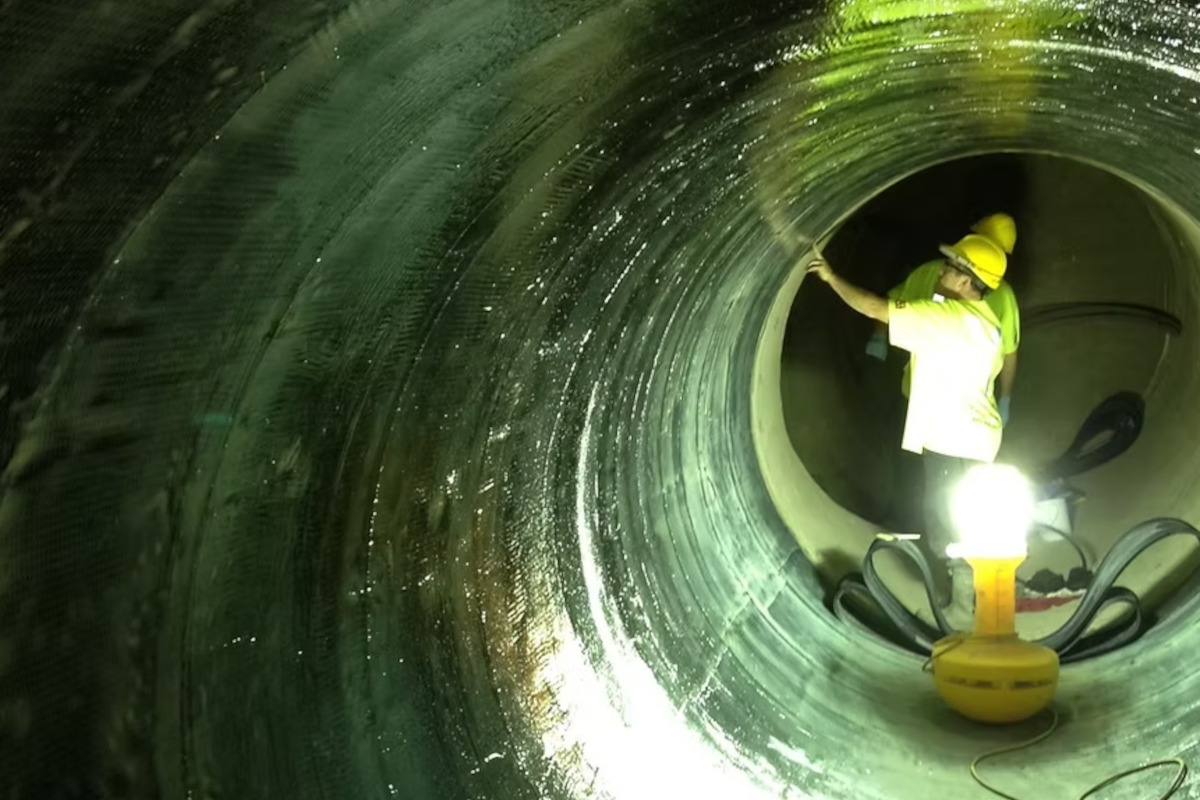
Inspectors are stationed throughout the manufacturing lines, meticulously monitoring each stage. Every layer of fiberglass, every fold, and every application of foil is observed and verified in real time. Quality control extends beyond visual inspection. Video documentation captures every foot of liner produced, creating a permanent record. If an issue ever arises in the field, technicians can trace it back to a specific production run. They can review the corresponding footage to identify root causes and verify compliance.
Precision in the Wet-Out Process
The wet-out phase — the step in which resin is impregnated into the fiberglass mats — is one of the most crucial in liner production. Achieving uniform resin impregnation ensures the final cured liner maintains structural integrity and consistent wall thickness. Because the resin is sealed within the liner during this process, contamination and air entrainment are minimized.
Temperature, viscosity, and resin quantity are all tightly controlled and logged. Operators continuously verify that resin saturation is even across the entire liner length. Once the wet-out is complete, the UV-resistant outer foil protects the liner during transport and storage until it’s ready for installation.
Field Installation and UV Curing
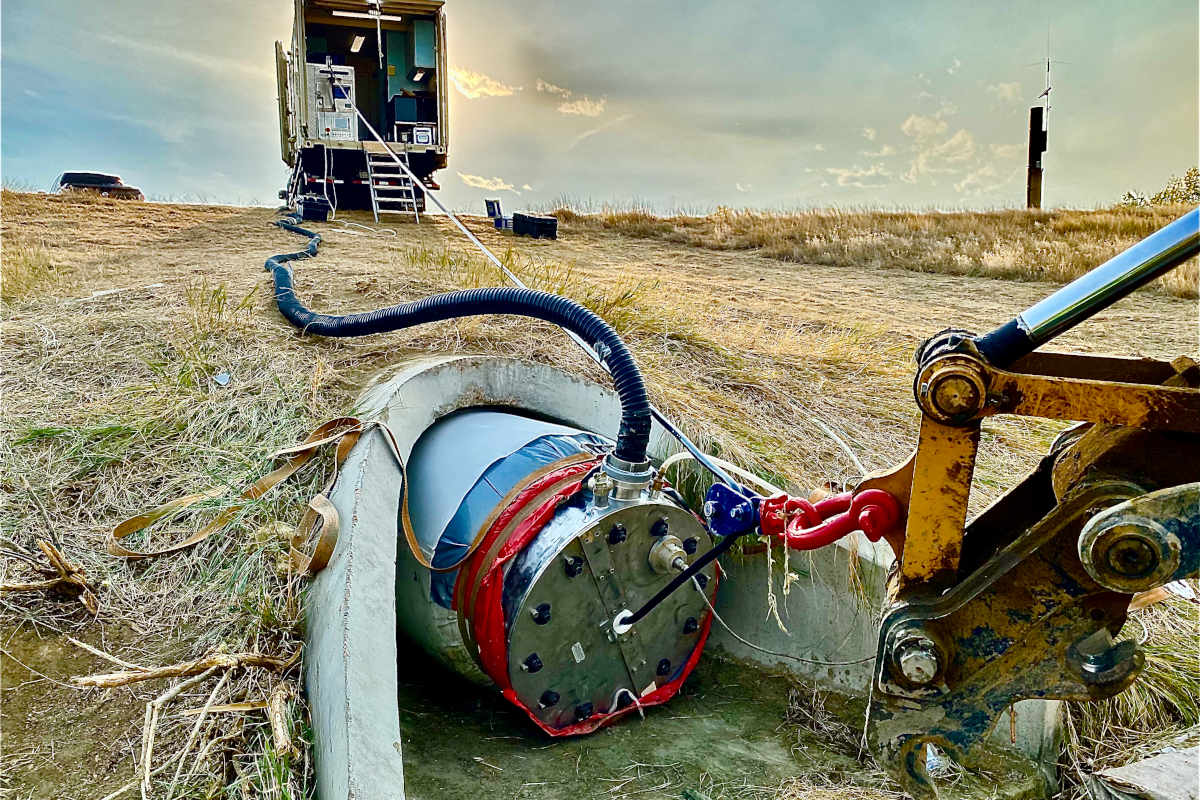
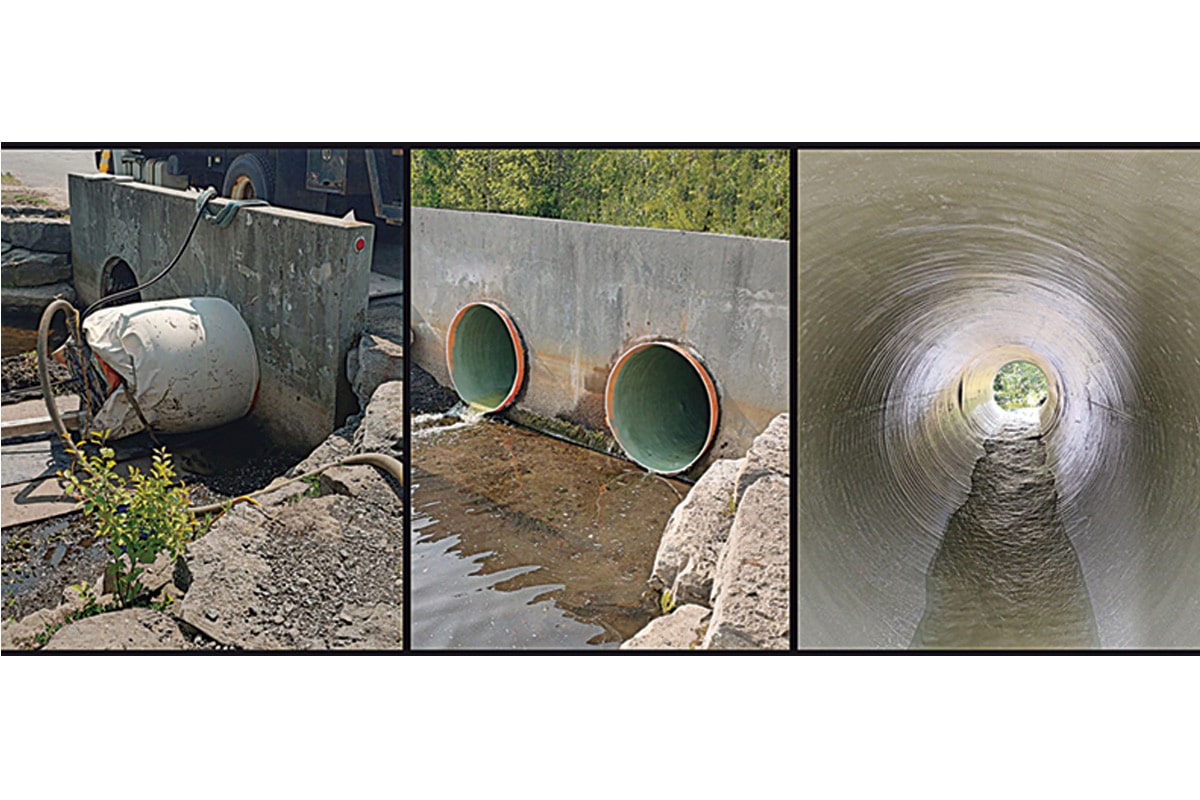
Once the liner arrives at the jobsite — packaged and crated to maintain integrity — it is pulled into the host pipe from one access structure to another. The liner is then calibrated with air pressure, inflating it to conform tightly to the interior of the host pipe. This inflation step ensures the liner assumes the correct shape and maintains continuous contact with the existing pipe wall.
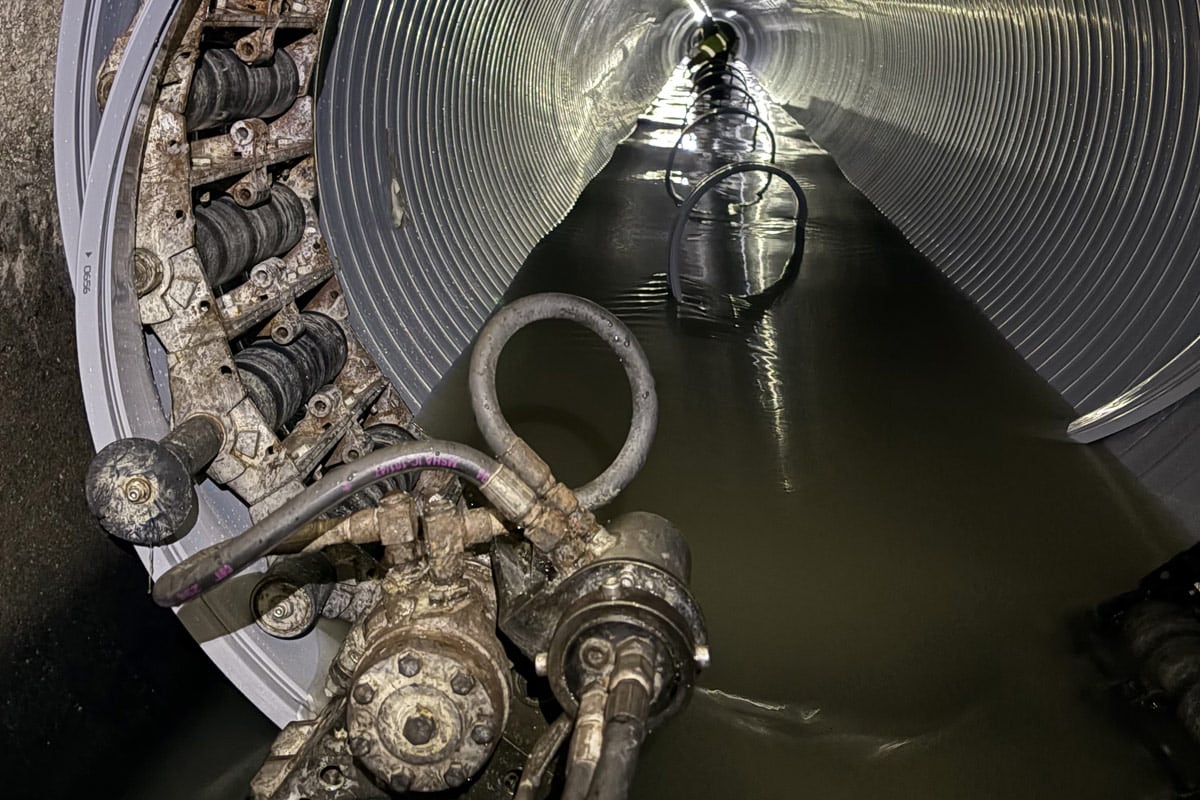
A light train with high-intensity UV lamps moves through the liner at a controlled speed. As the light train passes, the UV energy activates the photoinitiators within the resin. This initiates a rapid curing reaction that transforms the liner into a hard, durable pipe-within-a-pipe.
This entire installation and curing process follows ASTM F2019. This is the standard practice for rehabilitation of existing pipelines using UV-cured CIPP. Following this standard not only ensures structural performance but also verifies that materials and procedures meet the industry’s highest levels of safety and reliability.
A Transparent and Traceable Quality Culture
One hallmark of Omega Liner’s operation is its emphasis on traceability. A digital record tracks each liner from raw materials to final inspection. This record includes material batch data, inspection checklists, and video logs. This transparency allows for complete accountability. It is invaluable for contractors, municipalities, and engineering firms relying on consistent performance.
“We document every foot of liner we produce,” notes the QA team. “If there’s ever a question about a particular job, we can pull up the video, the inspection data, and the material records. That level of traceability protects everyone involved — the installer, the engineer, and ultimately the end user.”
Longevity Through Quality Control
Quality assurance doesn’t stop once the liner leaves the plant. The performance of UV-cured liners in the field, often designed for a 50-year service life or more, depends on the integrity of every preceding step. It is worth noting that 67 percent of its strength remains after 50 years. From controlled resin wet-out to meticulous inspection and standardized curing procedures, each element contributes to a final product that restores structural integrity, minimizes infiltration, and extends the lifespan of aging infrastructure.
Mark Hallett is president of Omega Liner Co. Inc.
- Kondex Cited as Best Downhole Tools

- Tri-Con™ Drilling System: Redefining Speed and Strength in HDD Tooling
- Verifying Quality Throughout the Manhole Rehabilitation Process
- Rehabilitation of a Deteriorated Sanitary Manhole Using Spray-Applied Protection
- HDD Proves Vital to New Mount Holy Pump Station
Next Up
2026 Microtunneling Short Course | May 5-7, 2026 | Scottsdale, Arizona | Learn more